What Is The Best Month For Whale Watching Near Victor Harbor?
July and August are the most reliable months for whale watching near Victor Harbor, with southern right whales in Encounter Bay from May to early October. A month by month guide with tour options.
For the full season picture month by month, see the Victor Harbor whale watching season calendar.
| Quick Fact | Detail |
|---|---|
| Season length | May to early October |
| Most reliable months | July and August |
| Species most often seen | Southern right whale |
| Operator's local whale season | June to September |
| Peak tour | Victor Harbor: Southern Ocean Adventure Cruise with Guide |
| Peak tour price | From AU$85 per person |
| Cancellation | Free up to 24 hours before, on the booking page |
July and August are the best months. The SA Whale Centre describes the season as May to October and names July and August the most reliable time, and Big Duck Boat Tours uses the same two months for its local whale season of June to September. Plan around those two months, and treat the shoulder weeks as a bonus rather than a promise.
The reason July and August sit at the centre of the season is calving. Southern right whales migrate to the sheltered waters of southern Australia to give birth and nurse, and Encounter Bay has been formally recognised for that role: the regulations that took effect on 1 September 2025 renamed the old Encounter Bay Restricted Area the Encounter Bay Whale Nursery Protection Area, one of three such areas in South Australia alongside Fowlers Bay and Sleaford Bay. A nursery protection area exists precisely because whales with calves gather here in mid-winter.
That mid-winter timing surprises some visitors. The best whale months at Victor Harbor are the coldest months of the South Australian year, with mean daily maximums of 15.5 degrees in July and 16.4 in August according to Bureau of Meteorology averages for the area. The whales are not avoiding the cold, they are seeking it: calm, cool, sheltered bays suit newborn calves. A winter whale trip is a different proposition to a summer beach day, and the what to wear on a Victor Harbor boat tour question deserves real thought before you book.
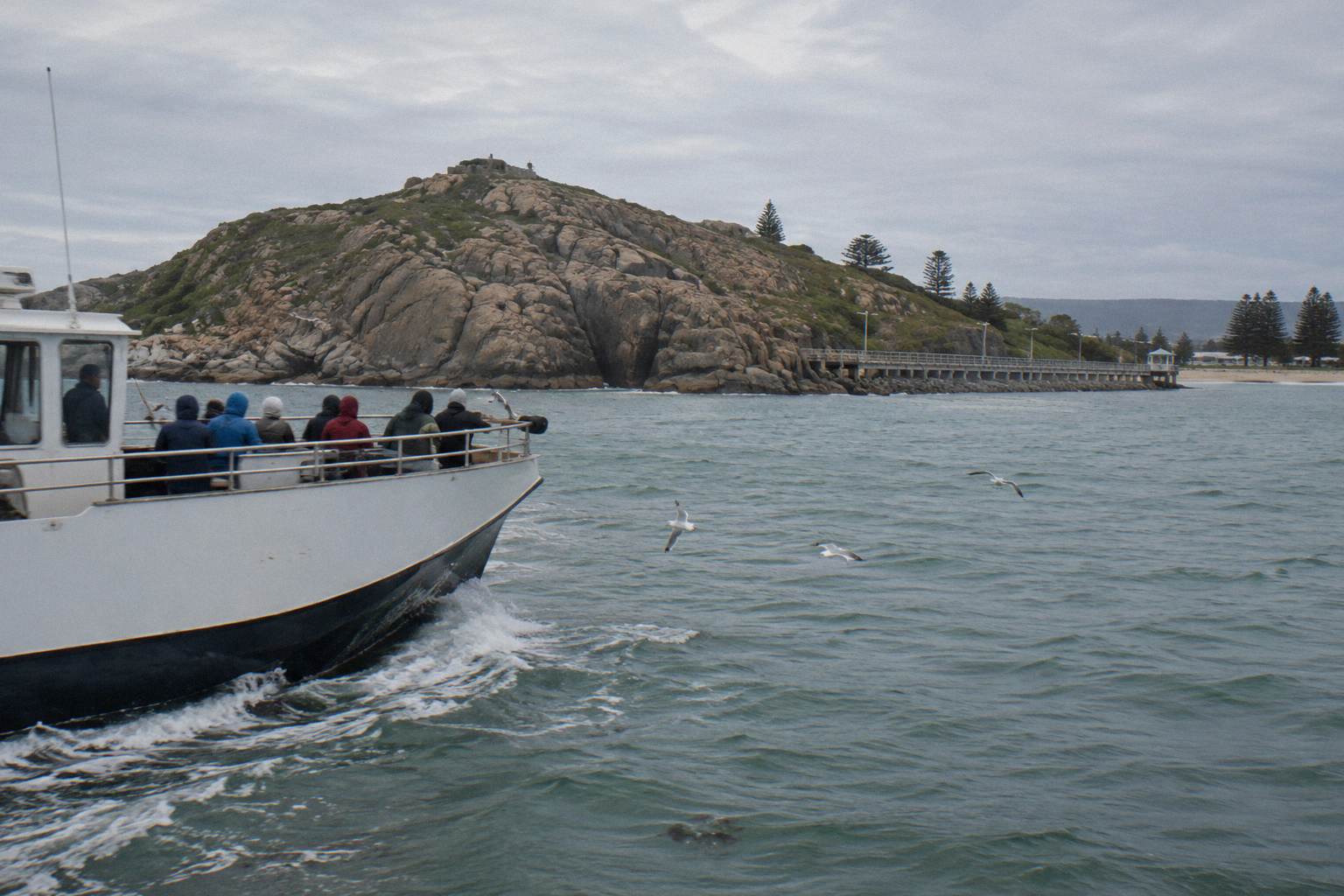
If you want to be on the water in the peak window, the Victor Harbor: Southern Ocean Adventure Cruise with Guide, the 1.5-Hour Ocean Adventure run by Big Duck Boat Tours from the Granite Island Causeway, is the tour most directly tied to whale season. It is from AU$85 per person, rated 4.7 from 163 reviews, and the operator's whale wording is careful: whales are seen where present and conditions permit, and sightings are never guaranteed. All amounts on the water here are Australian dollars.
Why July And August Are The Most Reliable Months
Mid-winter is when calving and nursing happen in sheltered bays, and by July most arriving females have either given birth or settled into Encounter Bay. The SA Whale Centre's own season answer names July and August directly, and Big Duck repeats the same two months for its local waters. Reliability here means probability, not certainty, and mid-winter stacks the probability in your favour.
It helps to understand what the whales are doing here. The Ramindjeri people of the lower Fleurieu, part of the Ngarrindjeri Nation, know the area as Kondilindjerung, described in the state heritage record as "the home of the whales", a reminder that this annual gathering long predates boat tours. Southern right whales were hunted to near extinction in Australian waters before protection began, and they have been recovering slowly since, which is why every sighting now carries regulatory weight as well as emotional weight.
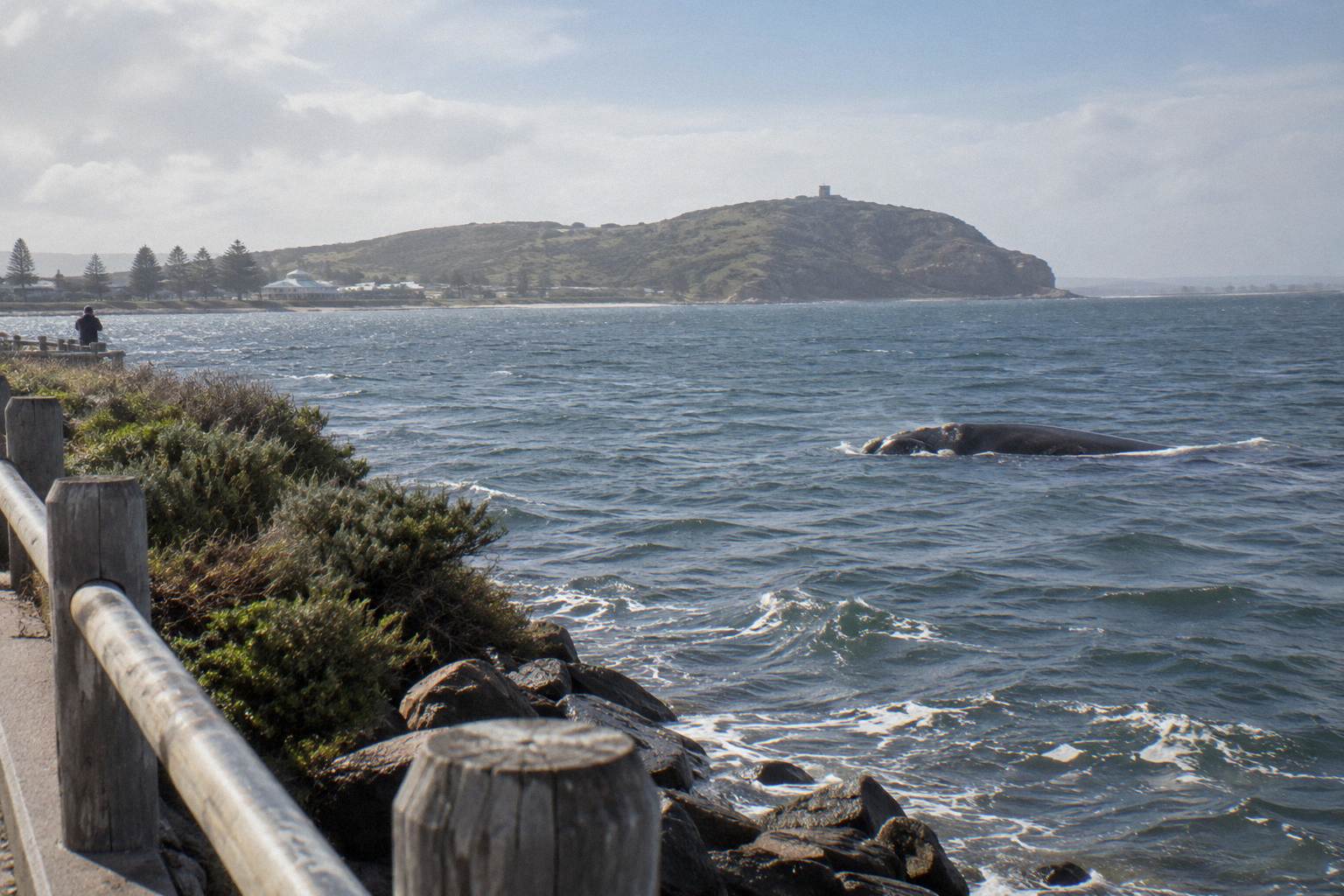
The pattern within the season matters for planning. May brings the first arrivals, usually single animals or early females looking for a quiet bay. June builds numbers. July and August combine the greatest number of animals with the highest chance of mother and calf pairs close to shore, the sighting most visitors want. September thins the herd as whales begin the migration back toward sub-Antarctic feeding grounds, and by early October the season is over. This is also why some visitors combine a whale month with a shore-based plan, since whales can be seen from shore at Victor Harbor on good days without boarding anything at all.
Booking for the peak window still deserves the same flexibility as any other month. Every tour on the roster carries free cancellation up to 24 hours before start on the booking page, and Big Duck cancels departures in rough or unsafe conditions, typically notifying passengers the day before by text and email with a full refund or reschedule. Weather does not follow the calendar, even in July.
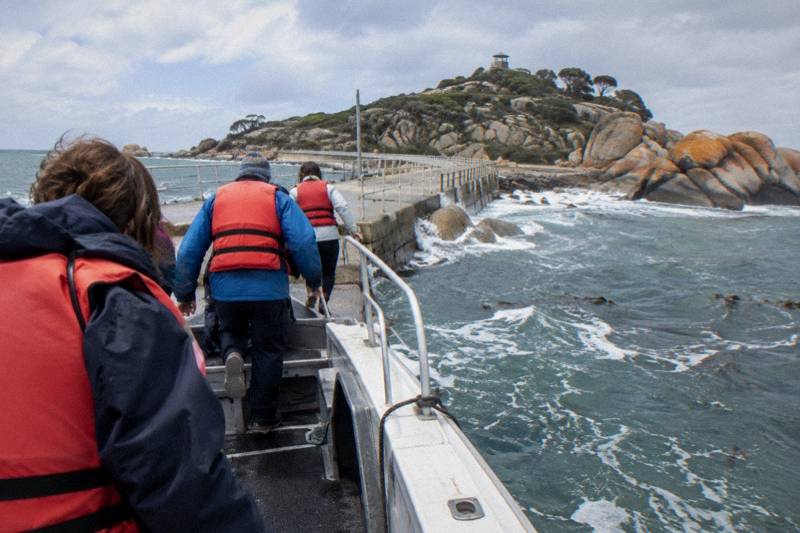
The 1.5-Hour Ocean Adventure departs about 10:45 am, with an extra 2 pm sailing when demand is busy, and boards from a landing about 300 metres out along the causeway, so allow time to walk out. Children from age 2 are welcome with an adult, and the operator notes the trip is not suitable for pregnant passengers.
What The Month By Month Season Looks Like
Each month from May to October plays a different role in the season: May brings the first whales, June builds, July and August hold the peak, September tapers, and early October closes the season. The SA Whale Centre says the first whales are usually seen in May and can be found until early October. The table below sets out what each month realistically offers, based on that wording.
| Month | Season role | What to expect |
|---|---|---|
| May | Season opens | First whales usually seen, low numbers, quiet bays |
| June | Numbers build | More arrivals, operator's local whale season begins |
| July | Peak begins | Most reliable month, mother and calf pairs most likely |
| August | Peak holds | Most reliable month alongside July, calves nursing in the bay |
| September | Late season | Numbers thin as whales begin to leave, still reasonable odds |
| October | Season closes | Whales can be found until early October, then gone |
Read the table with the right expectations. "Most reliable" is the wording both the SA Whale Centre and Big Duck use, and neither promises a sighting on any given day. Whales are wild animals, and on the Southern Ocean Adventure the operator states plainly that whales are seen where present and conditions permit. What July and August change is the base rate: with more animals in the bay for longer, a bad week in August still outperforms a good week in May.
May and October are the gamble months. A May trip can deliver a lone whale in glassy water with almost no other boats around, and a first-week-of-October trip can catch a straggler, but both can just as easily deliver an empty bay. If your heart is set on a whale, book July or August. If a whale would be a bonus on a wider day out, the shoulder months pair better with other activities.
The shoulder-month fallback question is worth settling before you travel. For a fuller treatment of how the season unfolds and what each part of it means for tour choice, the whale watching season calendar guide carries the complete month by month picture and the shore viewing angles.
How Weather And Sea Conditions Change Through The Season
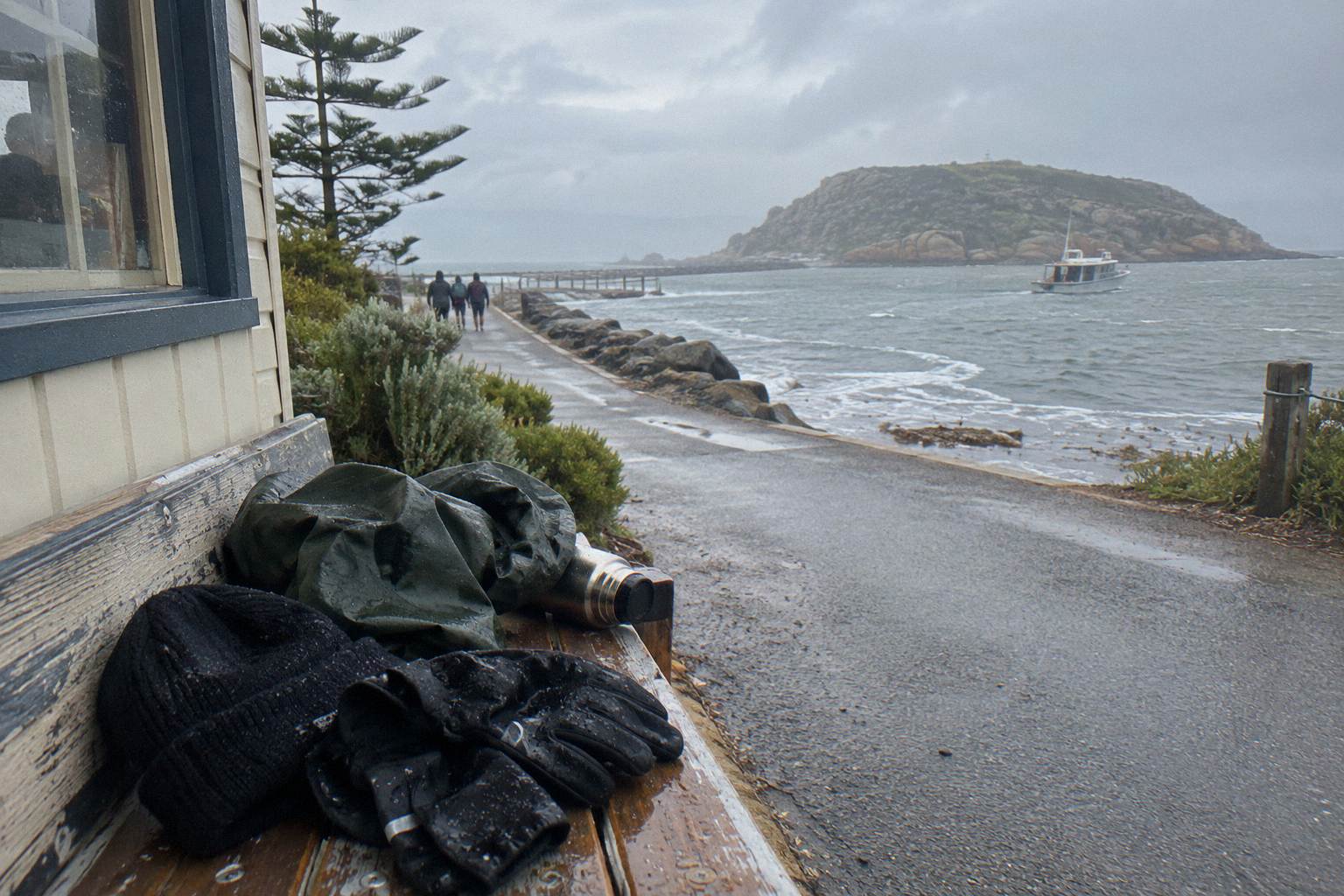
The whale season sits inside the wettest and coldest part of the Victor Harbor year, with June, July and August recording mean rainfall of 83.4, 79.7 and 72.8 millimetres respectively, and July's mean maximum at just 15.5 degrees, per Bureau of Meteorology averages. Rain itself rarely cancels a boat tour, but winter fronts bring the wind and swell that do. The peak months mean accepting winter weather.
| Month | Mean max (C) | Mean min (C) | Mean rainfall (mm) |
|---|---|---|---|
| May | 18.6 | 8.8 | 60.7 |
| June | 16.2 | 7.2 | 83.4 |
| July | 15.5 | 6.6 | 79.7 |
| August | 16.4 | 6.8 | 72.8 |
| September | 18.5 | 7.7 | 55.4 |
| October | 20.6 | 9.1 | 40.3 |
The numbers come from the Bureau of Meteorology's long-term climate averages for the Victor Harbor area, and they tell a consistent story: the best whale months are also the roughest weather months. That is not a reason to avoid them, it is a reason to plan around them. Layers, a waterproof jacket and flat shoes matter more in August than in any other month, and the walk along the causeway to the boarding landing is exposed to whatever the Southern Ocean is doing that day.
The cancellation logic follows the weather logic. Big Duck cancels in rough or unsafe conditions, usually with a day's notice, and rain alone does not necessarily cancel a trip. All tours on the roster also carry the 24 hour free cancellation window, so if a serious front is forecast for your only free day you can withdraw without cost up to a day out. The do Victor Harbor whale tours get cancelled question has a fuller answer, but the short version is that operators err on the side of safety and refund promptly when they do.
Sea conditions also shape which tour is comfortable for you. The Southern Ocean Adventure runs on a 12.5 metre rigid-hulled inflatable called Pungari, a vessel built for exactly this water, but an open boat in a July swell is a different experience to a sheltered cabin cruise. If you are prone to motion sickness, read up on whether you will get seasick on a Victor Harbor whale tour before committing to a peak-winter date.
Which Tours Run In The Peak Months
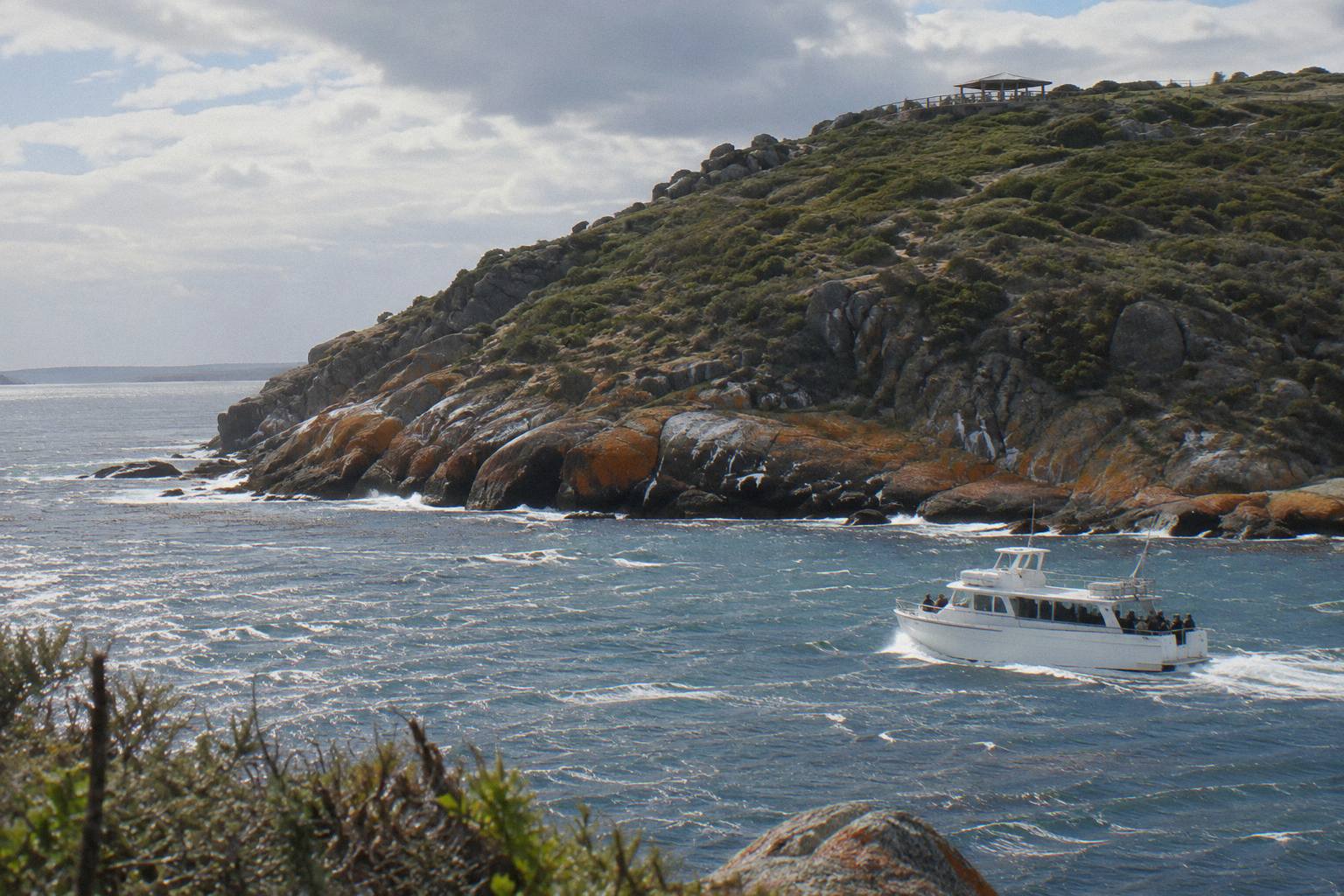
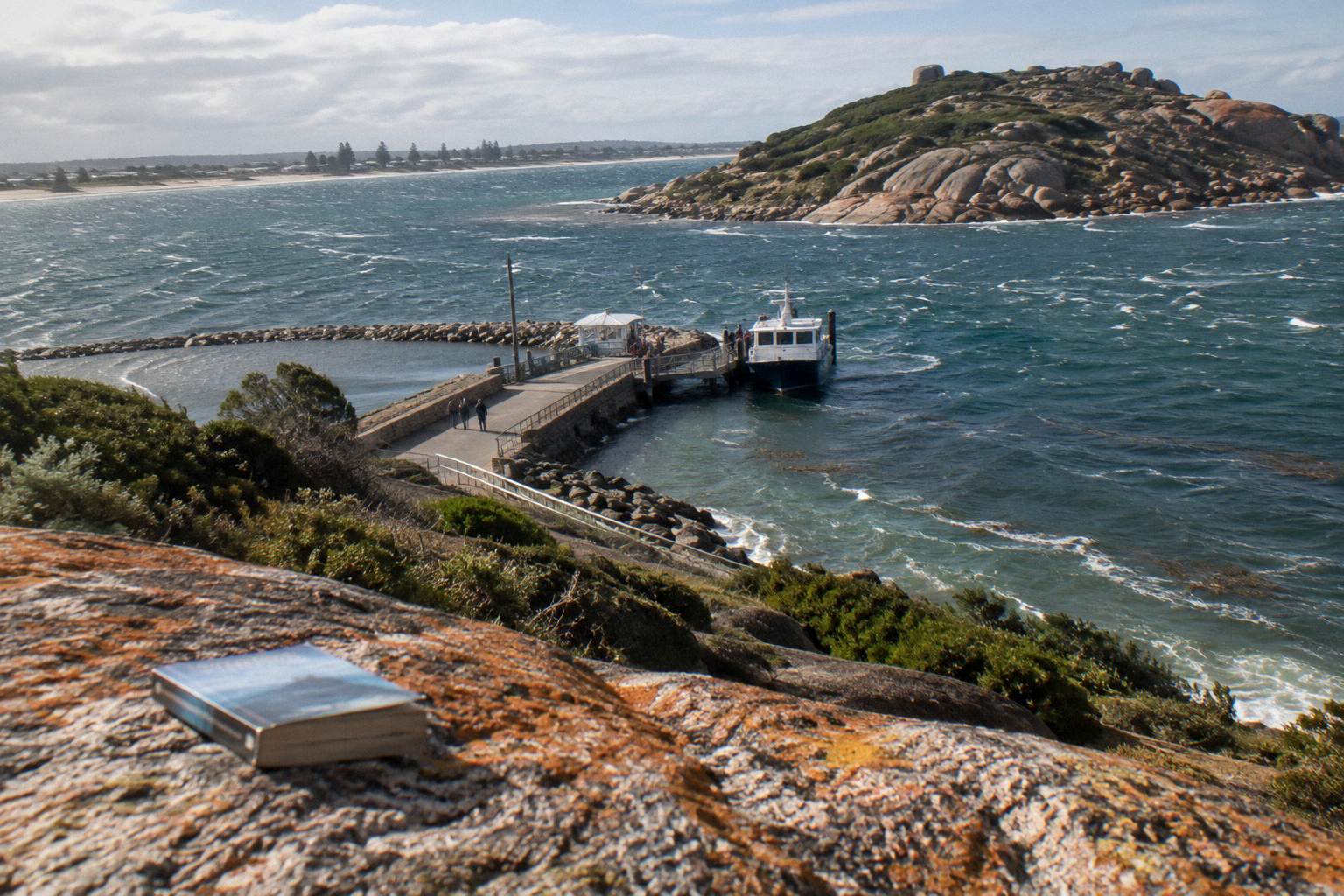
The tour built around the whale window is the Victor Harbor: Southern Ocean Adventure Cruise with Guide, from AU$85 per person and rated 4.7 from 163 reviews, which routes past Seal Island, Wright Island, The Bluff, West Island, Shark Alley, Kings Beach and the Waitpinga cliffs inside Encounter Marine Park. Whales are seen where present, and the wildlife does not disappear when a whale does not appear.
The route is the point. Even in a week when whales stay offshore, the 1.5-Hour Ocean Adventure passes fur seals, sea lions and seabirds at Seal Island, as the operator describes it, and the cliffs and headlands of the marine park are the scenery in every direction. Booking a whale-month date on a route like that is a low-regret decision: the whale is the headline, not the whole show.
If your budget or your stomach prefers something shorter, the Victor Harbor: Seal Island Cruise is the 45-Minute Seal Island Cruise, from AU$55 per person and rated 4.7 from 112 reviews, departing about 12:45 pm from the same causeway landing. It covers less water and does not advertise the whale route, but it shares the same wildlife baseline and the same 24 hour free cancellation, and the shorter run suits families testing whether small children enjoy boat trips at all. Children from age 2 travel with an adult on both Big Duck trips.
For a different water day entirely, the From Goolwa: Half-Day Cruise into Coorong National Park, a 3.5-Hour Coorong Park Cruise from Goolwa Main Wharf, from AU$125 per person and rated 4.8 from 179 reviews, runs through the Coorong, the long narrow lagoon system that stretches about 180 kilometres from the Murray Mouth to Kingston SE. It is not a whale tour, but it gives the same winter months a completely different water experience, sheltered from ocean swell.
What The Whale Approach Rules Mean For Your Month
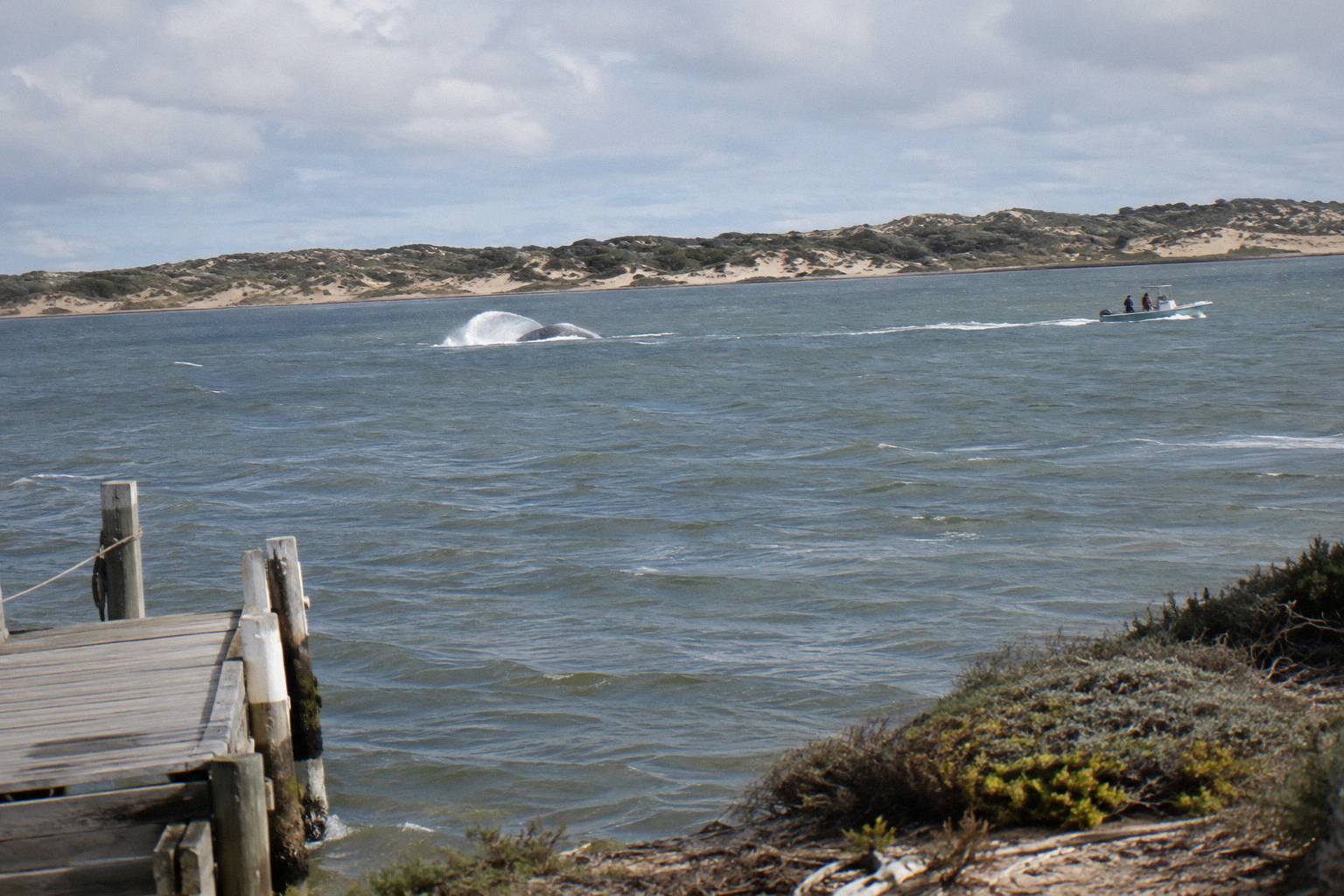
Since 1 September 2025, South Australian rules keep non-prescribed vessels at least 100 metres from a whale, and 300 metres if the whale has a calf or is inside the Encounter Bay Whale Nursery Protection Area, with vessels limited to 4 knots within 300 metres and no more than 60 minutes near an animal. No tour in any month can deliver a close-up encounter, so treat any promise of one with suspicion.
The 2025 regulations replaced the revoked 2010 rules, and they also cover aircraft: planes and drones must stay 300 metres from whales, and helicopters and gyrocopters 500 metres. Jet skis and other prescribed vessels are held to 300 metres from any marine mammal. The full framework is published by the South Australian marine parks authority, and the underlying regulations sit on the South Australian legislation site.
For a visitor choosing a month, the rules carry two implications. First, the whale experience at Victor Harbor is a respectful-distance experience in every month: a licensed boat holds back, and the whales decide whether to come closer, which mothers with calves sometimes do. Second, the nursery protection area over Encounter Bay is strongest evidence that July and August are special here. The state does not draw a calf-protection boundary around a bay where calves are rare.
The SA Whale Centre at 2 Railway Terrace, Victor Harbor, open seven days from 10:00 am to 4:00 pm, publishes a sightings report form on its own website, so checking recent sightings before you travel costs nothing. The whale sightings today guide covers how to read those reports without over-trusting a single day.
Should You Book Early Or Late Season?
Book May and June only if a whale is a bonus on a wider trip, because the SA Whale Centre says the first whales usually arrive in May and numbers build slowly. Book September into early October with the same mindset, as numbers thin from September. When the whale is the reason for travelling, July and August remain the months that give the trip its best chance.
The honest case for the shoulders is everything else that comes with them. September's mean maximum of 18.5 degrees and October's 20.6 are far kinder for walking, and the Victor Harbor walking tours calendar does not depend on whale behaviour at all. May delivers calm autumn days when the water is often at its smoothest, which matters if the boat, not the whale, is the intimidating part. A shoulder-month trip with a walking tour and a boat tour booked, each with 24 hour free cancellation, is a genuinely good plan.
The honest case against the shoulders is arithmetic. Fewer whales in the bay means fewer hours of whale-in-view time per tour hour, and no route or skipper can fix that. The Southern Ocean Adventure states that whales are seen where present and conditions permit, a phrase that is true in May and true in August, but with different frequency.
One hybrid worth considering pairs a peak-month whale attempt with the Coorong cruise above: both can sit in the same winter itinerary, one from the Granite Island Causeway and one from Goolwa Main Wharf, so a whale-free morning does not write off the day. Goolwa itself sits 83 kilometres south-east of Adelaide on Lake Alexandrina, and its wharf precinct sits at what the council calls The Meeting of the Waters, a place significant to the Ngarrindjeri people.
Mistakes People Make Picking A Month
The most common mistake is booking a single summer date and assuming whales are a year-round feature, when the season runs only May to early October. The next is treating July and August as a guarantee because they are the reliable months, then being disappointed by a quiet week. A third is ignoring the winter climate data: packing for 25 degree days in the coldest months of the year.
Fourth on the list is booking the day before arrival in peak season. July and August sailings fill, especially the extra 2 pm departure on the Southern Ocean Adventure, and free cancellation up to 24 hours before means an early booking carries almost no risk. Waiting costs the seat; booking early costs nothing if plans change a day out.
Fifth is reading a single sightings post from one morning and cancelling a whole trip. Whales move around Encounter Bay constantly, a bay that can be empty at dawn and occupied by mid-morning. The SA Whale Centre's sightings reports are a same-week signal, not a same-day forecast, and the can you see whales from shore at Victor Harbor question shows how much a walk to a headland can add between tour departures.
Sixth is over-budgeting for certainty no operator can sell. Any whale-month product that implies a guaranteed sighting is promising something the 2025 regulations and the whales themselves both refuse.
Whatever month you settle on, Victor Harbor Tours carries the full set of tour pages, each with its live from-price and booking link, so the comparison above can be extended to walking tours, surf lessons and private day trips before you commit.
Common Questions About Whale Season Timing
What Is The Best Month For Whale Watching Near Victor Harbor?
July and August. The SA Whale Centre describes the season as May to October and names July and August the most reliable time, and Big Duck Boat Tours uses the same two months for its local whale season of June to September.
When Do Whales First Arrive At Victor Harbor?
The first whales are usually seen in May, according to the SA Whale Centre's season description. Early arrivals are typically low in number, and June is when the build begins.
When Does The Whale Season End?
Whales can be found until early October. September is a tapering month as animals begin their migration away, so a late-season booking carries lower odds than July or August.
Can A Whale Tour Be Cancelled In The Best Months?
Yes. Big Duck cancels departures in rough or unsafe conditions, typically notifying passengers the day before by text and email, with a full refund or reschedule. Every tour on the roster also carries free cancellation up to 24 hours before start on the booking page.
Which Tour Should I Book For July Or August?
The Victor Harbor: Southern Ocean Adventure Cruise with Guide, from AU$85 per person, rated 4.7 from 163 reviews, is the tour whose route covers the whale grounds of Encounter Marine Park. The operator states whales are seen where present and conditions permit.
Are Whales Closer To Shore In Some Months Than Others?
Mother whales with calves use the shelter of Encounter Bay most often in the peak months, and the Encounter Bay Whale Nursery Protection Area exists because of that calving use. Shore sightings depend entirely on where the whales are on the day, and no month guarantees them.