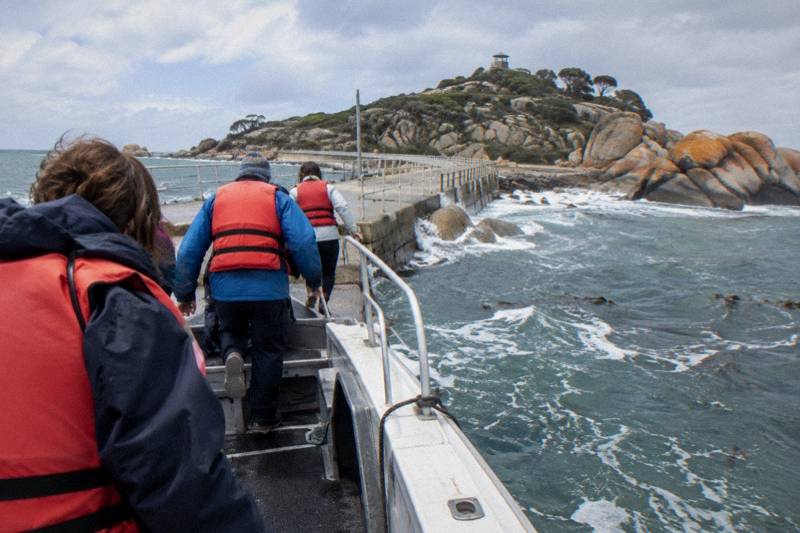
What Should You Wear On A Victor Harbor Boat Tour?
Clothing advice for boat tours around Victor Harbor, with Bureau of Meteorology temperature and rainfall averages, operator guidance and what to pack by season.
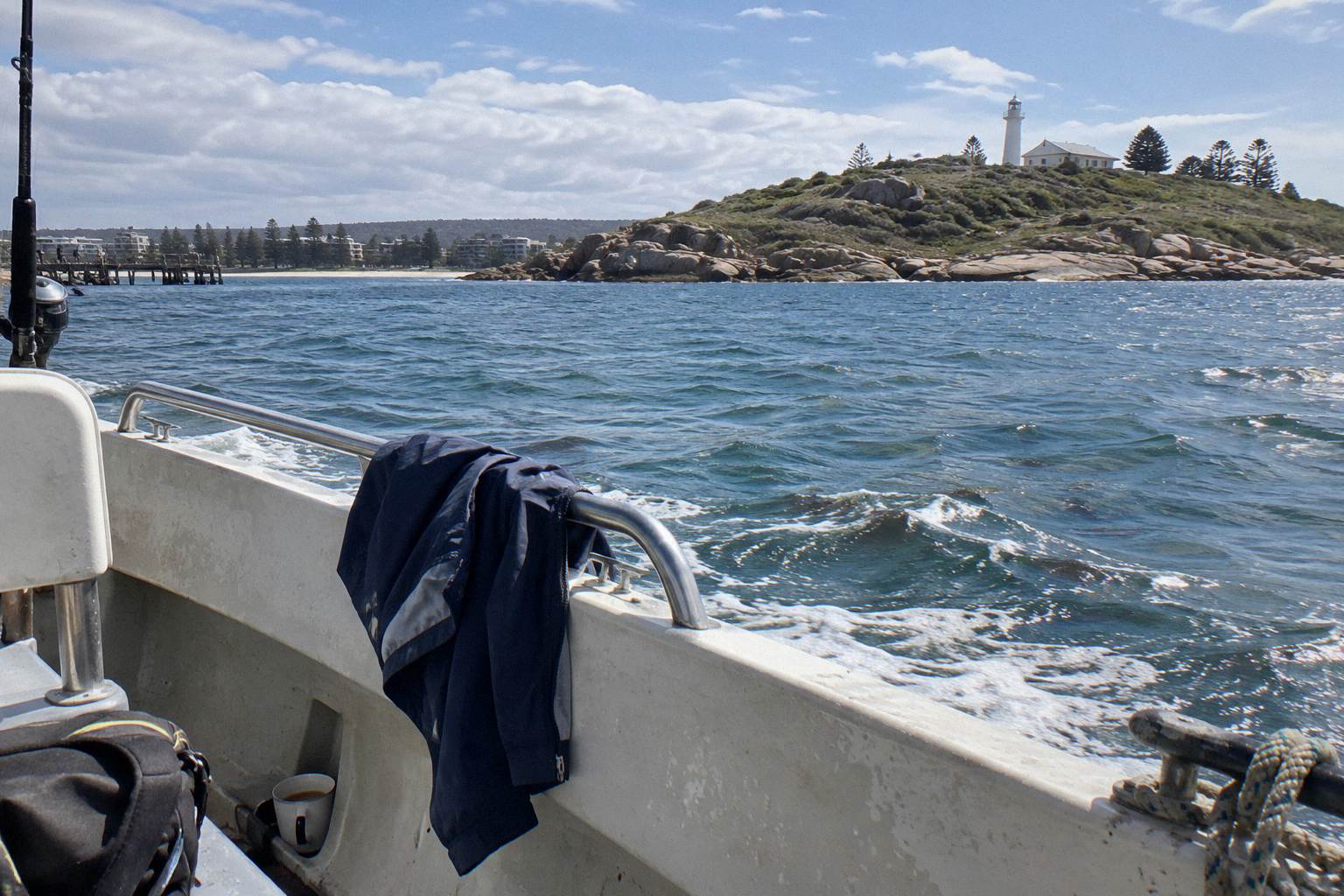
Victor Harbor's summer air is mild, but the Southern Ocean underneath it never is. The town's own climate record, measured at the Encounter Bay station, puts the January mean maximum at just 25.2 degrees, and the July mean maximum at 15.5. Out on the water, wind chill does the rest, and the difference between the jetty and the open southern coast can feel like two different seasons on the same afternoon. Choosing clothes for a boat tour here is less about dressing for the weather forecast and more about dressing for wind, spray and a boat moving at speed.
The operators are direct about it. The Big Duck booking terms ask passengers to bring a camera and weather-appropriate clothing, and that single phrase covers most of the decision. Before you book anything, it helps to know what the water actually does to the air temperature, which months are wettest, and how the different trips, from a 45-minute harbour run to a 3.5-hour Coorong cruise, change what you need on your back.
If you want the short version: think layers, a windproof outer shell, closed shoes with grip, and something warm for your head even in January. Everything below explains why, using the actual climate averages and the operators' own published guidance.
In short: dress in layers with a windproof outer layer, whatever the season. Victor Harbor's mean maximum never exceeds 25.2 degrees, and wind on an open boat strips heat fast. Closed shoes, a warm layer and a rain shell cover the 45-minute Seal Island Cruise and the 1.5-hour Southern Ocean Adventure alike. Longer trips, especially the Coorong cruises from Goolwa, add sun protection and a full spare layer to the kit.
Wear a moisture-wicking base layer, a warm mid layer such as a fleece, and a windproof or waterproof shell jacket, paired with long trousers and closed-toe shoes with good grip. Bring a warm hat and sunglasses no matter the season, since conditions on the water can change quickly and turn cold even on mild days. The reason is arithmetic rather than fashion: the warmest month at Victor Harbor averages a 25.2 degree maximum and a 14.8 degree minimum, so even a summer morning starts cool, and an open boat moving across Encounter Bay adds wind on top. Spray is normal on the faster trips, so nothing you wear should be ruined by salt water.
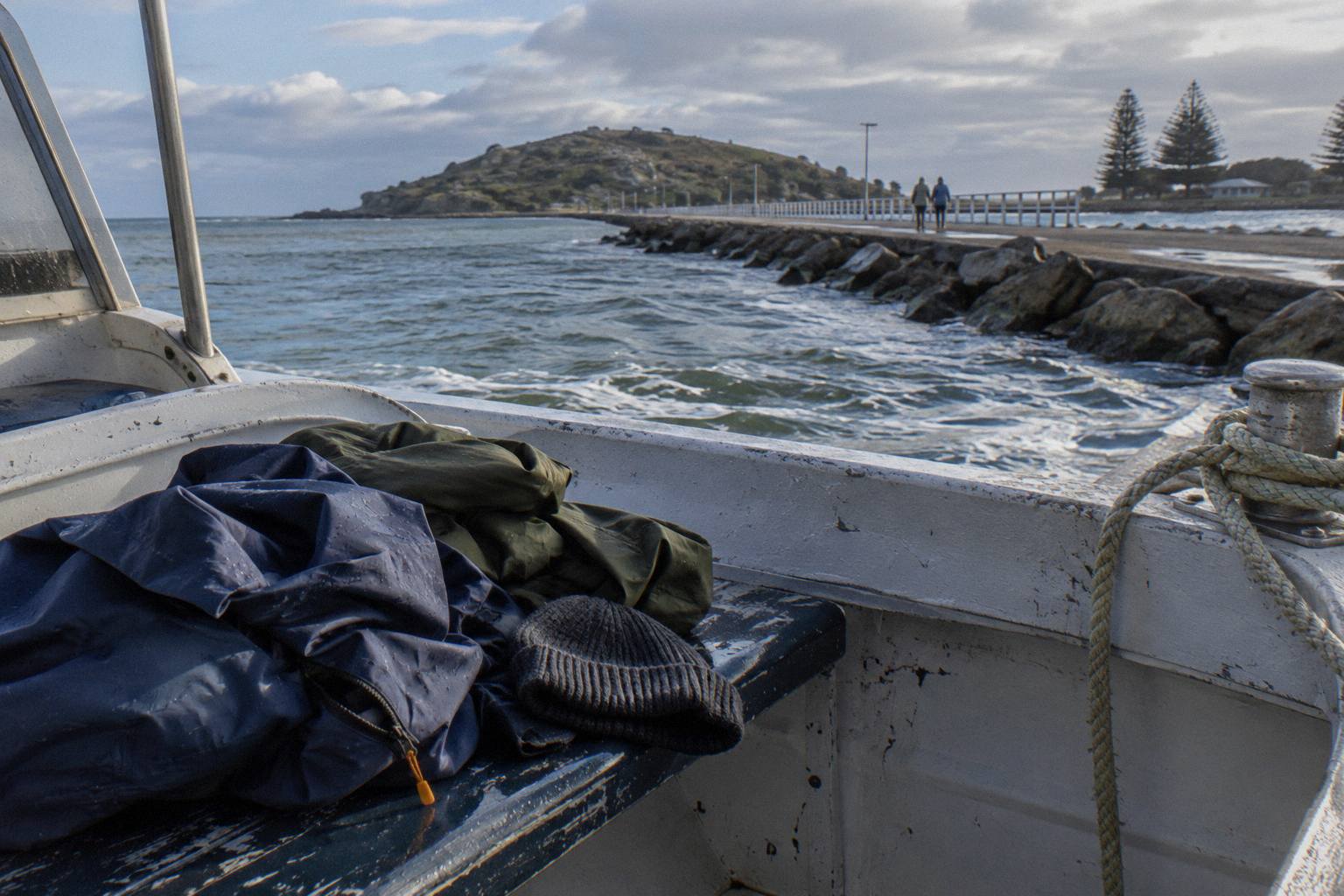
The place to start is the vessel. The Southern Ocean Adventure Cruise with Guide, run by Big Duck Boat Tours, uses a 12.5 metre rigid-hulled inflatable called Pungari. It is open to the weather by design, and its route runs past Seal Island, Wright Island, The Bluff, West Island, Shark Alley, Kings Beach and the Waitpinga cliffs, which means sustained passages in open water rather than a sheltered harbour loop. On a boat like that, the wind you feel is the boat's speed plus the breeze plus whatever the Southern Ocean is doing that day.
Shorter trips are gentler but not warmer. The 45-Minute Seal Island Cruise, also from the Granite Island Causeway, stays closer in, yet the operator describes the same advice: camera, weather-appropriate clothing. And if your plan runs to the Coorong, the 3.5-Hour Coorong Park Cruise from Goolwa is sheltered river and lagoon water rather than open ocean, but it is three and a half hours long, which changes the calculation. Warmth you can shrug off for 45 minutes becomes a problem by hour two.
Here is how the three most relevant options compare for clothing planning. All amounts are Australian dollars.
| Trip | Length | Where it runs | Exposure | Price |
|---|---|---|---|---|
| Victor Harbor: Southern Ocean Adventure Cruise with Guide | 1.5 hours | Open Southern Ocean coast | High, wind and spray | From AU$85 per person |
| Victor Harbor: Seal Island Cruise | 45 minutes | Encounter Bay, near-shore | Moderate | From AU$55 per person |
| From Goolwa: Half-Day Cruise into Coorong National Park | 3.5 hours | Sheltered Murray and Coorong waters | Lower, but long duration | From AU$125 per person |
How Cold Does It Actually Get Out On The Water?
Expect the boat to feel several degrees colder than the Victor Harbor forecast, and in winter expect it to feel genuinely cold, because the town's mean maximum in July is 15.5 degrees and the mean minimum is 6.6. There is no official sea-surface temperature figure for the area, so no number can responsibly be printed here, but the air averages alone tell the story: no month of the year has a mean maximum above 25.2 degrees, and eight months sit under 21. Wind on an open hull then removes more heat from exposed skin than the thermometer suggests.
The full monthly picture comes from the Bureau of Meteorology's long-term averages for the Victor Harbor (Encounter Bay) station, which you can check yourself on the Bureau's climate averages table. Two patterns matter for clothing. First, the spread between daily maximum and minimum is wide in every month, roughly 8 to 11 degrees, so a day that starts in a jumper often ends in a T-shirt or the reverse. Second, the wettest months are June, July and August, with means of 83.4 mm, 79.7 mm and 72.8 mm respectively, which is when a rain shell earns its place in your bag.
| Month | Mean max (C) | Mean min (C) | Mean rain (mm) |
|---|---|---|---|
| January | 25.2 | 14.8 | 21.6 |
| February | 24.3 | 14.5 | 22.0 |
| March | 23.6 | 13.0 | 19.2 |
| April | 21.6 | 10.5 | 34.2 |
| May | 18.6 | 8.8 | 60.7 |
| June | 16.2 | 7.2 | 83.4 |
| July | 15.5 | 6.6 | 79.7 |
| August | 16.4 | 6.8 | 72.8 |
| September | 18.5 | 7.7 | 55.4 |
| October | 20.6 | 9.1 | 40.3 |
| November | 22.5 | 11.5 | 36.0 |
| December | 24.1 | 12.8 | 27.6 |
Read that table as a packing guide rather than a weather forecast. A January tour can absolutely deliver a warm, still afternoon, but the same month can hand you a 15 degree morning with a southerly breeze, and the boat does not wait while you fetch a jacket from the car. The mean figures are the honest middle of the range, and the middle of the range at Victor Harbor is cooler than most visitors from Adelaide expect.
What Do The Operators Ask You To Bring?
Big Duck Boat Tours, whose two Victor Harbor cruises dominate the local water, ask passengers to bring a camera and weather-appropriate clothing. Their booking terms add that routes can change with weather and wildlife, so you should pack with flexibility in mind for the conditions you might encounter on the day. That is the operators' own wording, published on their booking terms page, and it is deliberately general: no operator can know in June what the 10:45 am departure will feel like in August, so the responsibility for comfort lands on you.
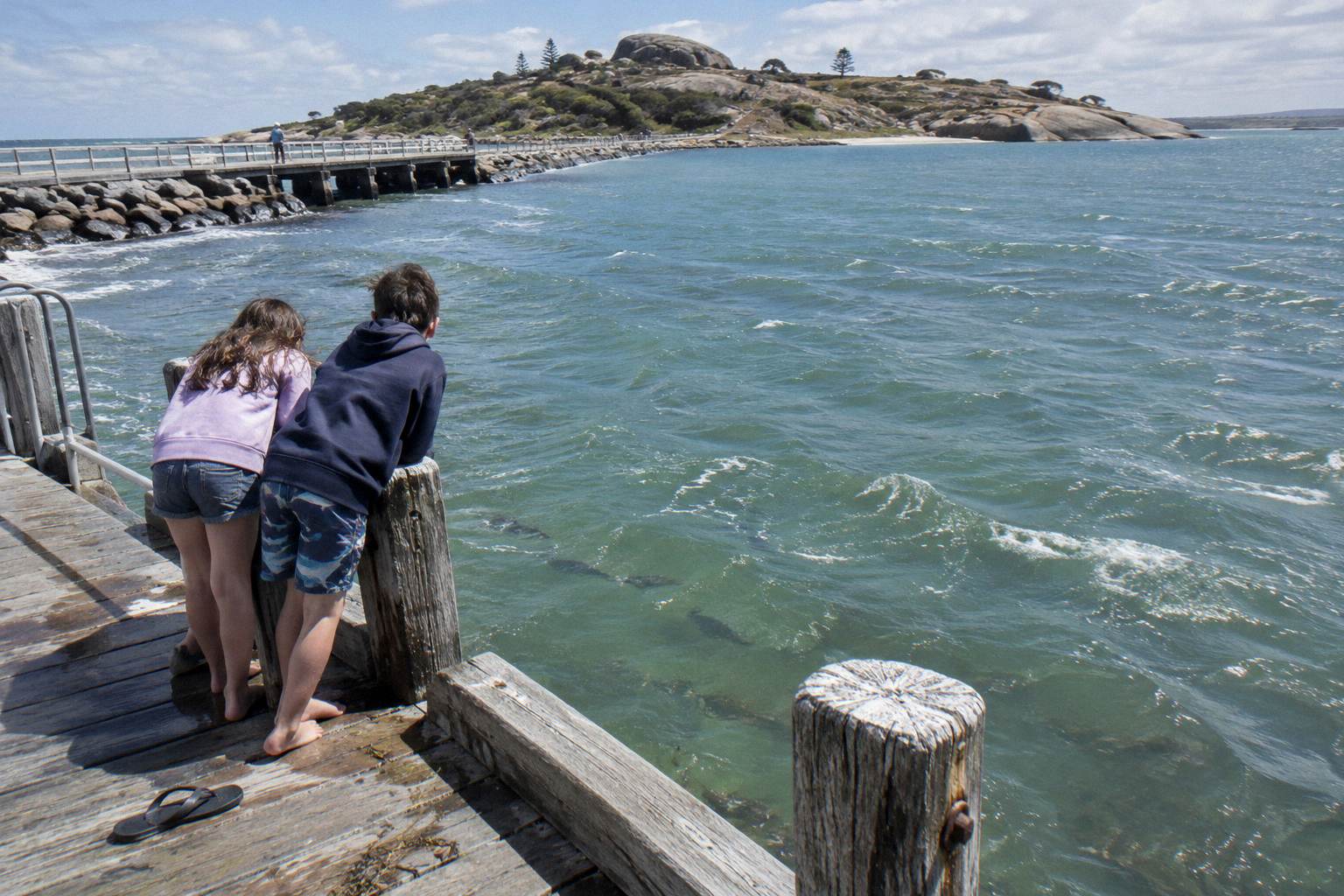
A few specifics from the same terms page shape the clothing call. The Southern Ocean Adventure runs about 90 minutes with a departure around 10:45 am, and an extra 2 pm sailing when demand is busy, while the Seal Island Cruise runs about 45 minutes from around 12:45 pm. The vessel boards from a landing about 300 metres out along the causeway, so you walk the causeway first, whatever the weather. Minimum age is 2, children aged 2 to 15 travel with an adult, and the trips are described as not suitable for pregnant passengers.
Weather cancellations are the operator's call, not yours. Big Duck cancels departures in rough or unsafe conditions, usually the day before by text and email, offering a full refund or a reschedule, and short-notice cancellations are possible. Rain alone does not necessarily cancel a trip, which is the single most important clothing fact on the page: you may well go out in drizzle, so the shell you pack should be waterproof, not just windproof. If you are weighing up whether the sea state might spoil the day, the piece on whether seasickness is likely on a Victor Harbor whale tour covers the other half of that worry.
For the Coorong trips the rules read differently. Spirit of the Coorong's Murray Mouth cruise is described on the booking page as operating rain or shine, subject to cancellation in strong winds, and the Coorong kayak run with Canoe the Coorong is cancelled if forecast wind reaches 15 knots or above, if lightning is possible, or on extreme or catastrophic fire-risk days. If your day includes the kayak option, remember the booking page also notes participants must be able to swim, which argues for clothes that are comfortable wet, quick-drying fabrics rather than heavy cotton.
How Should You Layer For A Southern Ocean Trip?
Build three layers: a fitted base layer that manages sweat, an insulating mid layer such as a fleece, and a windproof and waterproof outer shell, then add a warm hat, gloves in the cooler months, and long trousers you do not mind catching spray on. The order matters less than the ability to remove layers, because the walk out the causeway can be warm while the first ten minutes at speed can be cold, and a single heavy coat cannot adapt the way three light layers can.
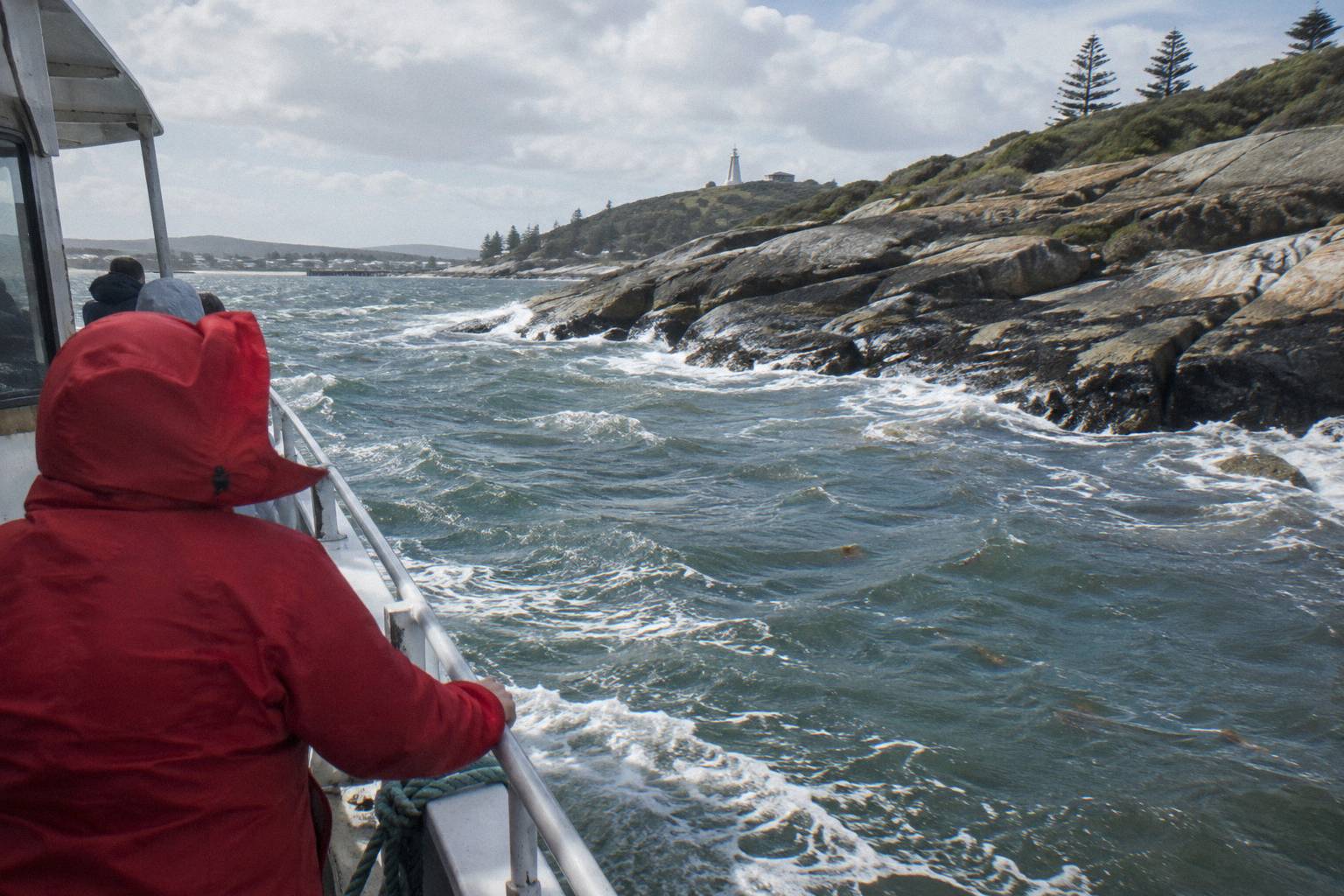
Footwear deserves its own sentence. The landing where the Big Duck vessels board sits about 300 metres along the causeway, the deck can be wet, and the surfaces you cross range from timber and concrete to boat gunwales. Enclosed shoes with a grippy sole are the practical answer; thongs and smooth-soled dress shoes are not. Socks matter more than people expect, and a spare pair in a plastic bag is the cheapest comfort upgrade available on any boat.
The 1.5-hour Southern Ocean Adventure is the trip where layering pays off most, because it spends real time in open water along the Waitpinga cliffs and past The Bluff, which rises 97 metres above sea level and marks where the protected bay gives way to the exposed coast. The trip carries a rating of 4.7 from 163 reviews and costs from AU$85 per person, with free cancellation up to 24 hours before, per the booking page. Book it, check the forecast the day before, and pack one layer more than the forecast implies.
If you are combining the boat with time on the island, the walking options change the kit slightly. The Kaiki Walk around Granite Island is a 2.9 km loop taking about an hour, and it is exposed to the same wind the boat gives you, so the same shell does double duty. The guide to walking tours and walks on Granite Island goes into the island side in more detail.
Does The Whale Season Change What You Wear?
Yes, because the whale season runs through the coldest and wettest months: whales are usually first seen in May and can be found until early October, with July and August the most reliable period, which is exactly when Victor Harbor averages a 15.5 to 16.4 degree maximum and 72.8 to 79.7 mm of rain. If you book a winter whale trip, the clothing brief is winter clothing, full stop: real insulation, a genuine waterproof layer, a beanie, gloves, and a change of clothes in the car for afterwards.
Big Duck describes its local whale season as extending through June to September, with July and August the best or most reliable months, and the same disclaimer applies to sightings as to weather: whales are seen where present and conditions permit, and sightings are not guaranteed. Sightings aside, the sea birds and the coastline do not depend on whales, and the operator's route past Seal Island and Shark Alley runs year round. The 45-Minute Seal Island Cruise, from AU$55 per person, rated 4.7 from 112 reviews, is a winter-friendly option precisely because it is short: less time exposed means the clothing bar is lower.
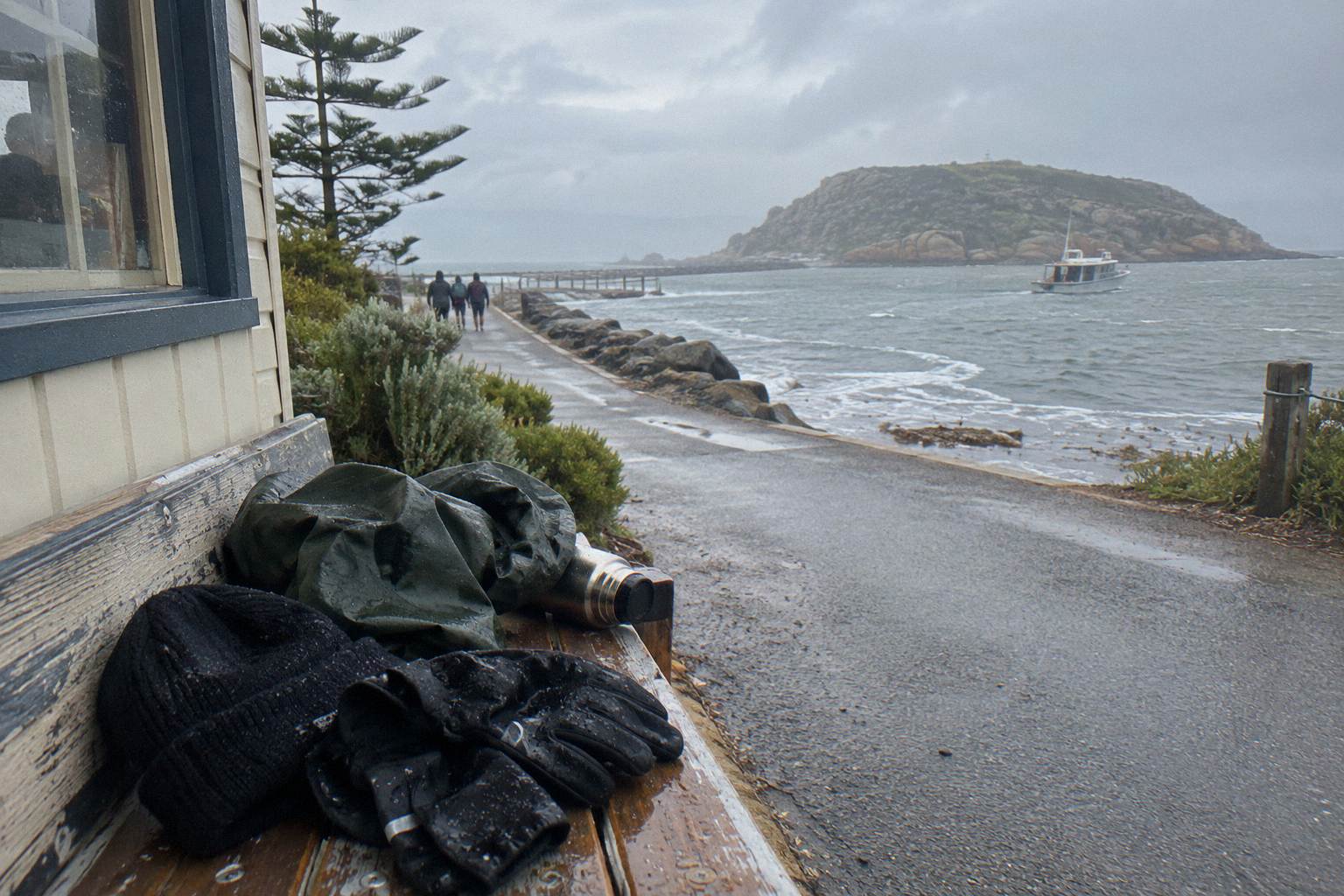
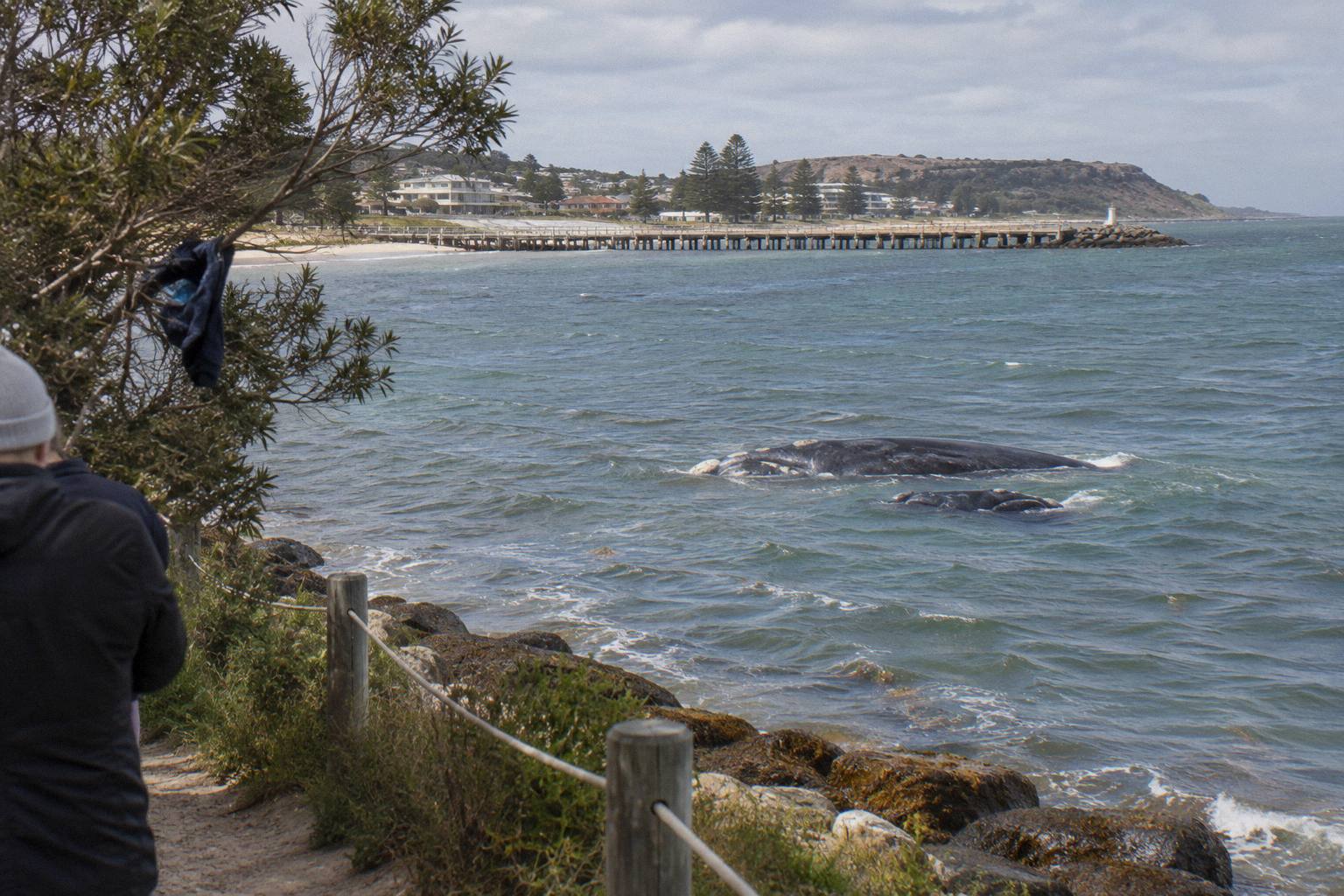
One regulatory point belongs here because it explains why boats keep their distance rather than closing in for a better look. Under South Australia's marine mammal regulations that took effect 1 September 2025, replacing the 2010 regulations, a vessel must stay no closer than 100 metres to a whale, and 300 metres where a calf is present or inside a protection area, which now includes the Encounter Bay Whale Nursery Protection Area. The marine parks guide to viewing marine mammals sets out the full distances. Dress for viewing at range, which mostly means dress for standing still in wind, and standing still in wind is the coldest thing you can do on a boat.
A winter packing list, in plain form:
- Waterproof, windproof jacket with a hood that fits over a beanie
- Fleece or woollen mid layer, plus a spare in a dry bag
- Long trousers, quick-drying fabric if you have it
- Enclosed water-resistant shoes and warm socks
- Beanie, gloves, scarf or buff
- Sunglasses and sunscreen, because winter sun off the water is still sun
- Dry clothes in the car for after the trip
What About Sun, Spray And Salt?
Sun protection matters even in winter, because reflected UV off the water and the deck hits from below as well as above, and spray means nothing you carry should fear salt water: sunglasses with a strap, a brimmed hat that ties or clips down, sunscreen applied before boarding, and a dry bag or zip-lock for your phone. The summer means top out at 25.2 degrees, which sounds gentle, but an hour and a half on open water with no shade changes the maths on exposure fast.
The spray question is worth being blunt about. On a rigid-hulled inflatable at speed, salt spray is part of the experience, and glasses, lenses and camera equipment all get a share of it. A strap keeps sunglasses on your face during the faster legs. If you wear glasses, a cloth in a pocket beats a cloth at the bottom of a bag. And the camera advice from the operator is not decoration: the route passes working coastline, from Shark Alley to the Waitpinga cliffs, and you will want the camera working when something appears off the bow.
For longer water days, the Coorong options stretch the same logic. The 3.5-Hour Coorong Park Cruise from Goolwa, from AU$125 per person and rated 4.8 from 179 reviews, and the Full-Day Coorong Cruise with Smoke Ceremony, 6 hours from AU$170 per person, both run on sheltered water where spray is minimal but duration is long. On those trips the risks flip: less wind chill, more sun, more boredom for anyone cold, so the spare layer goes in the bag even when the departure jetty feels warm.
Common Mistakes People Make With Boat Tour Clothing
The recurring mistakes are dressing for the forecast air temperature instead of the wind, wearing thongs or slippery shoes on a wet deck, skipping a warm layer in summer because Adelaide was hot, bringing no waterproof layer because rain alone rarely cancels a trip, and leaving the hat and gloves behind on winter whale runs. Each one traces back to the same misunderstanding: an open boat is not a beach, and the Southern Ocean does not warm up because the calendar says December.
The summer mistake deserves a special mention because it is the most common. Visitors drive down from Adelaide, where a 35 degree day is unremarkable, and board in shorts and a T-shirt. Victor Harbor's January mean maximum is 25.2 degrees, a full ten degrees milder, and the mean minimum that same month is 14.8. The 10:45 am Southern Ocean Adventure can start in that cool morning air and finish near midday warmth, which is exactly the scenario three layers handle and one T-shirt does not.
The winter mistake is its mirror image: assuming a waterproof jacket is a warm jacket. A shell stops wind and rain; it insulates almost nothing. The fleece under the shell is what keeps you warm, and the combination is what keeps you on deck looking at the coastline instead of in the cabin wishing the trip were shorter. Anyone uncertain about whether their party will cope with conditions can also read up on when whale tour departures actually get cancelled before committing.
One last practical note: the booking pages for these trips carry free cancellation up to 24 hours before start for a full refund, and a reserve-now-pay-later option. That means the clothing decision, like the booking itself, can be made calmly the day before, once you have seen the forecast, rather than guessed at a fortnight out.
Which Victor Harbor Trips Reward The Best Clothing Choices?
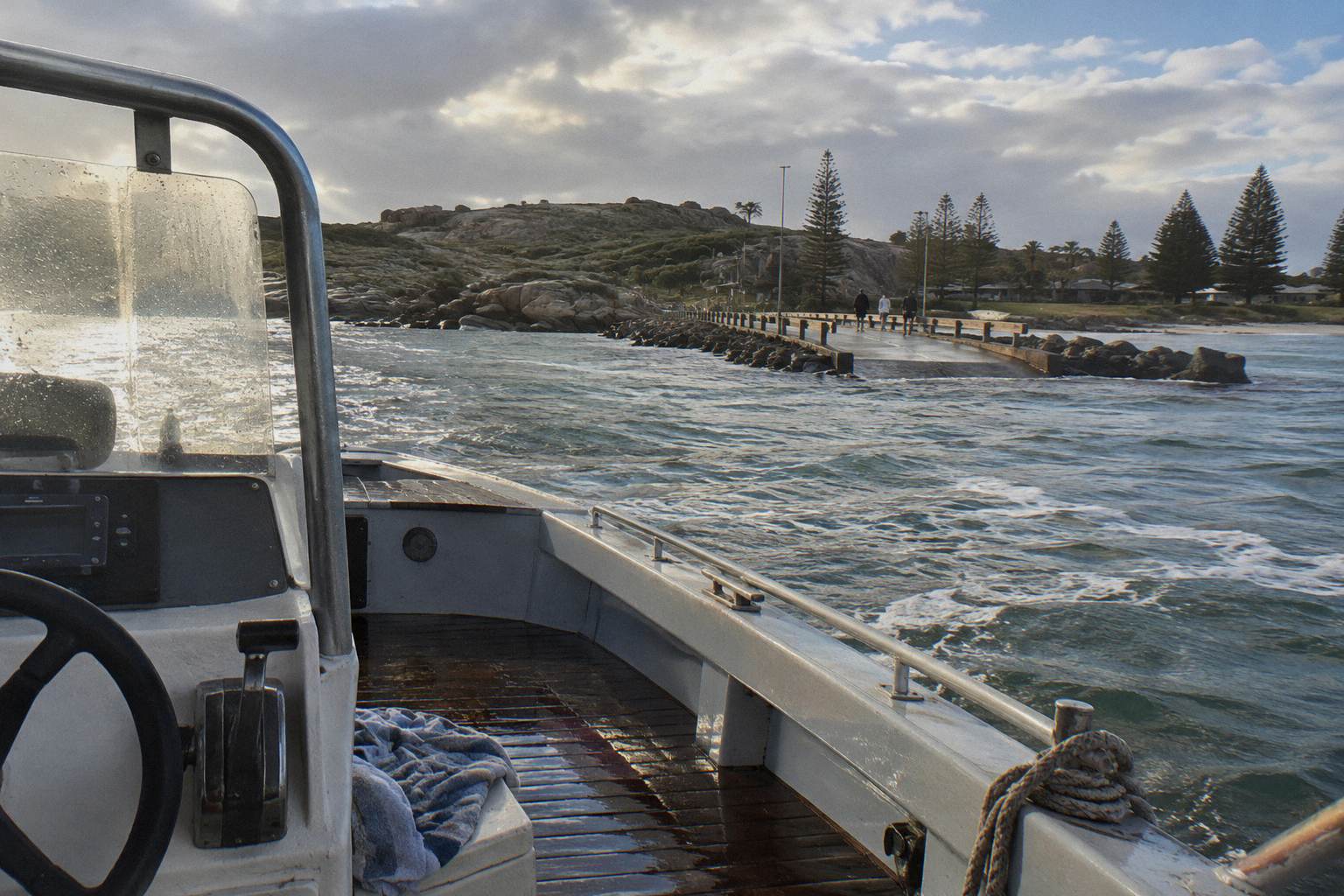
Think of it as a short ladder. The Seal Island Cruise, from AU$55 per person and rated 4.7 from 112 reviews, is a near-shore run where a jacket and closed shoes cover almost everything. The Southern Ocean Adventure, from AU$85 per person and rated 4.7 from 163 reviews, doubles the time and adds the exposed southern coastline, so the full three-layer system applies. The Coorong half-day, from AU$125 per person and rated 4.8 from 179 reviews, is sheltered but long, so pack for sun and for sitting still. Whichever rung you choose, Victor Harbor Tours keeps the booking details, prices and cancellation terms for all of them in one place.
Whales add a seasonal filter. If your trip falls in July or August, the most reliable whale months according to both the SA Whale Centre and the operator, you are by definition travelling in the coldest, wettest part of the local year, and the winter list above applies in full. Outside those months the same boats run the same routes, the wildlife shifts to seals, sea lions and seabirds as the operator describes them, and the clothing brief eases accordingly. For a broader look at how the seasons shape every trip, the whale watching season calendar breaks the year down month by month.
Common Questions About Boat Tour Clothing
What Should You Wear On A Victor Harbor Boat Tour?
Layers: a base layer, a warm mid layer and a windproof, waterproof shell, with long trousers and enclosed shoes with grip. Add a beanie and gloves from May to October, and sunglasses with a strap year round. The town's mean maximum never tops 25.2 degrees and wind on the water makes it feel colder.
Do Victor Harbor Boat Tours Get Cancelled For Rain?
Not usually. Big Duck states that rain alone does not necessarily cancel a departure, and Spirit of the Coorong's cruises operate rain or shine. Rough or unsafe sea conditions are what cancel trips, typically with notice the day before and a full refund or reschedule. Pack a waterproof layer and expect to sail through showers.
Should I Bring A Jacket In Summer?
Yes. January's mean maximum is 25.2 degrees but its mean minimum is 14.8, and a morning departure on an open boat at speed feels colder than either figure. A light packable windproof layer takes no space and covers the first twenty minutes, after which you can stow it.
What Shoes Are Best For The Boat?
Enclosed shoes with a grippy sole. You walk about 650 metres of causeway to reach the island, board from a landing about 300 metres along it, and stand on decks that are often wet. Thongs, smooth-soled dress shoes and new leather soles all struggle with that combination.
Is The Whale Season Colder Than Summer Boating?
Yes, plainly. Whales are usually seen from May to early October, with July and August the most reliable months, and those are Victor Harbor's coldest and wettest months: mean maxima of 15.5 to 16.4 degrees and mean rainfall of 72.8 to 83.4 mm. Treat a whale season trip as a winter expedition, insulation and waterproofs included.
Can You Swim Or Get Very Wet On These Trips?
The cruises are viewing trips, not swim trips, but spray on an open rigid-hulled inflatable at speed is normal, so dress in clothes that shrug off salt water and keep electronics in a dry bag or zip-lock. The Coorong kayak trip is the one where getting wet is expected, and quick-drying clothing is the right call there.