Can You See Whales From Shore Instead Of Taking A Boat Tour?
Southern right whales pass Encounter Bay from May to October, and yes, patient watchers do pick them up from the coast. Here is how shore watching compares with a boat trip from Victor Harbor.
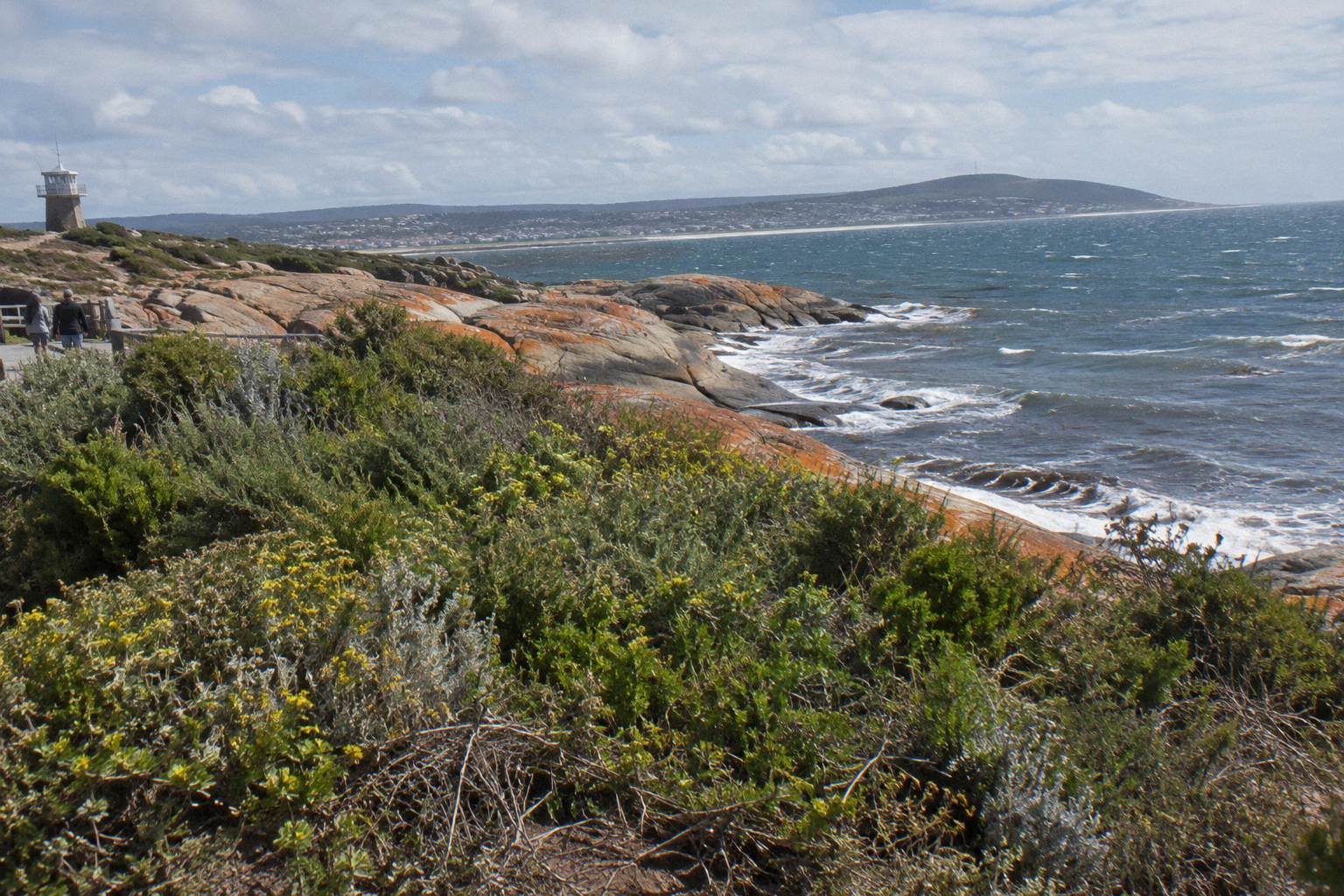
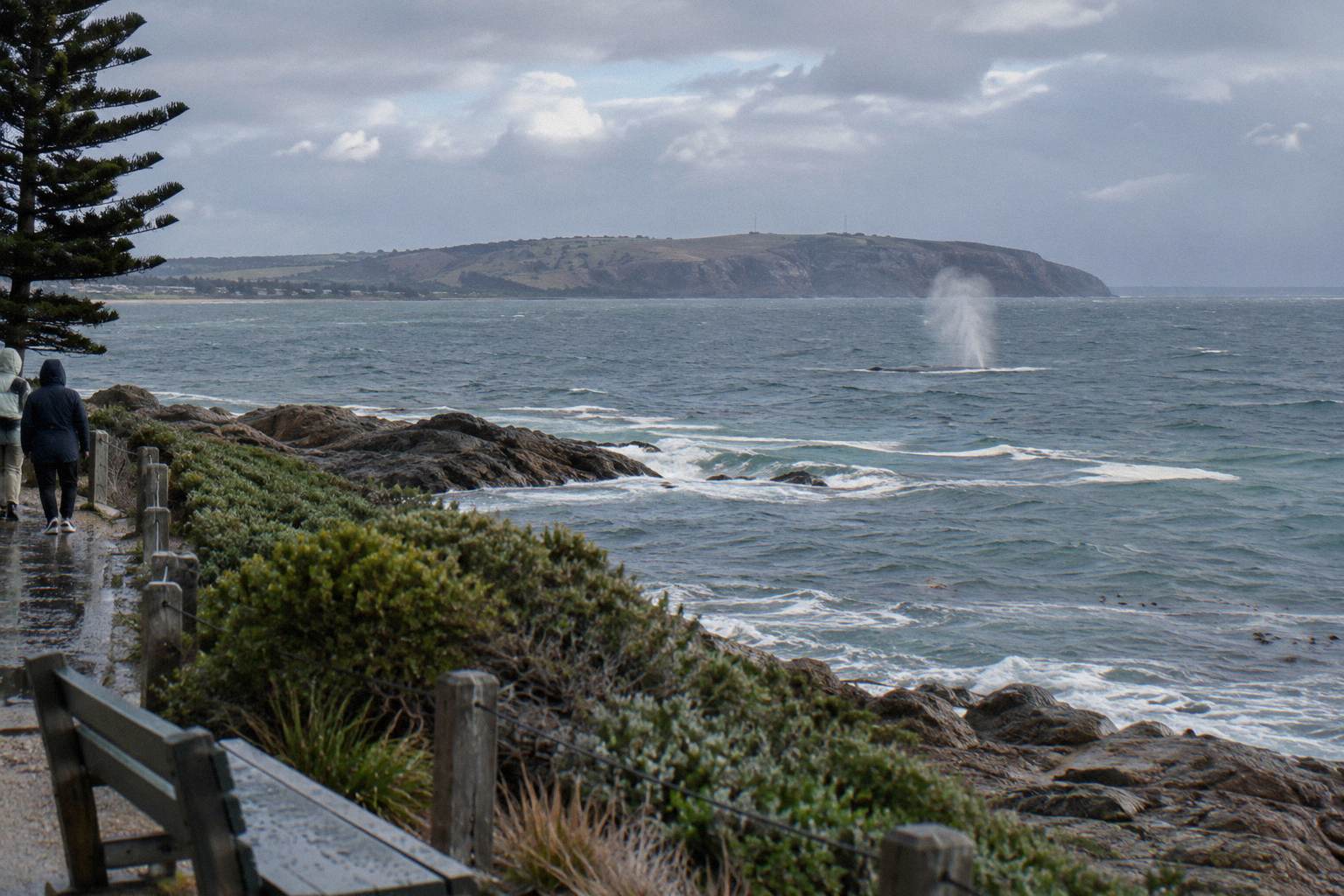
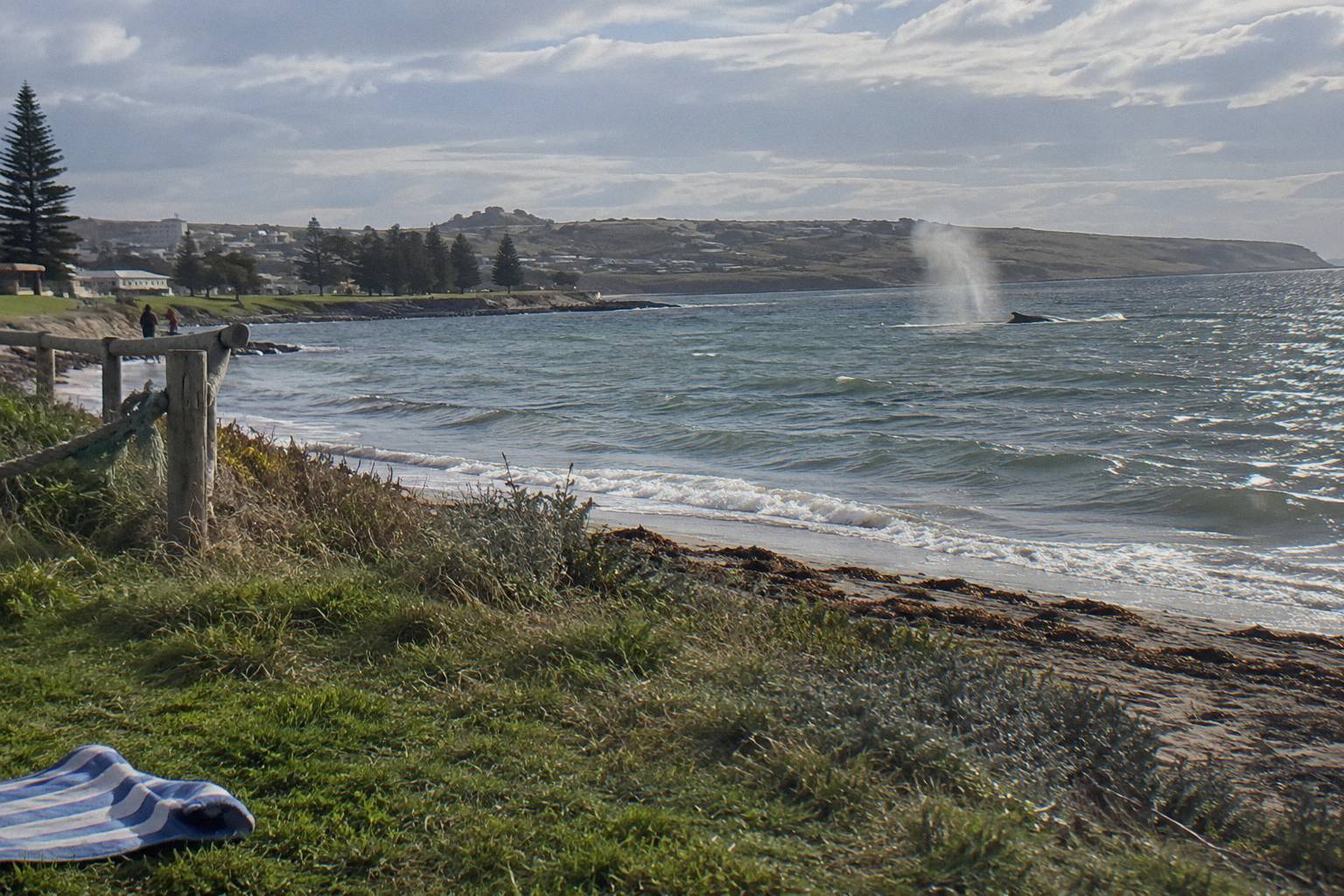
Yes, whales can be seen from the shore around Encounter Bay in season, and the SA Whale Centre tracks reported sightings along the coast for exactly that reason. The season runs May to October, with July and August the most reliable months. The catch is simple: the shore cannot move. A boat can travel to where a whale actually is, within the legal approach distances, while a shore watcher depends on the whale coming close.
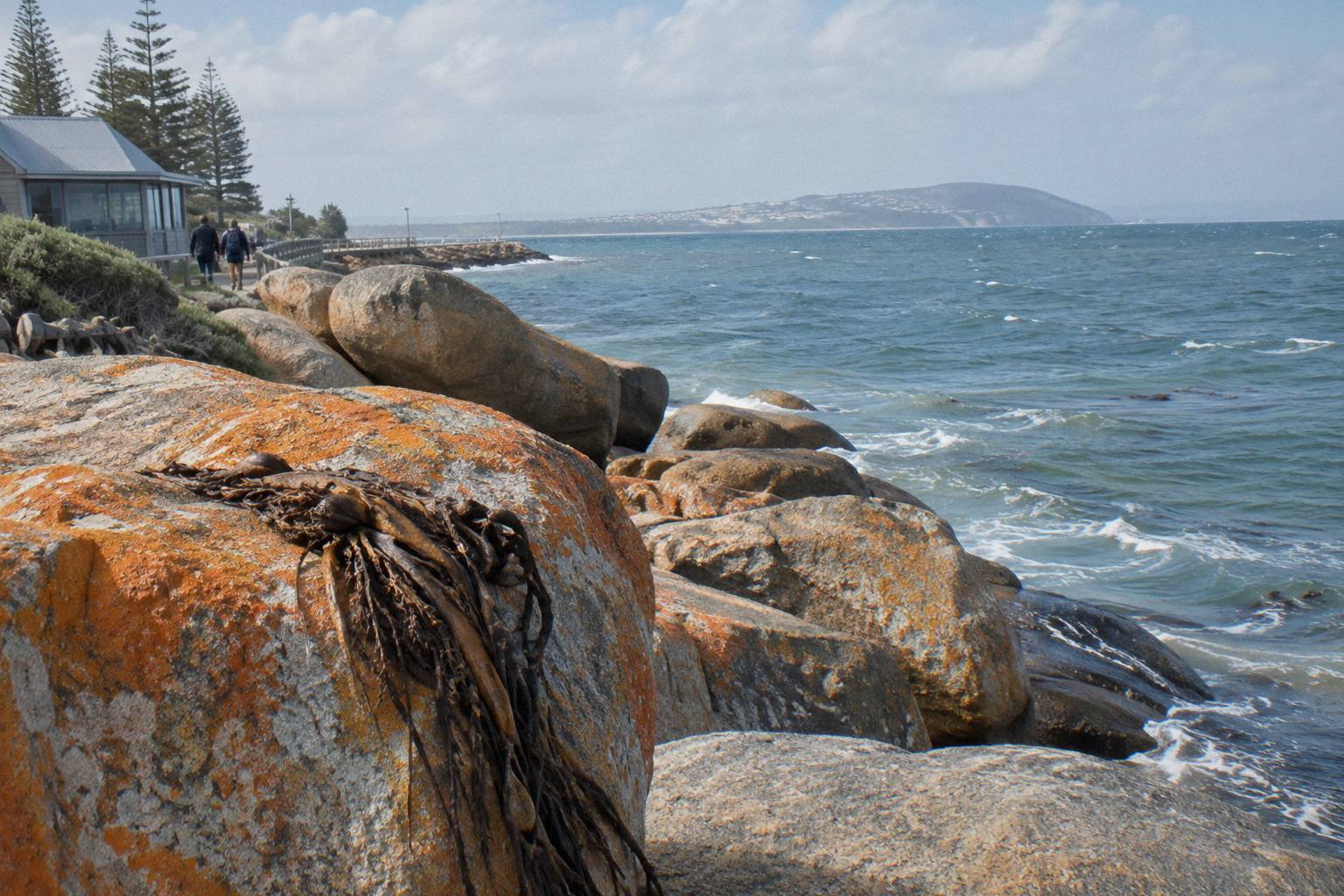
Southern right whales give birth and rest in these waters, and the state has recognised that by creating the Encounter Bay Whale Nursery Protection Area, one of three such areas in South Australia alongside Fowlers Bay and Sleaford Bay. That protection shapes what boats may do, and it also hints at why the whales are here at all. They are not passing through at speed. They linger, which is what gives shore watching a genuine chance of working.
The distinction matters for planning. A traveller with a free morning, decent binoculars and patience can absolutely spend that morning on the coast and may well see a blow, a back or a tail fluke. A traveller with one day in the region and a strong wish to see a whale well is taking a bigger risk by staying ashore, because the whale decides the distance, not the watcher. Both approaches are legitimate, and many visitors end up doing a bit of each across a couple of days.
How The Whale Season Works At Victor Harbor
The season runs from May to October, and the first whales are usually seen in May, with sightings continuing into early October. The SA Whale Centre says the most reliable time is July and August, and the boat operator Big Duck Boat Tours describes its local whale season as June to September, with July and August the best months. Those two windows overlap almost exactly, which is useful when planning.
The whales arriving here are southern right whales, a species that migrates to the southern Australian coast each winter to calve and mate. The name is a bitter piece of history: they were the "right" whales to hunt because they swim slowly and float when killed. Protected in Australian waters for decades, they now return each winter, and the Encounter Bay Whale Nursery Protection Area exists to give mothers and calves room. The area's traditional significance runs deep: the Ramindjeri people of the lower Fleurieu, part of the Ngarrindjeri Nation, know the area as Kondilindjerung, "the home of the whales".
Why does the season centre on winter? Because the whales follow their own calendar, not the tourist one. July and August sit in the middle of the local cold period, and the climate record for Victor Harbor shows mean maximums of 15.5 and 16.4 degrees Celsius for those months, with mean rainfall of 79.7 and 72.8 millimetres respectively, according to the Bureau of Meteorology averages for the Victor Harbor station. The shore watcher should plan for cold, wind and occasional rain, and dress for it.
Timing within the day matters less than people assume. There is no verified evidence that whales surface more often at dawn or dusk in Encounter Bay. What is true is that light angle and sea glare change how far a watcher can see, and that calm mornings often make blows easier to spot. Anyone weighing the time-of-day question in detail can read the companion piece on the best hours for whale watching at Victor Harbor.
How Close Can A Boat Legally Get To A Whale?
Under the marine mammal regulations that took effect on 1 September 2025, a standard vessel must stay at least 100 metres from a whale, and at least 300 metres if the whale is a calf or the boat is inside a protection area such as the Encounter Bay Whale Nursery Protection Area. Within 300 metres, boats must travel no faster than 4 knots and may remain no longer than 60 minutes.
These rules replaced the revoked 2010 regulations, and the marine park authority's guide to viewing marine mammals summarises them plainly. Jet skis and similar prescribed vessels must keep 300 metres from any marine mammal. Aircraft and drones must stay 300 metres away, while helicopters and gyrocopters must keep 500 metres. The full text lives at legislation.sa.gov.au. The point of the framework is to let whales, especially mothers with calves, behave normally.
Here is the part that answers the shore-versus-boat question directly. A boat holding at 100 metres, or 300 metres in the nursery area, is still dramatically closer than almost any shore watcher will ever be, because the boat starts from wherever the whale is and moves to the legal line. A shore watcher starts from a fixed point and hopes the whale's chosen path passes within visible range. Both are distance-limited, but only one of the distances is chosen that morning.
The regulations also mean a responsible boat crew cannot chase or crowd a whale, and any operator describing close encounters is describing what the rules allow, not what they guarantee. On the Southern Ocean Adventure Cruise, the operator's own terms say whales are seen where present and conditions permit, and that routes are subject to change with weather and wildlife. That phrasing is the industry's way of being straight with customers: the sea decides.
What The SA Whale Centre Adds To A Shore Watch
The SA Whale Centre at 2 Railway Terrace, Victor Harbor, in the old Railway Goods Shed, is open seven days from 10:00 am to 4:00 pm, and it runs a sightings report form that turns individual whale reports into a shared picture of where animals have been. For a shore watcher, that flow of recent reports is the single most useful free tool available, and it costs nothing to use.
A shore watcher's real problem is not eyesight, it is position. Whales move along the coast, and a morning spent at the wrong stretch of shore yields nothing. The sightings reports partly solve that, because a report from earlier in the day or the day before narrows the search. The centre's phone line, 08 8551 0750, and its sightings information at sawhalecentre.com.au are the practical starting points before anyone drives to a headland.
One habit worth building: check reports on the morning of the watch, not the week before. A sighting report five days old describes where a whale was, and southern right whales do move between bays. Reports from the same morning, or the evening before, are the ones that meaningfully raise a shore watcher's odds.
Shore Versus Boat: The Practical Trade-Offs
Shore watching is free, needs no booking and carries no seasickness risk, but it depends entirely on the whale coming within visible range of a fixed point. A boat costs money, takes a couple of hours and can be cancelled in rough conditions, yet it can travel to where whales actually are and watch them from the legal distance. Neither option guarantees a sighting; the choice is really about control versus cost.
The table below sets the two approaches side by side. All prices are Australian dollars, and each price belongs to the specific tour named.
| Factor | Watching From Shore | Taking A Boat |
|---|---|---|
| Cost | Free | Southern Ocean Adventure Cruise from AU$85 per person |
| Distance to a whale | Whatever the whale allows | 100 m minimum, 300 m for a calf or inside the nursery protection area |
| Flexibility to relocate | Walk or drive to another stretch of coast | Vessel travels to reported whale positions |
| Weather cancellation | Watchers simply leave; no booking at stake | Operator cancels in rough, unsafe conditions, typically the day before, with a full refund or reschedule |
| Seasickness risk | None | Possible; the same waters in a different season are covered in the seasickness discussion |
| Booking terms | No booking | Free cancellation up to 24 hours before, per the booking page |
| Best for | Locals, repeat visits, tight budgets, calm clear days | One-visit travellers, photographers, anyone who wants the whale framed by ocean |
Two honest qualifications belong next to that table. First, a boat's mobility is not unlimited: the 60-minute rule inside 300 metres and the 4-knot speed limit mean a vessel shadows a whale rather than orbiting it. Second, shore watching has produced some of the best whale experiences on this coast precisely because mothers with calves sometimes rest in shallow water near land. The nursery protection area exists because that behaviour is real. The difference is that the shore watcher needs luck to be in the right place, and the boat can go looking.
For travellers who want a fuller comparison of the operators and prices, the boat tour comparison guide covers each cruise side by side. And if the question is really about whether a whale trip fits into a single day from the city, the guide to whale watching from Adelaide works through the timing.
A second, smaller table helps with the other half of the decision: what to pack and which rules apply, whichever side of the water you stand on.
| Item Or Rule | Applies To Shore Watchers | Applies To Boat Passengers |
|---|---|---|
| Binoculars | Essential for spotting distant blows | Optional; the boat closes the distance |
| Approach distance rules | No limit on watching from land | 100 m to a whale, 300 m for a calf or in the protection area |
| Speed and time limits | Not applicable | 4 knots and no more than 60 minutes within 300 m |
| Drones | 300 m from any whale, 500 m for helicopters and gyrocopters | Same limits apply to any passenger-launched drone |
| Clothing | Warm layers and wind protection for standing still | Weather-appropriate clothing per the operator's advice |
What A Boat Trip Actually Adds Beyond Whales
A boat trip adds three things the shore cannot supply: position, angle and commentary. Position means reaching the whale's patch of ocean rather than waiting for it to reach the shore. Angle means seeing a whale's whole back, blow and fluke at water level rather than from far above. Commentary means a guide who reads behaviour, names the islands and explains the marine park, which turns 90 minutes into a structured wildlife outing rather than a gamble.
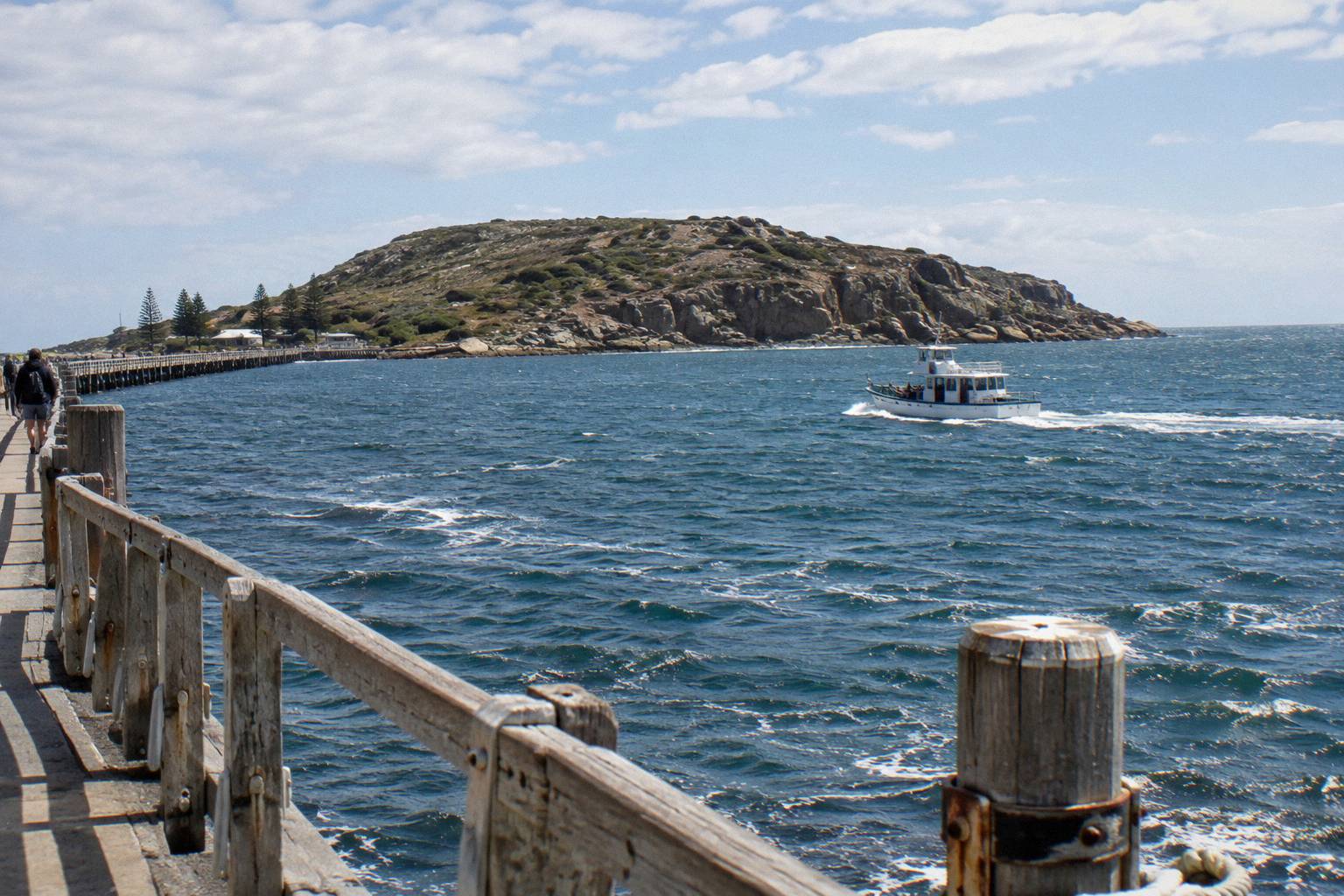
The Victor Harbor: Southern Ocean Adventure Cruise with Guide, run by Big Duck Boat Tours, is the region's flagship trip. It runs about 90 minutes, departs from the Granite Island Causeway, and carries a from-price of AU$85 per person. It rates 4.7 from 163 reviews, and it travels a named route through the Encounter Marine Park: Seal Island, Wright Island, The Bluff, West Island, Shark Alley, Kings Beach and the Waitpinga cliffs, aboard the 12.5-metre vessel Pungari. Whales are seen where present and conditions permit. The cruise typically departs about 10:45 am, with an extra 2 pm sailing when demand is high, and children aged 2 to 15 travel with an adult.
Not every sea trip needs to be about whales at all, and that is worth saying out loud. The Victor Harbor: Seal Island Cruise is a shorter alternative, 45 minutes from the same causeway, from AU$55 per person, rating 4.7 from 112 reviews. The operator describes fur seals, sea lions and seabirds at Seal Island, and for families with young children or short attention spans it is often the smarter booking, with free cancellation up to 24 hours before on the booking page. It sails about 12:45 pm, which pairs neatly with a morning shore watch on the same causeway.
Further afield, Spirit of the Coorong runs cruises from the Historic Goolwa Wharf, and the From Goolwa: Murray Mouth Cruise is the shortest of them at 90 minutes, from AU$62 per person, rating 4.7 from 116 reviews. It is not a whale trip, but it shows the other half of the region's water story: the Murray Mouth, the barrages and the meeting of river and sea, significant to the Ngarrindjeri people. That cruise operates rain or shine but can be cancelled in strong winds.
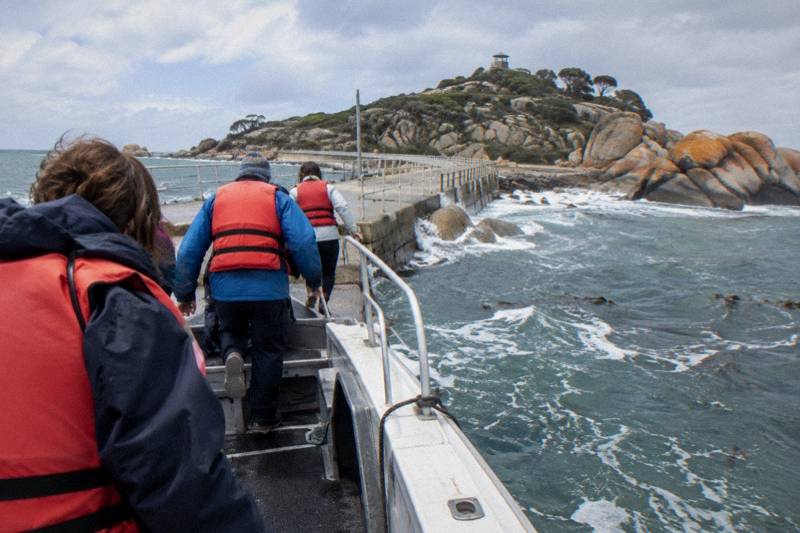
The pattern across these options is that the coast around Victor Harbor supports several kinds of water trips, and a traveller can combine a morning shore watch with an afternoon boat ride on the same day. The boat boards from a landing about 300 metres out along the causeway, so even reaching the vessel involves a walk across the same structure shore watchers use, an odd and rather pleasing overlap between the two approaches.
Mistakes Whale Watchers Make At Victor Harbor
The most common mistakes are scanning without binoculars, ignoring the sightings reports, expecting a guarantee from either shore or boat, dressing for the calendar rather than the climate, and writing off a trip because no whale appeared. July and August bring mean maximums around 16 degrees and mean rainfall near 80 millimetres a month, so cold hands and wet glass are normal. None of these errors is expensive to avoid.
Skipping binoculars is the biggest one. A whale blow at a kilometre or more is a faint vertical smudge, and eyes alone will miss it until the animal is close. Ignoring the SA Whale Centre's reports is the second, because it converts a blind search into an informed one. Expecting a guarantee is the third: no operator here promises a whale, and the honest ones say so in writing, as Big Duck's booking terms do.
The fourth mistake is subtler: treating a no-show morning as a wasted day. The same coastline that fails to produce a whale still produces fur seals, sea lions and seabirds, per the operator's description of Seal Island, plus dolphins are a possibility the operator never promises. A traveller who books a flexible boat trip with 24-hour free cancellation keeps the option open without penalty, which is exactly what the booking terms allow.
The fifth is dressing badly. Winter on an exposed headland or an open boat at 15 knots of apparent wind is genuinely cold even at 16 degrees air temperature. Weather-appropriate clothing is the operator's stated advice, and it applies doubly to shore watchers who may stand still for an hour. A sixth, smaller error is arriving at the causeway with no time to spare: the boat boards from a landing about 300 metres out, and late arrivals get no refund.
Common Questions About Watching Whales At Victor Harbor
Can You See Whales From Shore Instead Of Taking A Boat Tour?
Yes. Whales can be seen from the coast around Encounter Bay in season, which runs May to October with July and August the most reliable months. The shore watcher's limits are position and patience: the whale decides how close it comes, while a boat can travel to the whale and hold at the legal distance of 100 metres, or 300 metres for a calf or inside the nursery protection area.
When Is Whale Season At Victor Harbor?
The SA Whale Centre describes the season as May to October, with the first whales usually seen in May and sightings continuing into early October. Big Duck Boat Tours runs its local whale season from June to September. Both name July and August as the best or most reliable months.
How Close Can A Boat Get To A Whale?
Under the regulations in force since 1 September 2025, a standard vessel must keep at least 100 metres from a whale and 300 metres from a calf or inside a protection area such as the Encounter Bay Whale Nursery Protection Area. Within 300 metres the boat must travel no faster than 4 knots and stay no more than 60 minutes.
Do Boat Whale Tours Get Cancelled?
They can be. Big Duck Boat Tours cancels departures in rough, unsafe conditions, typically the day before by text and email, offering a full refund or reschedule. Rain alone does not necessarily cancel a trip. Bookings also carry free cancellation up to 24 hours before for a full refund, per the booking page.
Where Can I Check Recent Whale Sightings?
The SA Whale Centre at 2 Railway Terrace, Victor Harbor, open seven days from 10:00 am to 4:00 pm, runs a sightings report form and a phone line on 08 8551 0750. Recent reports are the most useful free tool a shore watcher has, because they narrow the stretch of coast worth watching.
Is A Boat Tour Worth It If I Might See Whales From Shore?
For a traveller with one day in the region, usually yes. A boat can move to where whales are reported, watch from the legal distance at water level, and add a guided commentary through the Encounter Marine Park. The Victor Harbor: Southern Ocean Adventure Cruise runs about 90 minutes from the Granite Island Causeway, from AU$85 per person, rating 4.7 from 163 reviews.
Shore watching at Victor Harbor is a real option, not a consolation prize, and in a strong July it can deliver a breaching whale from dry land. What it cannot deliver is reliability, because a fixed point on the coast negotiates with the ocean on the ocean's terms. A boat negotiates too, held back by the 100-metre and 300-metre rules, but it starts the negotiation next to the whale. That, in the end, is the whole answer, and the operator's own words frame it: whales are seen where present and conditions permit. Travellers who want both can find more to weigh up through Victor Harbor Tours, including the full range of wildlife boat trips and walking tours on offer around Encounter Bay.