Are There Whales At Victor Harbor Today?
How to find out whether whales are in Encounter Bay today: sightings channels, season timing, boat tour options and what happens when a trip is cancelled.
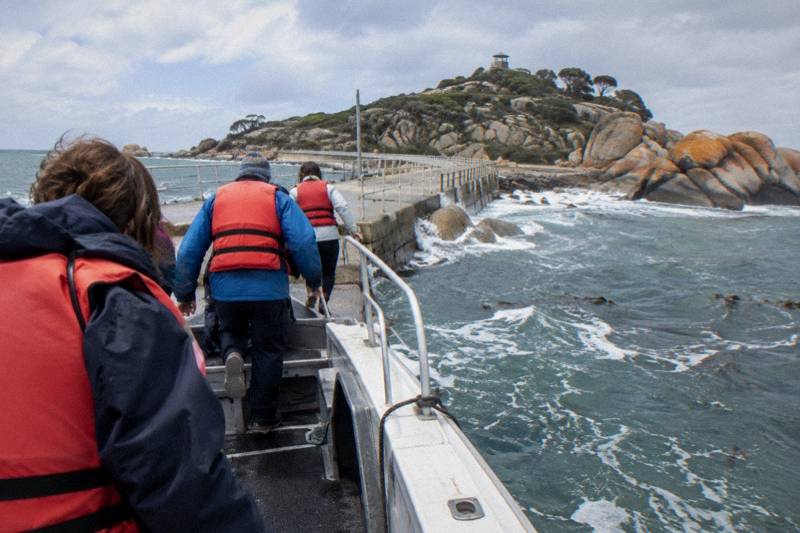
The honest answer to that question changes by the day, and nobody can promise it in advance. What can be said with confidence is this: southern right whales migrate past Encounter Bay between May and October, July and August are the most reliable months according to the SA Whale Centre, and there are concrete ways to check what has been reported in the bay before you commit to a boat trip. The Victor Harbor: Southern Ocean Adventure Cruise with Guide, from AU$85 per person and rated 4.7 from 163 reviews, takes in Seal Island, The Bluff and the Waitpinga cliffs, and whales are seen where present and conditions permit. All amounts in this article are Australian dollars. For the wider picture, start with the Victor Harbor whale watching guide.
In short: Nobody can state a standing whale sighting, and any page that does is guessing. The season runs May to October, with July and August the most reliable months. Check the SA Whale Centre's sightings channel and form, phone the centre on 08 8551 0750, then check the operator's departure status, because rough conditions cancel boats even when whales are present. If whales are in the bay, a boat tour gives you the closer, regulated view; if they are not, the Seal Island and Coorong cruises are strong same-day alternatives.
No page can tell you that with certainty in advance, because a sighting is a fact about a single day, not a standing condition. Southern right whales pass Encounter Bay on migration between May and October, and the SA Whale Centre describes July and August as the most reliable months. Whether one is in the bay on the morning you ask depends on the whales, so the practical move is checking the sightings channels below before booking anything.
The southern right whale is the species that brings people to this coast. The whales migrate from sub-Antarctic waters to southern Australian bays to calve and rest, and Encounter Bay is one of the places they use. The bay's significance is formally recognised: it is now part of the Encounter Bay Whale Nursery Protection Area, one of three such areas in South Australia alongside Fowlers Bay and Sleaford Bay. The Ramindjeri people, of the lower Fleurieu and part of the Ngarrindjeri Nation, know the area as Kondilindjerung, "the home of the whales", a name that long predates any tour operator.
A useful mental model is weather forecasting. Asking whether there are whales at Victor Harbor today is like asking whether it is raining there today: the underlying pattern is seasonal and predictable, but the answer for any single day has to come from an observation made that day. Pages that imply a permanent answer, or that promise sightings as part of a booking, are not describing how whale watching works. The operator of the Southern Ocean Adventure states plainly that whales are seen where present and conditions permit, and that sightings are not guaranteed. That phrasing is the honest one.
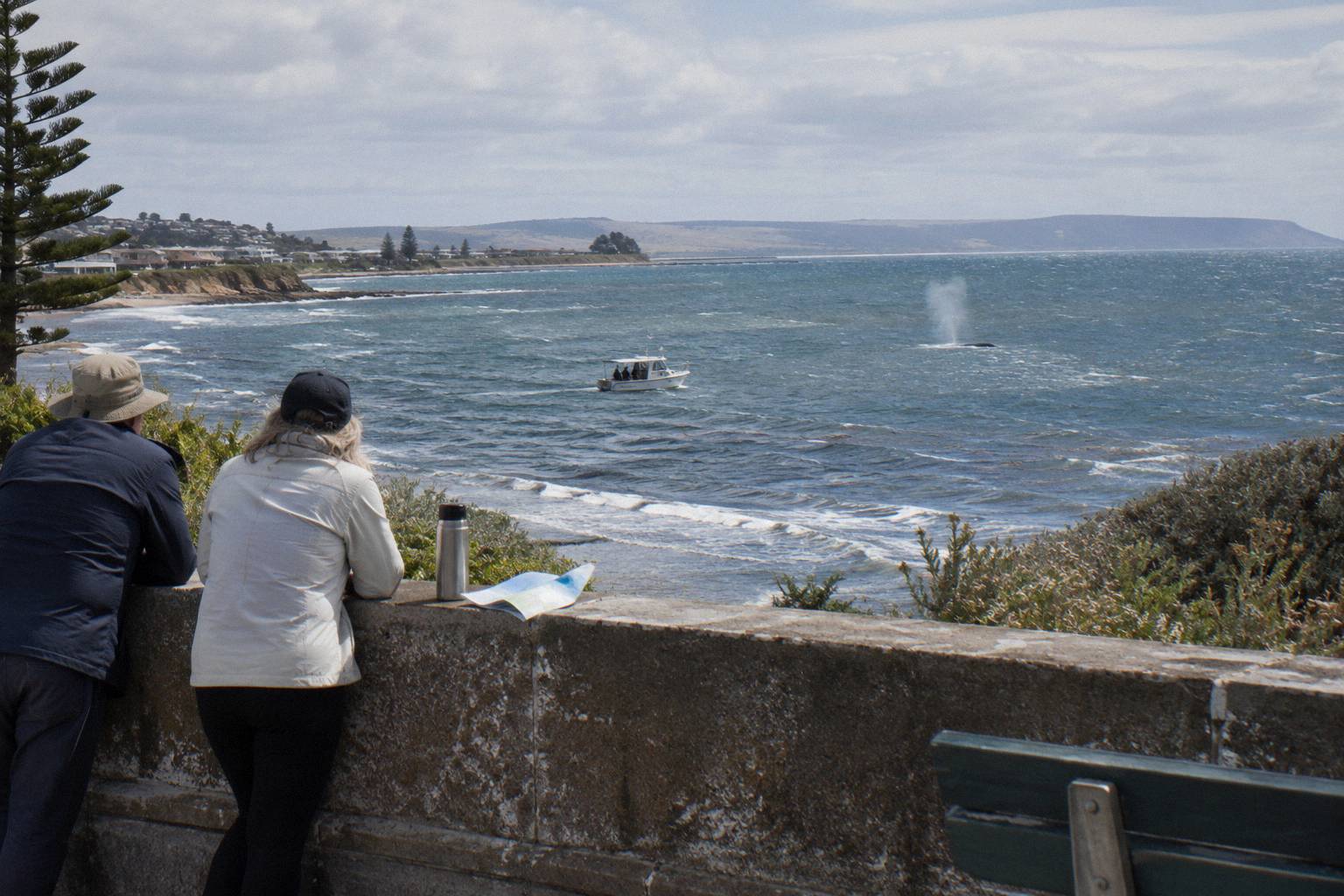
Timing within the season also matters more than most visitors expect. The SA Whale Centre says the first whales are usually seen in May and can be found until early October, while the operator's own season description runs June to September with July and August called the best or most reliable months. Plan around those windows, then use the same-day checks in the next section to find out what is actually being reported in the bay. For a month-by-month breakdown, see the whale watching season calendar guide.
How Do You Check For Whales At Victor Harbor Today?
Two channels answer the question properly: the SA Whale Centre, which collects and publishes sighting reports, and the boat operators, who know each morning whether conditions allow a departure. The centre sits at 2 Railway Terrace, Victor Harbor, in the old Railway Goods Shed, open 7 days from 10:00 am to 4:00 pm, with a sightings report form on its website and a phone line on 08 8551 0750. Checking both takes minutes.
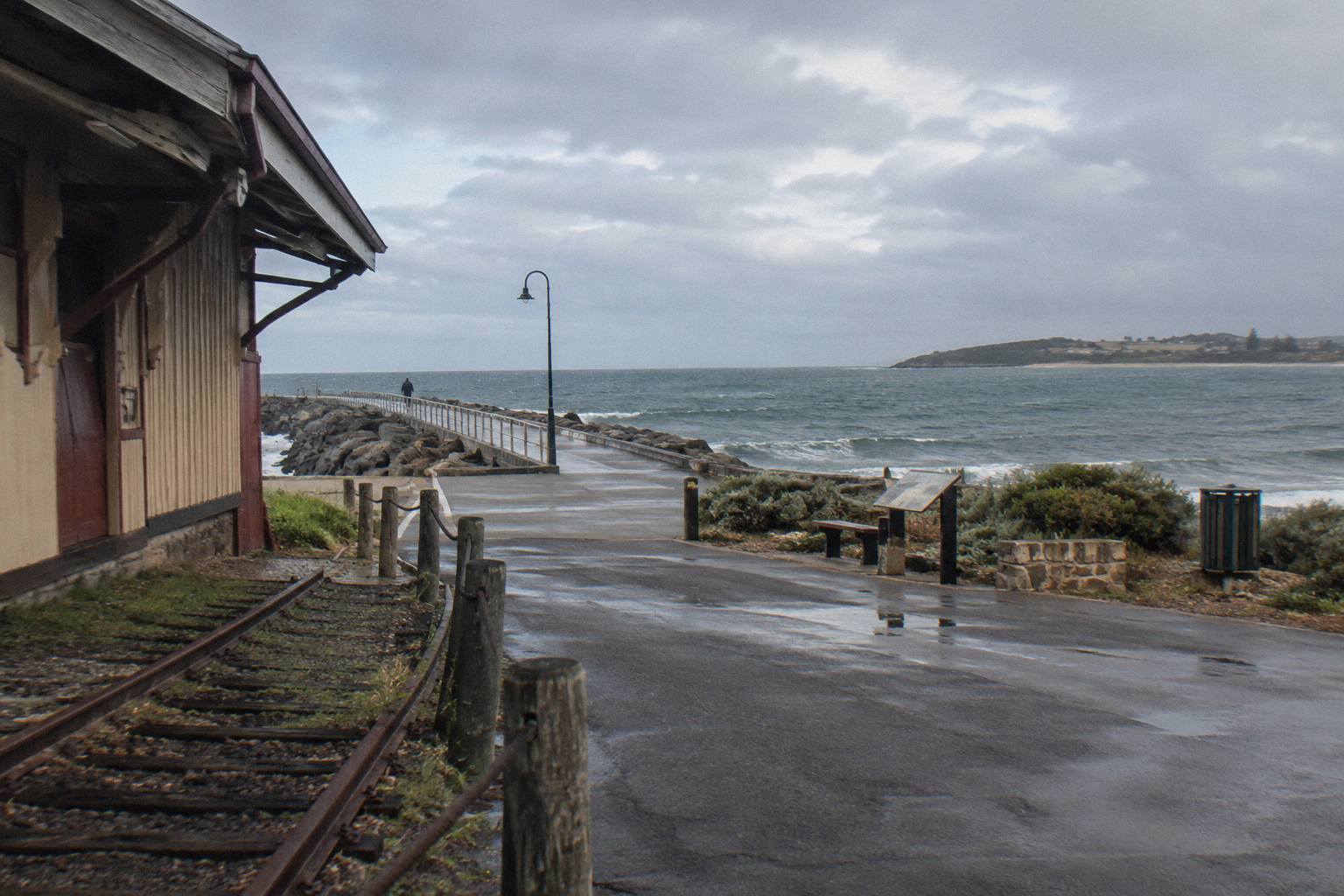
The SA Whale Centre is the closest thing the region has to a sightings desk. It publishes reported sightings and takes reports from the public through the form on its own website, and it can be phoned directly. Reports of a whale off Victor Harbor, The Bluff or Port Elliot usually reach the centre quickly, because the whale watching community here is small and active. If a whale has been resting in the bay for several days, the centre's records are the most likely place that pattern shows up.
Operators are the second channel, and they answer a different question: not just whether whales are around, but whether a boat can reach them. Big Duck Boat Tours, which runs the Southern Ocean Adventure from the Granite Island Causeway, cancels departures in rough or unsafe conditions, typically notifying passengers the day before by text and email with a full refund or reschedule, and short-notice cancellations are possible. Rain alone does not necessarily cancel a trip. So a whale can be reported in the bay while the boats stay tied up, and boats can run on days when no whale has been reported at all. Ask both questions.
| Check | What it tells you | How to access it |
|---|---|---|
| SA Whale Centre sightings reports | Whales reported in Encounter Bay and nearby coast | Form and updates at sawhalecentre.com.au |
| SA Whale Centre phone line | Same-day local knowledge from staff | 08 8551 0750, 10:00 am to 4:00 pm, 7 days |
| SA Whale Centre front desk | In-person sighting log and advice | 2 Railway Terrace, Victor Harbor, Railway Goods Shed |
| Big Duck departure status | Whether the boat is running and on what schedule | Operator contact after booking; changes sent by text and email |
| Shore viewpoints | A free, immediate look at the bay | The Bluff and coastal cliffs; binoculars help |
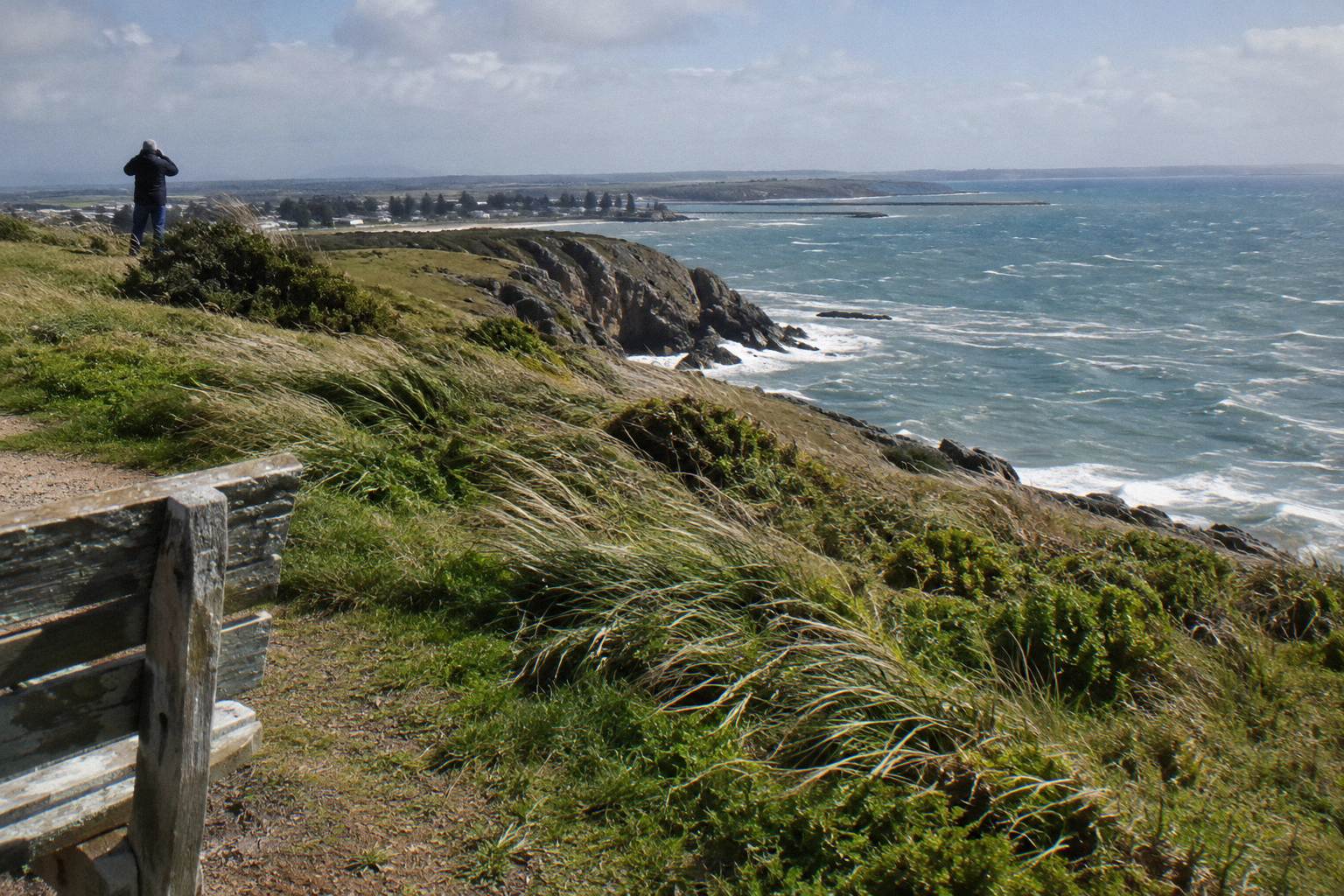
Shore viewing deserves a place in the routine because it costs nothing and answers the question with your own eyes. The Bluff at Rosetta Head stands 97 metres above sea level and gives a wide view over Encounter Bay; whales resting with a calf are sometimes visible from the cliffs for hours. There is a fuller treatment of land-based watching in whether you can see whales from shore at Victor Harbor, and the live sightings angle is covered in the whale sightings today guide.
Is the Victor Harbor: Southern Ocean Adventure Cruise worth booking on a day whales are reported?
Yes, when the sighting is confirmed and the sea allows it, because the boat covers ground a shore viewer cannot. The cruise runs 1.5 hours from the Granite Island Causeway from AU$85 per person, rated 4.7 from 163 reviews, and its route takes in Seal Island, Wright Island, The Bluff, West Island, Shark Alley, Kings Beach and the Waitpinga cliffs inside the Encounter Marine Park. Free cancellation applies up to 24 hours before.
Read the tour page for the 1.5-Hour Ocean Adventure with guide for the full route and departure details, or check availability once the sightings and the forecast line up. The vessel, Pungari, is a 12.5 metre NAIAD rigid-hulled inflatable, which is a genuine consideration for anyone sensitive to motion; the seasickness question is handled separately in whether you will get seasick on a Victor Harbor whale tour.
When Is The Whale Season At Victor Harbor?
The season runs May to October, and the SA Whale Centre says July and August are the most reliable months. The centre's own wording is that the first whales are usually seen in May and can be found until early October; the operator frames its local season as June to September with July and August the best months. Outside that window, a whale at Victor Harbor is possible but not the pattern to plan around.
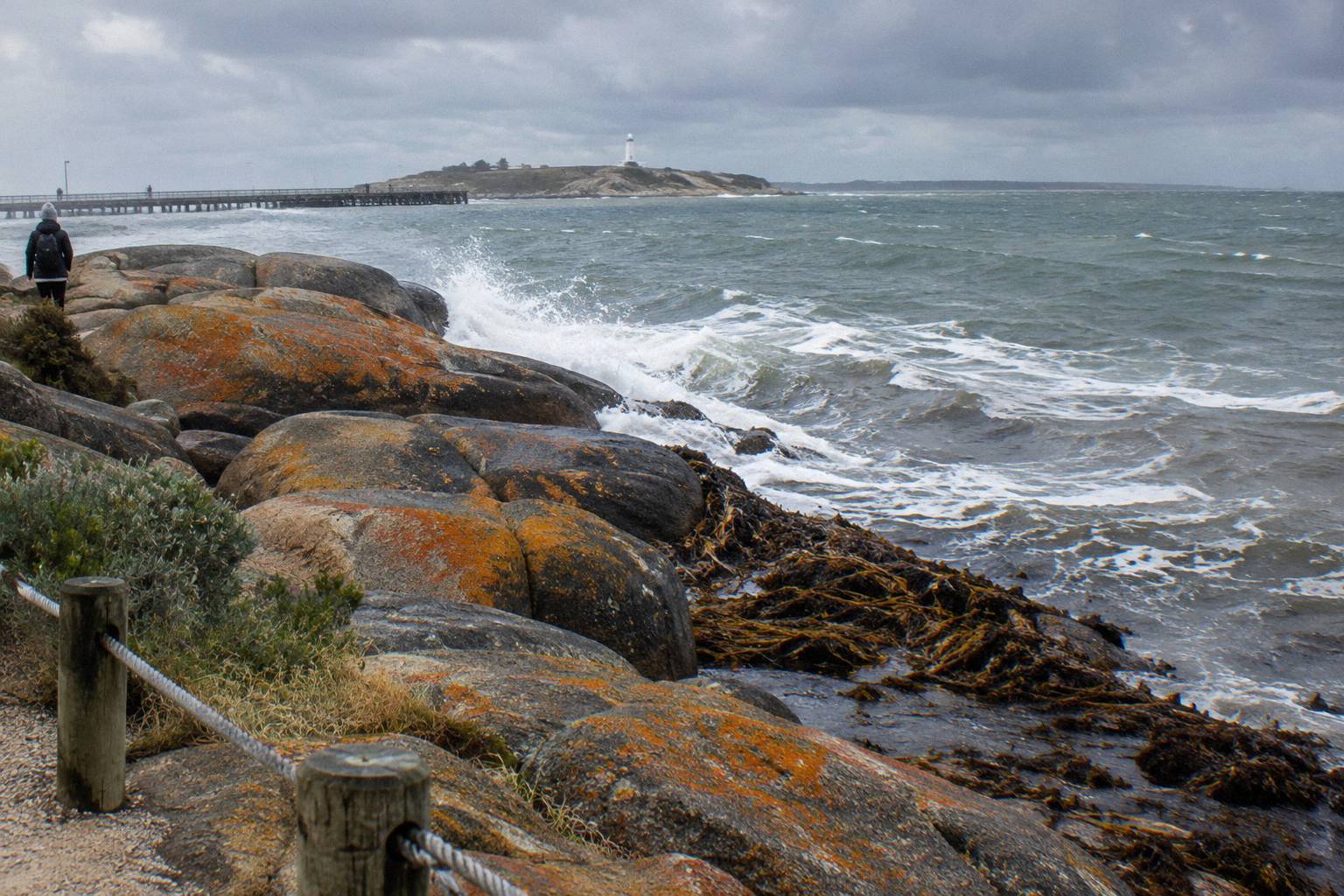
The reason for the season is calving. Southern right whales spend the summer feeding in the cold, food-rich waters of the sub-Antarctic, then travel north to the comparatively sheltered bays of southern Australia to give birth and raise newborn calves in winter. Encounter Bay, with its whale nursery protection area status, is one of those bays. That is also why the rules treat a whale with a calf differently from a lone adult, which the next section covers.
The overlap of season and weather is the part that catches visitors out. The most reliable whale months are also the wettest and coolest: Bureau of Meteorology averages for Victor Harbor show July and August mean maximums of 15.5 and 16.4 degrees Celsius, mean minimums of 6.6 and 6.8, and mean rainfall of 79.7 and 72.8 millimetres, against a January mean maximum of 25.2. Anyone booking a July boat trip should plan for winter conditions on the water, which is the subject of what to wear on a Victor Harbor boat tour.
| Month | Mean max (C) | Mean rainfall (mm) | Whale likelihood |
|---|---|---|---|
| May | 18.6 | 60.7 | First whales usually reported |
| June | 16.2 | 83.4 | Season building |
| July | 15.5 | 79.7 | Most reliable |
| August | 16.4 | 72.8 | Most reliable |
| September | 18.5 | 55.4 | Late season |
| October | 20.6 | 40.3 | Usually tailing off to early month |
Climate averages come from the Bureau of Meteorology's Victor Harbor (Encounter Bay) station records. The likelihood column reflects the season statements above, not a guarantee about any week. For choosing between months in more detail, the best month for whale watching at Victor Harbor does that comparison directly.
What Whales Can You See At Victor Harbor?
The southern right whale is the species the season is built around: a slow-moving baleen whale that comes close to shore to calve, which is why Encounter Bay works as a viewing point. Other species pass the coast, including dolphins, but no operator promises a species list for any single day. Treat any whale in the bay in winter as most likely a southern right, and check the sighting report for what was actually observed.
The southern right whale takes its name from whaling history: it was the "right" whale to hunt because it swims slowly, floats after death and yielded abundant oil, which drove the species close to extinction under commercial whaling. Protection since then has allowed a slow recovery, and the winter appearance of southern rights in South Australian bays is one of the visible results. An adult southern right is large, dark and distinctive, often showing callosities, the pale patches of rough skin on the head, and individuals can be identified by them.
What a whale with a calf does in the bay also explains a lot of the viewing behaviour visitors notice. Mothers rest in shallow water close to shore, sometimes for days at a time, which is exactly the pattern that makes shore viewing productive and makes a multi-day sighting report worth chasing. The Encounter Bay Whale Nursery Protection Area exists to give those pairs space, and the regulations that follow from it shape what a boat tour can do when a whale is present.
It is worth being clear about what a tour actually offers on the wildlife front. On the Southern Ocean Adventure, whales are one part of a route that also passes Seal Island, where the operator describes fur seals, sea lions and seabirds, and the cliffs and beaches of the marine park. A day with no whale still returns plenty of wildlife; a day with a whale in the bay may mean the boat holds at the legal distance and watches. That is how the rules intend it.
What Are The Whale Watching Rules On The Water?
Boats must stay at least 100 metres from a whale, and 300 metres if the whale has a calf or is inside a protection area such as the Encounter Bay Whale Nursery Protection Area. Vessels must travel no faster than 4 knots within 300 metres and may stay no more than 60 minutes. These distances come from South Australian marine mammal regulations that took effect on 1 September 2025, replacing the 2010 rules.
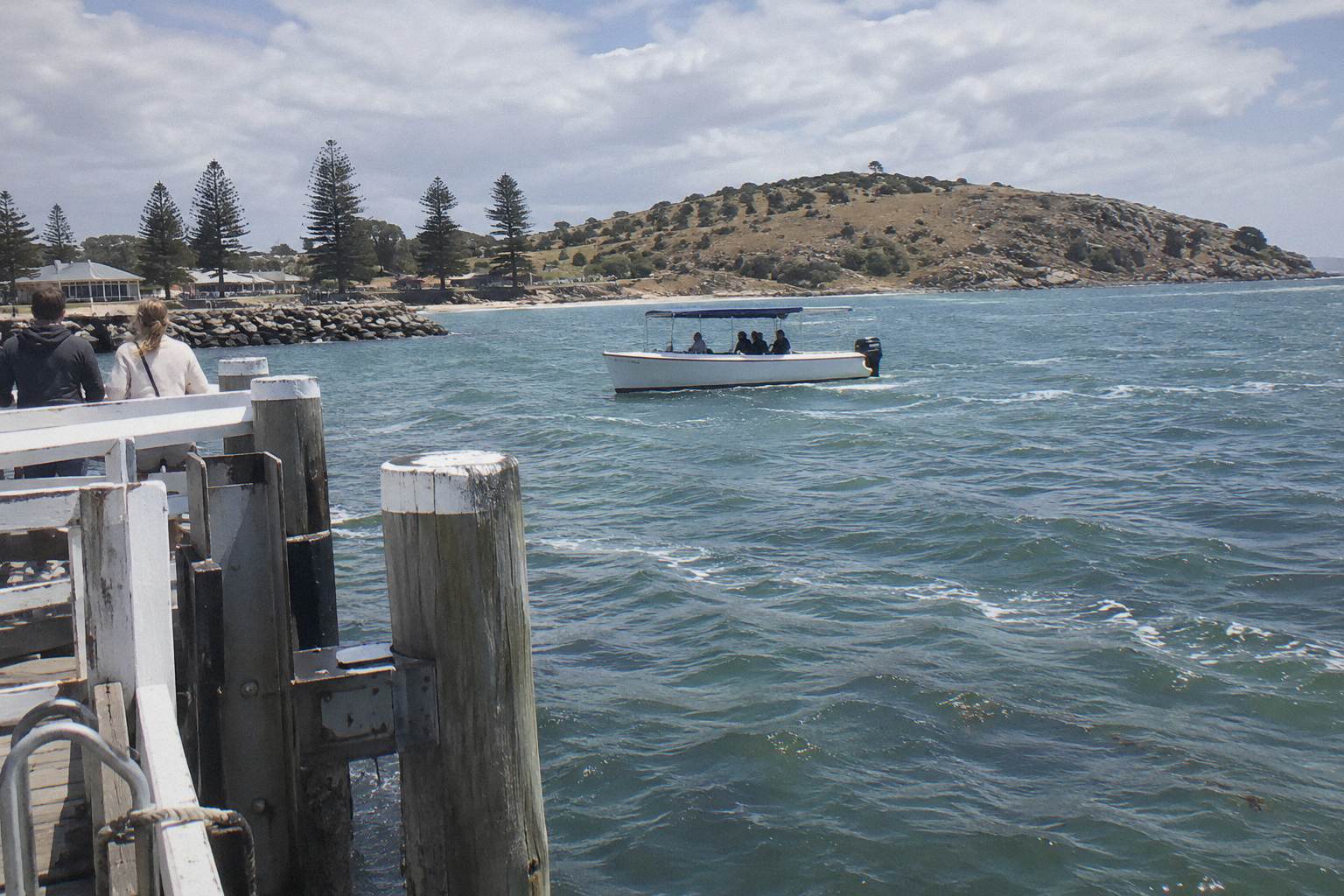
The detail matters because it explains what a licensed tour can and cannot do. A boat cannot chase a whale, cut off its path or press in close for photographs. Within 300 metres the speed limit is 4 knots, and the time limit is 60 minutes. Jet skis and similar prescribed vessels must keep 300 metres from any marine mammal. Aircraft and drones must stay 300 metres away, and helicopters and gyrocopters 500 metres. The full text lives at South Australian legislation online, and the marine parks authority summarises the viewing rules for the public.
For a passenger, the practical effect is smaller than the numbers suggest. A 100 metre approach to an animal the size of a bus is close; a nursing pair viewed from 300 metres across calm water is still an unmistakable sight, especially from the elevated deck of a vessel like Pungari. The rules also mean the skipper, not the passengers, decides how the encounter runs, which is one of the quiet arguments for taking a licensed boat rather than a private craft: the operator carries the responsibility for compliance.
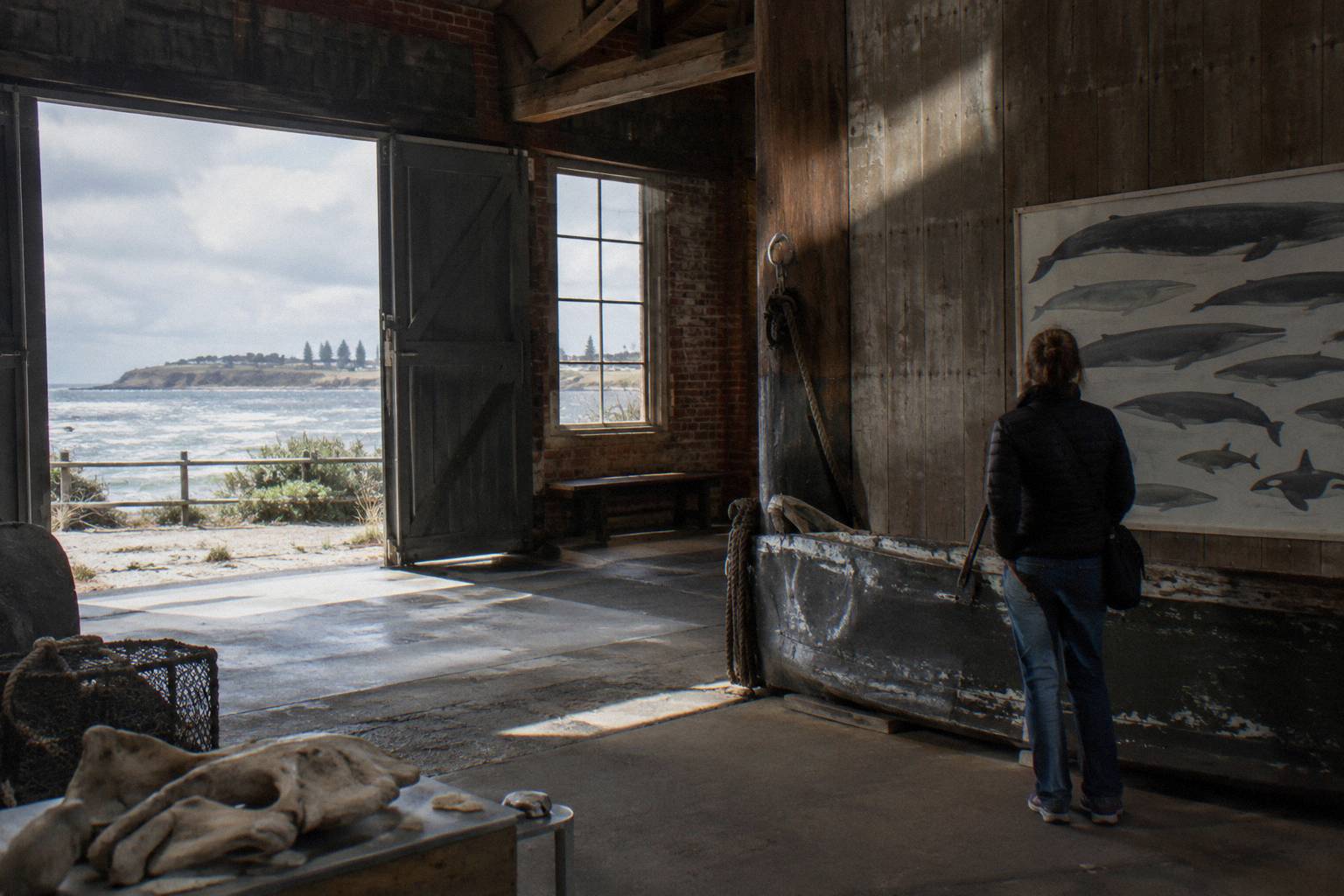
The renaming of the old Encounter Bay Restricted Area to the Encounter Bay Whale Nursery Protection Area under the 2025 regulations is more than wording. It puts the bay alongside Fowlers Bay and Sleaford Bay in a formal network of calf-protection zones, and it is the mechanism behind the 300 metre rule when a calf is present. If a sighting report mentions a mother and calf, expect the boat experience to be a respectful holding distance rather than a close pass.
Can A Whale Tour Be Cancelled On The Day?
Yes, and rough sea conditions are the usual reason, even in peak season. Big Duck Boat Tours cancels departures in rough or unsafe conditions, typically notifying passengers the day before by text and email and offering a full refund or reschedule, with short-notice cancellations possible. Rain alone does not necessarily cancel a trip, and late arrivals receive no refund, so timing matters as much as the forecast.
Every booking page in the current roster carries free cancellation up to 24 hours before start for a full refund, plus a reserve-now-pay-later option, which is the safety net that makes an advance booking reasonable during whale season. The two policies work together: book ahead for a July or August date, then watch the forecast and the operator's messages in the final 24 hours. The fuller decision framework is in whether Victor Harbor whale tours get cancelled.
Age and fitness conditions apply on the water and are worth knowing before the day. On the Big Duck boats the minimum age is 2, children aged 2 to 15 travel with an adult, and the trips are described as not suitable for pregnant passengers. Boarding for the Southern Ocean Adventure happens from a landing about 300 metres out along the causeway, so the walk out is part of the trip. The family angle, including how kids handle these boats, is covered in whether kids can go on a Victor Harbor whale tour.
Weather rules differ by operator and by water. Spirit of the Coorong's Murray Mouth cruise operates rain or shine but is subject to cancellation in strong winds, while the Coorong kayak trip run by Aspire Paddling Company is cancelled if forecast wind reaches 15 knots or above, if lightning may occur, or on extreme or catastrophic fire-risk days, and it is refundable when cancelled due to weather. The common thread is that the sea, not the calendar, decides. Checking the marine forecast alongside the sightings report, as the tour sea conditions guide explains, is the step most people skip.
What If There Are No Whales Today?
Plenty, because the same coast supports seals, seabirds and sheltered-water cruises that do not depend on a migration. The 45-Minute Seal Island Cruise, from AU$55 per person and rated 4.7 from 112 reviews, runs from the same causeway landing year-round, and the Goolwa cruises into the Coorong, from AU$62 to AU$170 per person, explore a different waterway. A no-whale day at Victor Harbor is a redirect, not a write-off.
The Seal Island cruise is the natural fallback because it shares the meeting point, the operator and the cancellation terms with the Southern Ocean Adventure. In 45 minutes it reaches the island where the operator describes fur seals, sea lions and seabirds, which are resident rather than migratory, so the trip runs the same in February as in July. When the sightings report is quiet or the ocean trip is cancelled for swell, the shorter, more sheltered run is often still going out.
The Coorong is the deeper alternative. From the Main Wharf at Goolwa, Spirit of the Coorong runs the 90-Minute Murray Mouth Cruise from AU$62 per person, rated 4.7 from 116 reviews, which reaches the mouth of the Murray where five barrages hold salt water out of the lakes, and the 3.5-Hour Half-Day Cruise into Coorong National Park from AU$125 per person, rated 4.8 from 179 reviews. Both are covered in the Coorong boat tours guide.
For a full day on that water, the same operator runs the 6-Hour Full-Day Coorong Cruise and Smoke Ceremony from AU$170 per person, rated 4.8 from 23 reviews, which pairs the waterway with a cultural component delivered with Ngarrindjeri involvement. The Coorong itself stretches about 180 kilometres from the Murray Mouth to Kingston SE, its name from the Ngarrindjeri word Kurrangk, "long narrow neck", and the lagoon system and its lakes carry Ramsar listing dating to 1 November 1985. It is a different kind of wildlife day: birds, dunes and water rather than whales.
Back in town, the Granite Island side of the day stands entirely apart from the whale question. The causeway walk is about 650 metres each way, roughly 20 minutes on foot, the island is a free-entry recreation park open in daytime subject to weather and fire-danger closures, and the Kaiki Walk loop takes about an hour over 2.9 kilometres. The island's little penguin colony numbered 46 adults in the 2026 census, up from 30 in 2024, though commercial penguin tours ended in 2020 and none is sold; the Granite Island tours guide covers how to visit respectfully.
What Mistakes Do People Make Chasing A Same-Day Sighting?
The most common mistakes are trusting a stale sighting report as if it were live, booking only the whale-peak months and nothing else, ignoring the sea-state forecast until the morning of the trip, and treating every whale question as a whale tour question. Each of these costs people a good day at Victor Harbor. Checking sightings, season and conditions as three separate questions, in that order, avoids nearly all of them.
A sighting report is a record of something seen at a time, not a promise it is still there. A whale logged yesterday morning may have left the bay overnight; conversely a bay with no report may simply have had nobody looking from The Bluff that day. Weight recent reports heavily, prefer several reports across hours over a single one, and treat a mother-and-calf report as more likely to persist than a single passing adult, since nursing pairs often hold position.
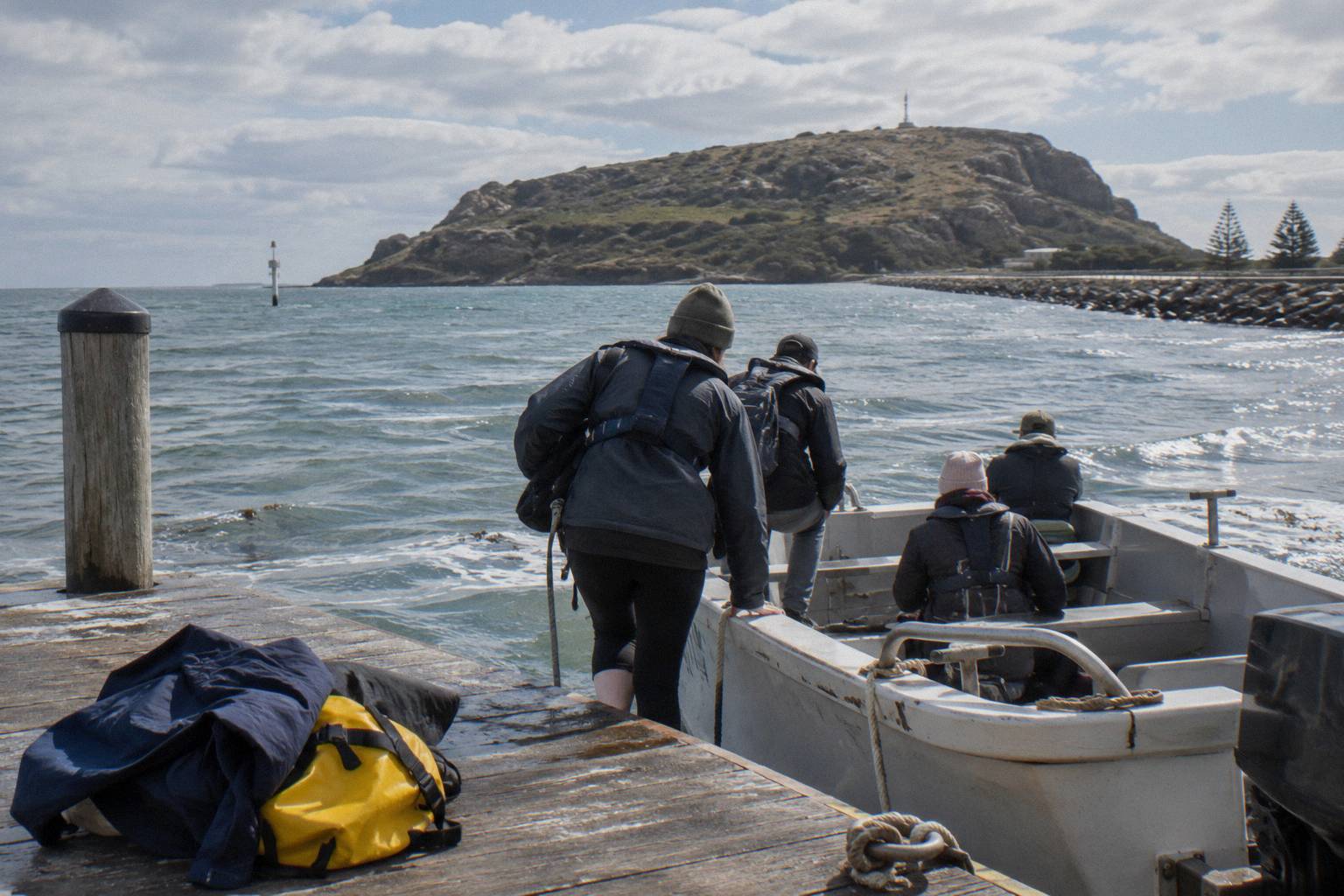
The second mistake is treating July and August as the only months worth booking. They are the most reliable, but the season runs May to October, and shoulder months carry lower crowds and milder weather. The third is ignoring sea state. A confirmed whale plus a rough-conditions cancellation adds up to a shore viewpoint and binoculars, which is a fine outcome if you planned for it and a frustrating one if you did not. The fourth mistake is assuming every visitor to Victor Harbor Tours content needs a whale trip at all: the walking tours of the town, from AU$35 per person, run year-round and depend on nothing but legs.
Finally, arrive on time. Late arrivals on the Big Duck boats receive no refund, and boarding requires walking about 300 metres out along the causeway to the landing, so the published meeting time is not the moment to start parking. Small logistics, but they decide whether a good sighting day becomes a good day overall.
Common Questions About A Same-Day Whale Check
Are There Whales At Victor Harbor Today?
Nobody can state a standing sighting. Whales migrate past Encounter Bay from May to October, with July and August the most reliable months, and same-day reports reach the SA Whale Centre, which is open 7 days from 10:00 am to 4:00 pm at 2 Railway Terrace and on 08 8551 0750.
Where Do Whale Sightings At Victor Harbor Get Reported?
The SA Whale Centre collects sightings through a report form on its website and shares what has been reported in the region. Operators also know each morning whether whales are around and whether conditions allow departures.
What Is The Best Month To See Whales At Victor Harbor?
July and August, according to both the SA Whale Centre and the operator, within a season that runs May to October. The operator frames its local season as June to September with those two months the most reliable.
Do Whale Tour Boats Get Cancelled For Weather?
Yes. Big Duck Boat Tours cancels departures in rough or unsafe conditions, usually notifying passengers the day before by text and email with a full refund or reschedule, and short-notice cancellations are possible. Rain alone does not necessarily cancel a trip.
How Close Can A Boat Get To A Whale At Victor Harbor?
Under the South Australian marine mammal regulations in force since 1 September 2025, boats must stay at least 100 metres from a whale and 300 metres from a whale with a calf or inside a protection area, travelling no more than 4 knots within 300 metres and staying no longer than 60 minutes.
What If There Are No Whales When I Visit?
The 45-Minute Seal Island Cruise from AU$55 per person runs year-round from the Granite Island Causeway, and the Goolwa cruises into the Coorong from AU$62 per person explore the Murray Mouth and lagoon system. The town walking tours from AU$35 per person depend on no wildlife at all.