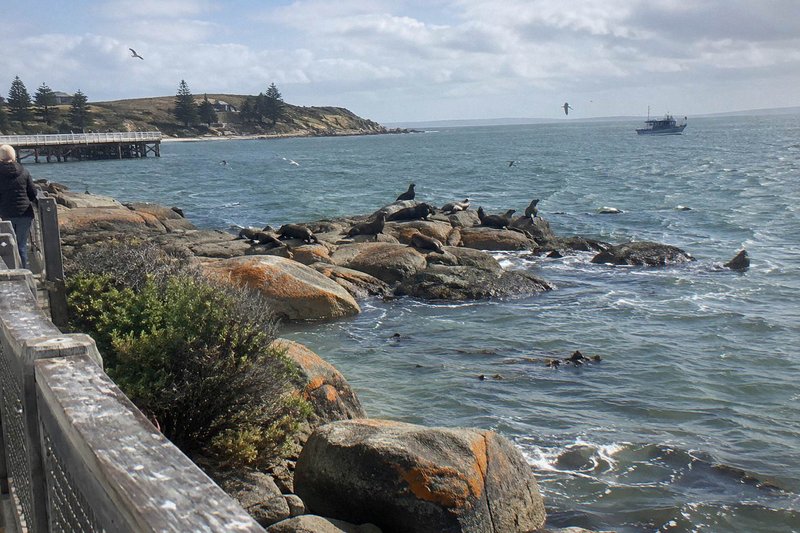
What Is Victor Harbor Famous For: Whales, Penguins, Or The Causeway?
Victor Harbor is famous for southern right whales in winter, the Granite Island causeway and its little penguin colony, and the boat trips out to Seal Island. Here is how each one actually works for a visitor.
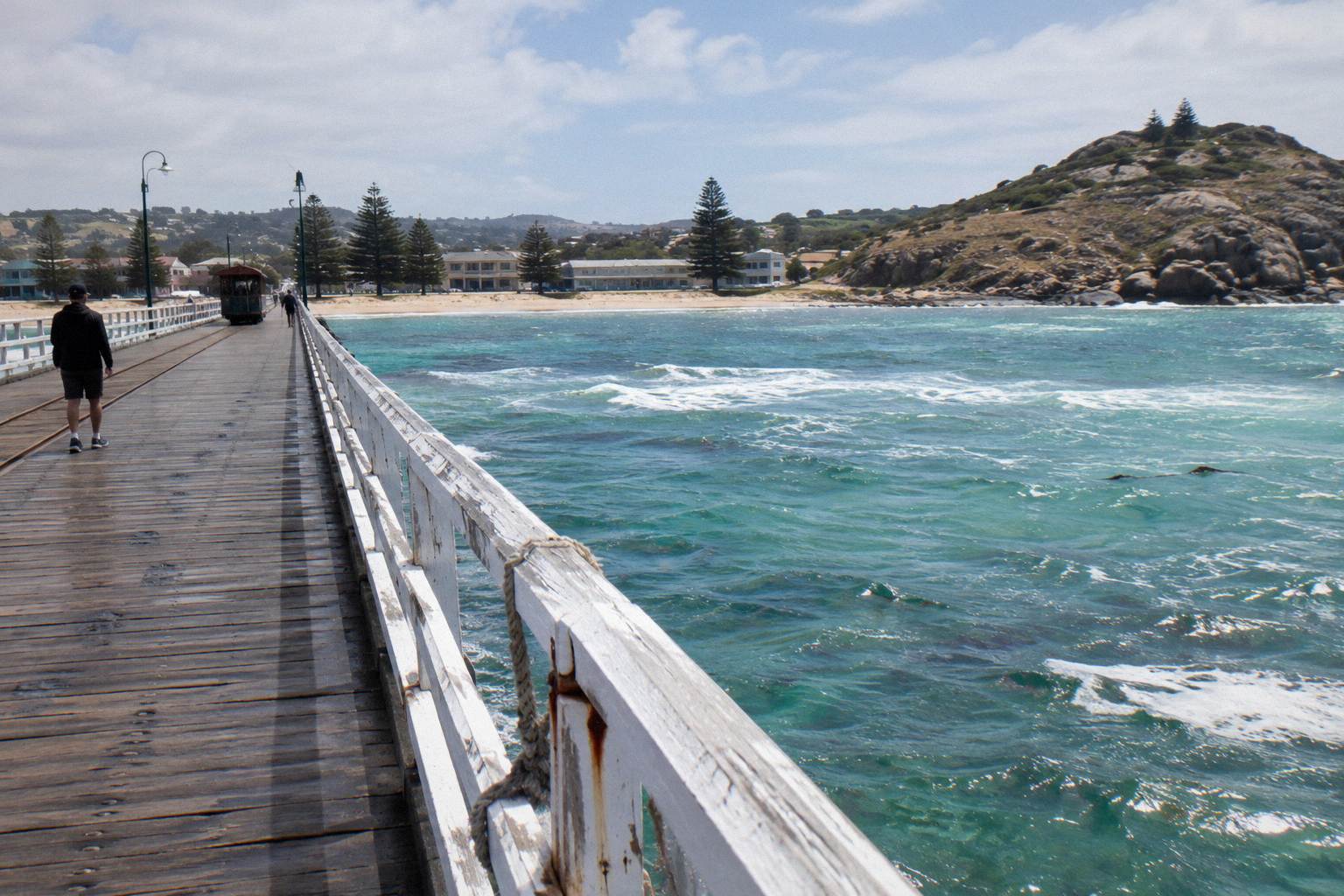
Victor Harbor sits on the eastern shore of Encounter Bay, about 84 km and roughly 1 hour 15 minutes by road from the Adelaide city centre, and its fame rests on a triangle of attractions: southern right whales that pass close to shore in winter, a small and hard-fought little penguin colony on Granite Island, and the causeway itself, rebuilt in 2021, which carries walkers and a horse-drawn tram across to the island. The whales are seasonal and best in July and August. The penguins are wild, recovering, and have had no commercial tours since 2020. The causeway runs every day of the year except Christmas Day, weather permitting. A visitor who understands those three facts plans a better day than one who arrives expecting all three on demand.
The practical answer for most travellers is to build the day around the water. The Victor Harbor: Southern Ocean Adventure Cruise with Guide covers the bay's headline geography in 90 minutes, from AU$85 per person, rated 4.7 from 163 reviews, and free cancellation applies up to 24 hours before on the booking page. The 1.5-Hour Guided Town Walk at from AU$35 per person, rated 5.0 from 9 reviews, covers the stories on land. The 45-Minute Seal Island Cruise at from AU$55 per person, rated 4.7 from 112 reviews, is the shorter water option. Amounts throughout are Australian dollars.
The honest ranking is: the causeway first, because it never goes away; whales second, because they are extraordinary but seasonal, running May to October with July and August the most reliable months; and penguins third, because the colony is real, counted at 46 adults in 2026, but no commercial penguin tour has existed since 2020. Every one of those three is a genuine reason the town is known. None of them is bookable in the same way. The causeway is a free walk, the whales are watched from boats that also do other things, and the penguins are monitored nightly by citizen scientists rather than shown to ticket holders. That asymmetry is the single most useful thing to understand before arriving.
Start with the geography, because it explains the fame. Encounter Bay opens straight to the Southern Ocean, and Rosetta Head, The Bluff, stands 97 m above sea level at its western edge, giving land-based viewers a high platform over migrating whales. The Ramindjeri people of the lower Fleurieu, part of the Ngarrindjeri Nation, know the area as Kondilindjerung, "the home of the whales", a name that predates the town by millennia. Granite Island sits just offshore, joined by the causeway, and the bay between them shelters in ways the open coast does not.
That combination, a whale nursery bay, an island a short walk from the main street, and a horse-drawn tram that has crossed to it since the era of steamers, is why the question is always phrased as three options rather than one. Different visitors answer it differently. A family with small children in February will live on the causeway and the island walk. A couple in late July will be scanning the water from dawn. Neither is wrong; they are just there in different seasons.
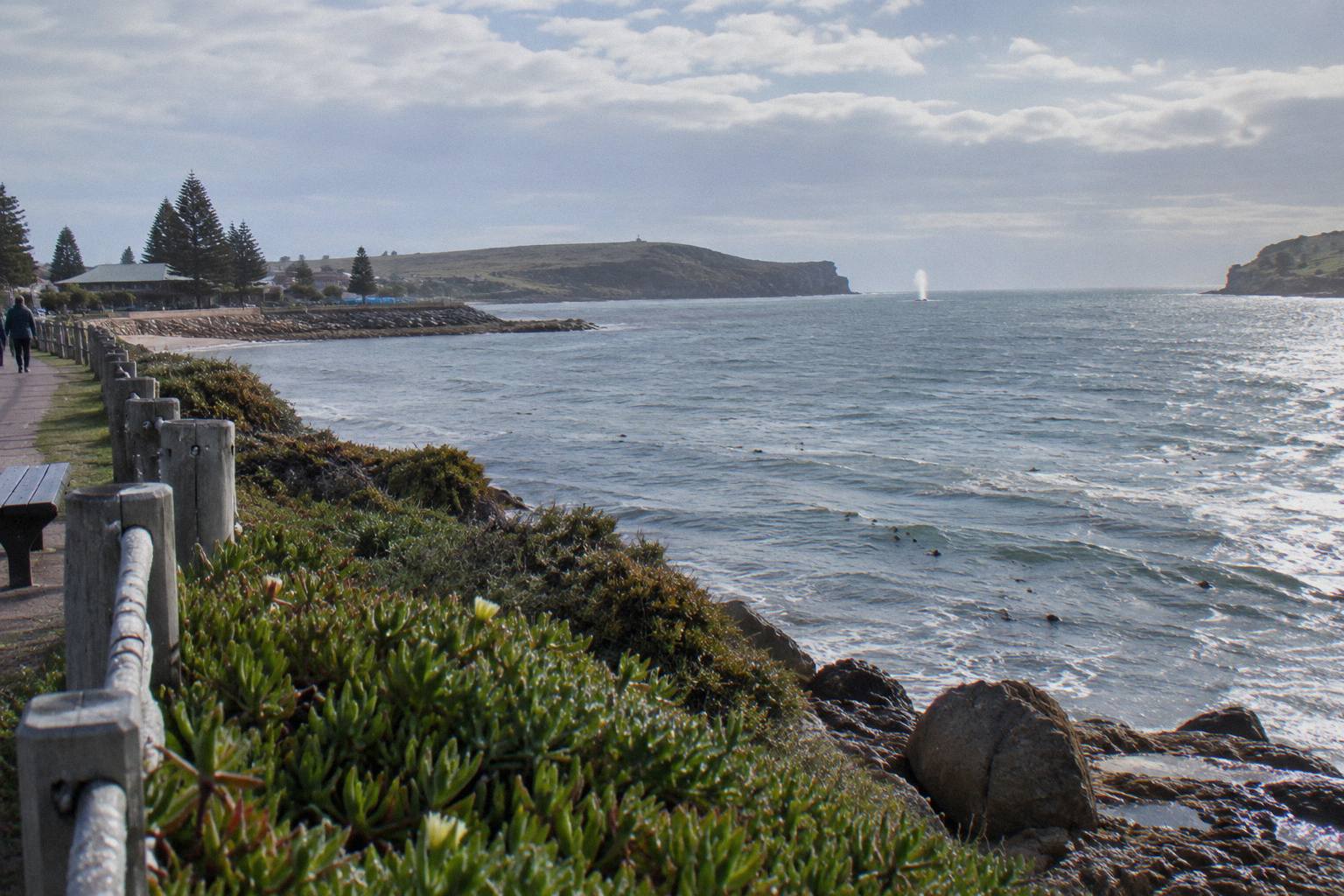
Why Do Whales Come So Close To Victor Harbor?
Southern right whales migrate from sub-Antarctic waters to the southern Australian coast to calve in winter, and Encounter Bay is one of the places they do it: the state's regulations now name an Encounter Bay Whale Nursery Protection Area, one of only three such areas, alongside Fowlers Bay and Sleaford Bay. The SA Whale Centre puts the season at May to October, with the first whales usually seen in May and the most reliable months July and August. The whales come for sheltered water, not for tourism, which is why they can appear remarkably near shore and why the rules around them are strict.
Those rules changed recently. The old marine mammal regulations from 2010 were revoked on 1 September 2025 and replaced by the 2025 regulations, and the new text matters to anyone on the water. A vessel may come no closer than 100 m to a whale, and no closer than 300 m where a calf is present or inside a protection area such as the Encounter Bay Whale Nursery Protection Area. Within 300 m a boat must travel at 4 knots and stay no more than 60 minutes. The full approach distances are published by the marine parks authority, and the regulations themselves sit at legislation.sa.gov.au. What that means practically is that tour boats keep legal distance and the whales decide the rest.
| Rule under the 2025 regulations | Distance or limit |
|---|---|
| Vessel to any whale | No closer than 100 m |
| Vessel where a calf is present or inside a protection area | No closer than 300 m |
| Speed within 300 m of a whale | 4 knots |
| Time within 300 m of a whale | No more than 60 minutes |
| Prescribed vessels such as jet skis, to any marine mammal | 300 m |
| Planes and drones | 300 m |
| Helicopters and gyrocopters | 500 m |
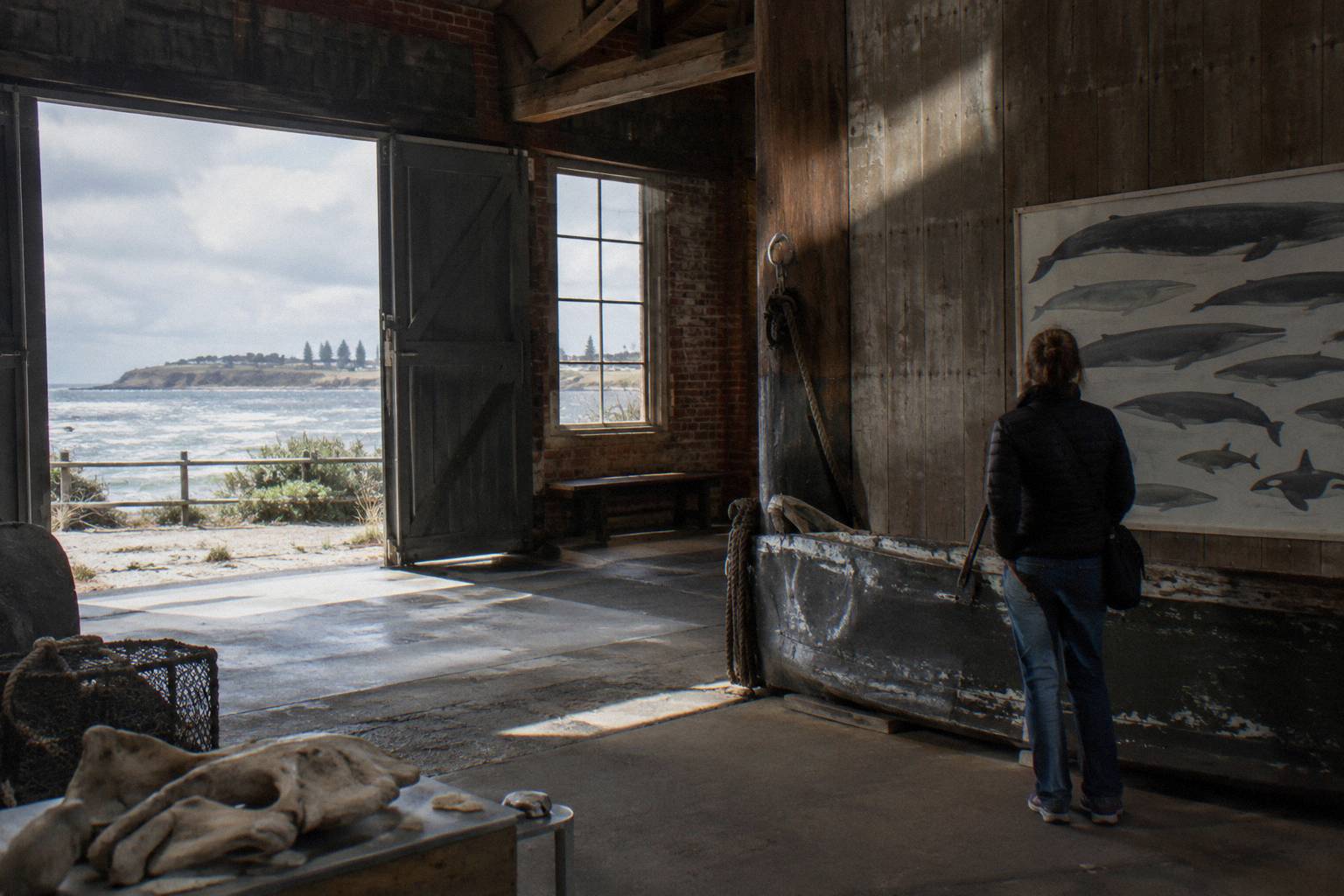
No operator promises a sighting, and the Big Duck's own terms say exactly that: whales are seen where present and conditions permit. The honest framing is probability, not guarantee. July and August, a calm morning, and a boat already going out for other reasons is the best stack of odds a visitor can arrange. The SA Whale Centre at 2 Railway Terrace, in the old Railway Goods Shed, is open 7 days from 10:00 am to 4:00 pm and maintains a sightings report form, so it functions as the town's live intelligence desk before anyone commits to a ticket. More of these guides are collected on Victor Harbor Tours.
The species to read up on is the southern right whale, a slow, coastal migrant that habituates to shallow bays, which is precisely why Encounter Bay works for it. Humpbacks pass the South Australian coast too, but the southern right is the one the bay's reputation rests on. For depth on the season, the whale watching season calendar breaks the months down, and the Victor Harbor whale watching guide covers the viewpoint and boat options in full.
The flagship water product here is the 1.5-Hour Ocean Adventure, Guide, run by Big Duck Boat Tours aboard Pungari, a 12.5 m NAIAD rigid-hulled inflatable, boarding from a landing about 300 m out along the causeway. In whale season the skipper works the same waters the whales use, under the 2025 distance rules, and outside it the route still delivers: Seal Island, Wright Island, The Bluff, West Island, Shark Alley, Kings Beach and the Waitpinga cliffs, all inside Encounter Marine Park.
The 90-minute trip departs about 10:45 am, with an extra 2 pm sailing when demand runs high. In rough or unsafe conditions the operator cancels, typically the day before by text and email, with a full refund or reschedule; rain alone does not necessarily stop a departure. Minimum age is 2, children aged 2 to 15 travel with an adult, and the trip is described as not suitable for pregnant passengers. Arrive on time, because late arrivals get no refund. The broader comparison of every boat option, including which suits kids, is in the whale watching boat tours compared guide.
What Happened To The Penguin Tours On Granite Island?
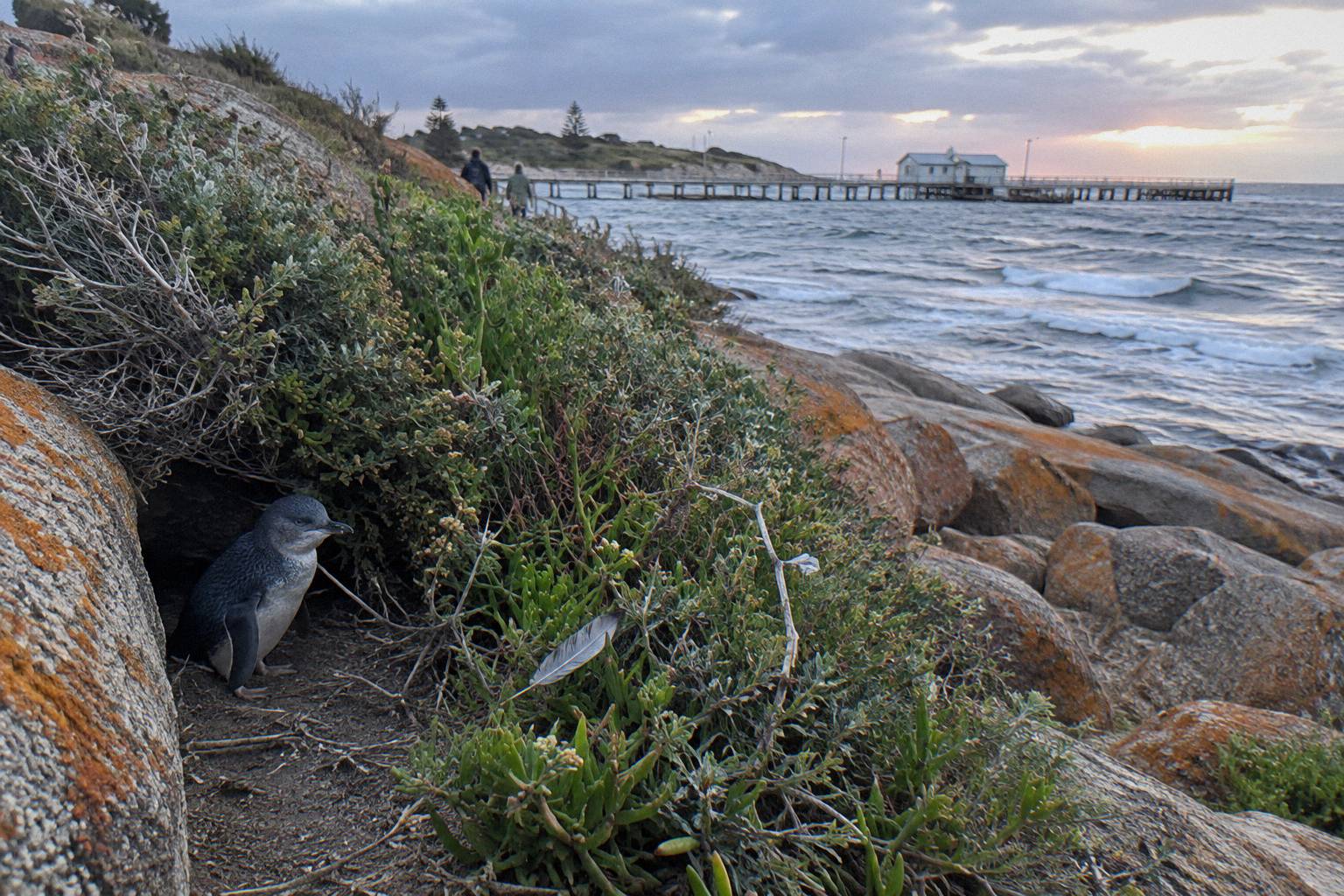
Commercial penguin tours of Granite Island ended in 2020, and no penguin tour is sold today: the colony is wild, counted at 46 adults in the 2026 census, up from 30 in 2024 and 36 in 2025, and monitored nightly by citizen scientists rather than guides with tickets. The Department for the Environment's own 2025 wording is that since the tours ended, citizen scientists have conducted the nightly monitoring. So the fame is real, the penguins are real, and the purchase is not available. Anyone offered a "penguin tour" is being offered something that does not exist in this line-up.
The numbers deserve the full arc, because the recovery is the story. The colony was about 1,548 adults in 2001, collapsed to 22 by 2015 and 44 at the 28 September 2018 census, and a fox attack in 2020 pushed it to its lowest point. The trend since is quietly positive: 30 in 2024, 36 in 2025, 46 in the 2026 count reported by the ABC. The species itself, the little penguin, is the smallest penguin in the world, and Granite Island's colony is South Australia's best known.
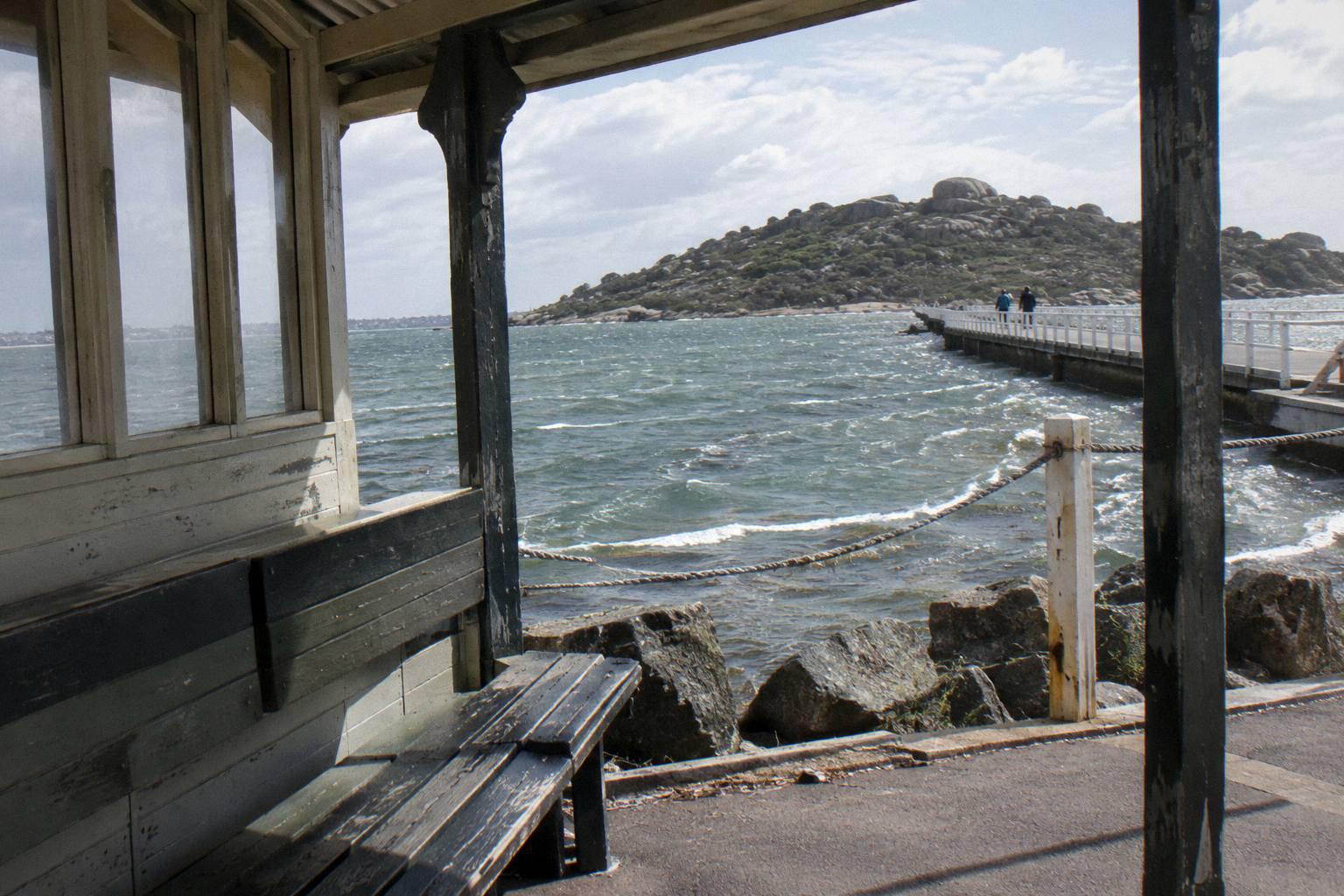
What a visitor can legitimately do is walk the island at dusk, quietly, on the Kaiki Walk, a 2.9 km loop that takes about an hour, and treat any sighting as a gift rather than an itinerary item. The status, the census history and how to visit respectfully are laid out in the Granite Island penguin tour guide, with viewing conditions covered separately in the penguin viewing conditions guide. The honest answer to "are there still penguins" is yes, 46 adults at the last count, and no tour.
Is The Causeway And Horse Tram The Real Icon?
For sheer reliability, yes: the causeway to Granite Island is about 650 metres each way, roughly 20 minutes on foot, free to walk, and open every day of the year except Christmas Day for the tram, weather permitting, so it is the one famous thing that is always there. The current causeway opened to pedestrians on Wednesday 22 December 2021, after construction began in March 2021 under a AU$43 million state commitment. The original crossing dates to 1875, built as the Victoria Pier extension, and the old causeway was taken out of service in 2022 with parts kept as viewing platforms. The council's project page carries the full history.
The horse-drawn tram is the causeway's personality. Run by the Victor Harbor Horse Tram Authority, a council subsidiary, it operates every day of the year except Christmas Day, weather permitting, on an approximate 40-minute schedule. The first tram leaves Victor Harbor at 10:30 am and Granite Island at 10:50 am, and the last tram varies. There is no online booking: tickets are bought at the causeway, and fares change, so check at the counter rather than trusting any figure quoted secondhand. Whether the ride earns its cost is argued both ways in the is the horse tram worth it post.
The island at the far end is a Recreation Park: free entry, open daytime, subject to weather and fire-danger closures, with park enquiries through the Victor Harbor National Parks and Wildlife Service office, per the official park page. The Kaiki Walk loops it in about an hour. Families weighing the walk against the ride, and against doing both, will find the mechanics in the can you walk to Granite Island post, and the full island breakdown in the Granite Island tours guide.
What About The Seals And Seal Island?
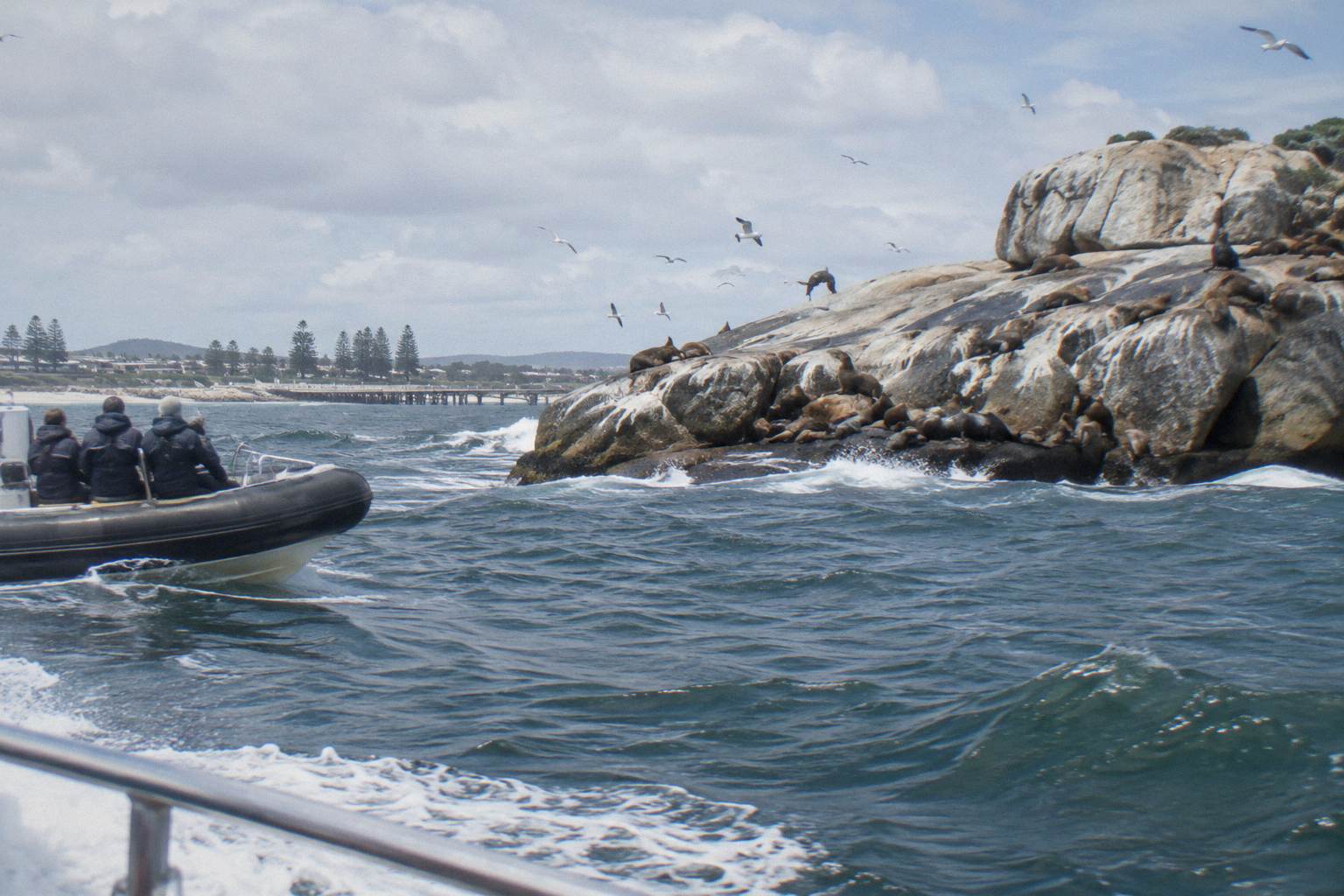
Seal Island is the wildlife draw that can actually be booked year-round: Big Duck Boat Tours describes fur seals, sea lions and seabirds waiting there, and both of its cruises, the 45-minute Seal Island trip from AU$55 per person and the 90-minute Southern Ocean Adventure from AU$85 per person, put it on the route. Where the whales are seasonal and the penguins untourable, the seals are resident, and the operator's own wording is the honest ceiling on the claim: no official species count or distance exists, so "the operator describes" is as far as any article should go, per the operator's Seal Island page.
The 45-Minute Seal Island Cruise is the tighter, cheaper water option, departing about 12:45 pm from the same causeway landing, rated 4.7 from 112 reviews, with the same 24-hour free-cancellation terms on the booking page. It suits visitors who want the marine park without committing 90 minutes, including families with children aged 2 and up. The Seal Island boat tour guide compares it against the longer route stop by stop.
Around the island sits Encounter Marine Park, which includes the Encounter Bay Sanctuary Zone where fishing and extractive activity is not allowed, and tourism operations get favourable consideration for permits. That protection is partly why the seals and seabirds stay. The bay's wider wildlife line-up, from dolphins to seabirds beyond the two headline acts, is catalogued in the Victor Harbor wildlife boat tours guide.
Which Famous Thing Suits Which Visitor?
Match the draw to the season and the traveller: the causeway and island walk work for everyone year-round; whales suit a July or August visit with flexible dates; the Seal Island boat works any calm day including with young children; the penguin colony suits a quiet dusk walk with expectations set to zero. The table below is the decision logic in one view, using only figures from the operators and official sources.
| Famous draw | Best time | Can it be booked? | What it costs |
|---|---|---|---|
| Southern right whales | July and August most reliable, season May to October | Yes, via boat tours under 100 m/300 m approach rules | From AU$85 per person on the 1.5-Hour Ocean Adventure, Guide |
| Little penguins | Dusk on Granite Island, year-round colony | No, commercial tours ended in 2020 | Free to walk the island and look, no tour exists |
| Causeway and horse tram | Any day, tram daily except Christmas Day, weather permitting | Walk free, tram tickets at the causeway | Walk is free, tram fares set at the counter |
| Seals on Seal Island | Year-round, resident colony | Yes, 45-minute and 90-minute cruises | From AU$55 per person on the Seal Island Cruise |
The pattern worth noticing is that the two bookable wildlife products come from the same operator off the same causeway landing, which makes them stackable on a single morning: the 10:45 am adventure cruise, lunch on the esplanade, the 12:45 pm seal trip is not possible on the same day, but the walk plus one boat plus the island loop comfortably is. Free cancellation up to 24 hours before applies across the roster on the booking pages, which matters most for boat trips, where weather calls happen a day ahead.
For travellers basing themselves in Adelaide, the day-tour layer adds a second decision: the 8-Hour Fleurieu Peninsula Day Trip from CP Tours And Charters at from AU$149 per person, rated 4.6 from 124 reviews, brings the town and the peninsula together with hotel pick-up, while the Victor Harbor day tours from Adelaide guide compares the full set. Solo drivers get the trade-off analysis in the Adelaide to Victor Harbor tour or drive guide.
What Mistakes Do Visitors Make With The Famous Three?
The recurring mistakes are booking a penguin tour that does not exist, chasing whales in November or December when the season closed in October, assuming the tram has online booking when tickets are sold only at the causeway, and treating a whale sighting as promised when every operator states plainly that sightings depend on presence and conditions. Each mistake is avoidable with one piece of knowledge, and each costs a morning or a refund if missed. The whales alone mislead people twice: once on timing, and once on expectation.
The timing problem has a data answer. The Bureau of Meteorology's averages for Victor Harbor show July and August are both the whale peak and the wettest months, 79.7 mm and 72.8 mm of mean rainfall respectively, against 21.6 mm in January, per the BOM climate averages for station 023804. Rain itself does not necessarily cancel a boat, but winter visitors should plan around it rather than against it. Mean maximums of 15.5 °C in July and 16.4 °C in August say pack layers, which the what to wear on a boat tour post covers in detail.
The penguin mistake usually arrives via outdated articles or old brochures. The fix is simple: the colony exists, 46 adults counted in 2026, it is recovering, and the way to see it is the free island walk at dusk with no expectations. Anyone selling an evening penguin departure in Victor Harbor is selling something the state ended in 2020. The third mistake, tram booking, dissolves on arrival: tickets are bought at the causeway, and the fourth, weather, is why the 24-hour free-cancellation terms on the booking pages are worth reading before paying rather than after.
A final planning note for families: children aged 2 to 15 travel with an adult on the Big Duck boats, minimum age 2, and the walking tours have no such constraint, which makes the 1.5-Hour Guided Town Walk, from AU$35 per person, rated 5.0 from 9 reviews, the most weather-proof wildlife-adjacent option on the roster. It meets at 1 Esplanade and tells the town's story, whales included, from land.
Common Questions About The Famous Three At Victor Harbor
What Is Victor Harbor Famous For: Whales, Penguins, Or The Causeway?
All three, in different ways: the causeway and Granite Island are the year-round icon, whales are the seasonal headline from May to October with July and August most reliable, and the little penguin colony is a recovering wild population counted at 46 adults in 2026 with no tour since 2020.
Can You See Whales From The Shore At Victor Harbor?
Sometimes, yes. Encounter Bay's shape and high viewpoints such as Rosetta Head, 97 m above sea level, give land-based watchers a real chance in season, and the SA Whale Centre tracks reported sightings at 2 Railway Terrace, open 7 days 10:00 am to 4:00 pm. No sighting is guaranteed from shore or boat.
Are There Still Penguins On Granite Island?
Yes. The 2026 census counted 46 adults, up from 30 in 2024 and 36 in 2025, after a long decline from about 1,548 adults in 2001. Commercial penguin tours ended in 2020, so the way to look is the free Kaiki Walk, a 2.9 km loop taking about an hour, quietly at dusk.
How Long Is The Walk Across The Causeway?
About 650 metres each way, roughly 20 minutes on foot, and free. The horse-drawn tram covers the same crossing every day of the year except Christmas Day, weather permitting, with the first departure from Victor Harbor at 10:30 am; tickets are sold at the causeway, not online.
Which Boat Tour Is Best For Seals?
The Victor Harbor: Seal Island Cruise spends 45 minutes on the route for from AU$55 per person, rated 4.7 from 112 reviews. The longer Victor Harbor: Southern Ocean Adventure Cruise with Guide, from AU$85 per person, also passes Seal Island among its named stops. Both depart from the Granite Island Causeway with free cancellation up to 24 hours before.
When Is Whale Season At Victor Harbor?
May to October, with the first whales usually seen in May and the most reliable months July and August, per the SA Whale Centre. The Big Duck describes its local season as June to September, best in July and August. Boats follow the 2025 regulations: no closer than 100 m to a whale, 300 m with a calf or in the Encounter Bay Whale Nursery Protection Area.