Seeing Little Penguins On Granite Island: Season, Light, And Tour Timing
Little penguins still live on Granite Island, but no commercial penguin tour has operated since 2020. The counts, the conditions and the tours that replace it are set out below.
Short answer
Granite Island's little penguin colony counted 46 adults in 2026, up from 30 in 2024. Commercial penguin tours ended in 2020, so there is nothing of that kind to book: the island is free to enter by day, and the guided walks and boat cruises cover the same ground.
For the wider picture of what runs from the causeway, see the Granite Island tours overview.
What Happened To The Penguins On Granite Island?
The Granite Island little penguin colony collapsed from roughly 1,548 adults in 2001 to just 22 adults in 2015, a crash linked to declining recruitment and rising predation pressure. Since then it has begun a slow recovery, with numbers climbing to 46 adults in the 2026 census, the third consecutive annual increase recorded for the island. Those figures come from the South Australian environment department's monitoring reports and the annual census, which is now carried out with the help of citizen scientists. A fox attack in 2020 pushed the population to its lowest point in the modern record. The recovery since then has been real but gradual, and the colony remains a small fraction of the population documented at the start of the century. Reading the trend, not any single year, is what gives a visitor an honest picture of the island today.
The decline was long and well documented. The department's 2011 report described the colony as declining from about 1,548 adults in 2001, and the 2018-19 report recorded 44 adults at the census of 28 September 2018, bracketing a low of 22 in 2015. The last three annual counts run 30 in 2024, 36 in 2025 and 46 in 2026, a steady upward trend that conservation work and nightly monitoring have supported. The 2026 figure was covered nationally when the census results were published.
One number you should treat with caution is any figure for 2012. A national news report described the colony as collapsing from more than 1,000 birds in 2012, but the department's own 2016 action plan recorded 38 to 26 individuals across 2012 to 2014. The two sources conflict directly, which is why no 2012 number is reproduced here. The department figures are the monitoring record; the news figure is not. You can read the census coverage at the ABC's report on the 2026 little penguin census.
Can You Still See Penguins On Granite Island?
No, there is currently no commercial penguin tour operating on Granite Island, and none has run since 2020, when the environment department confirmed the tours had ended. While the guided tours are gone, that does not mean penguins have vanished from the island entirely, so visitors may still have opportunities to see them through other means. Since then, citizen scientists have conducted nightly monitoring of the colony, a program the department publicly recognised in 2025. What remains is the island itself: free entry, open in daytime, and reachable on foot or by the horse-drawn tram. Any penguin presence on the island is wild and unprotected by any viewing program, and sightings can never be promised. The practical question shifts from booking a wildlife product to choosing how to spend time on a free, open island park.
That status matters for planning. Searches for a penguin tour still return results, and older travel articles still describe evening tours that no longer operate, so it is easy to build an itinerary around something that does not exist. The honest position: the penguins are there in small and growing numbers, the island is open, and the ways to experience it are the causeway walk, the Kaiki Walk loop, the tram and the boat cruises. For the full status background, read whether Granite Island still has penguins.
The three tours above are the practical substitutes. The Discover Victor Harbor Guided Walking Tour runs 1.5 hours from 1 Esplanade with a guide who covers the town and island history, from AU$35 per person, rated 5.0 from 9 reviews. The Southern Ocean Adventure Cruise with Guide from Big Duck Boat Tours circles the island and the marine park in a fast rigid-hulled inflatable, and the 45-Minute Seal Island Cruise covers the same operator's shorter wildlife circuit. All three carry free cancellation up to 24 hours before, in line with the booking page terms.
When Is The Best Season To Visit Granite Island?
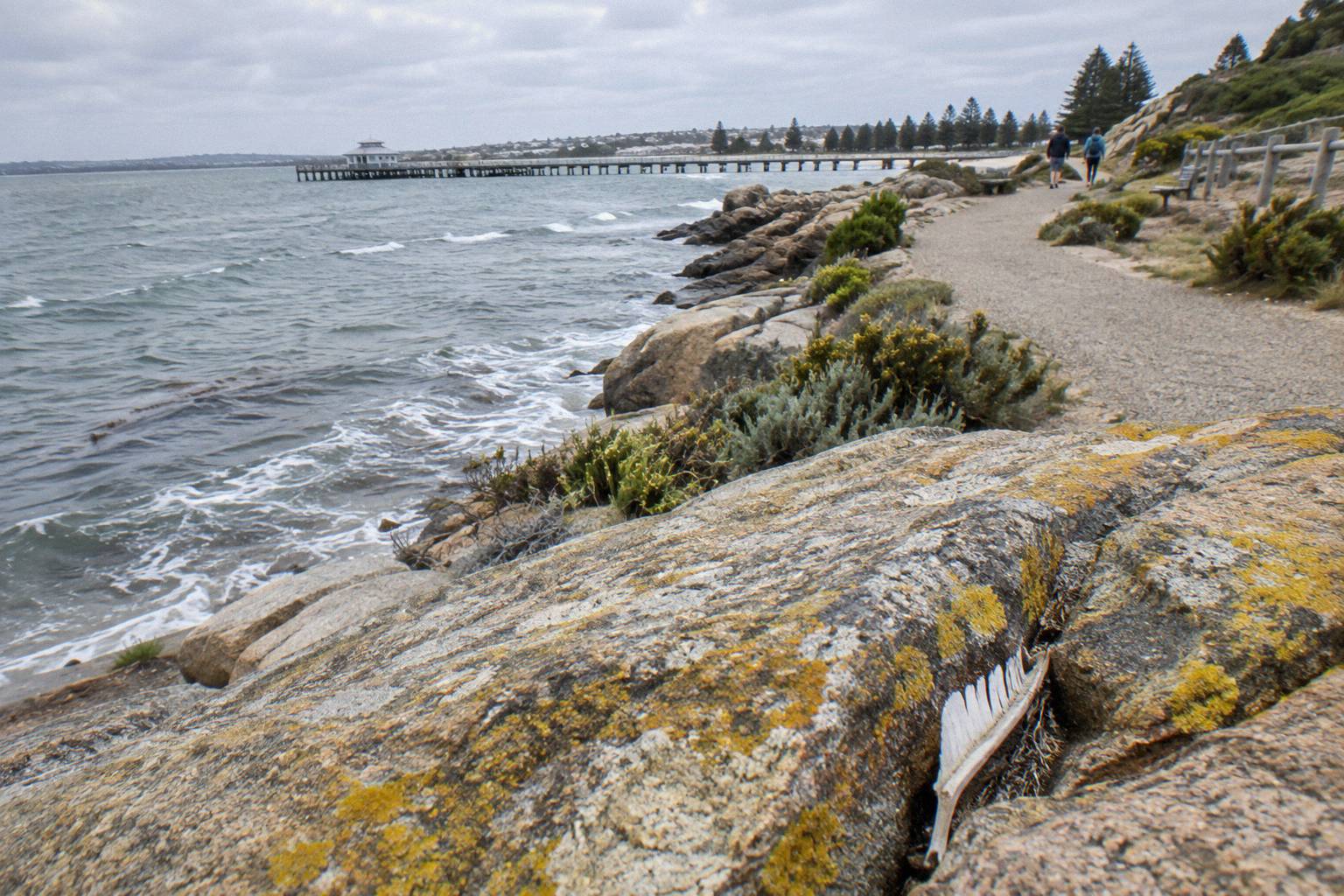
There is no penguin season to time a visit around, because no viewing program operates; the practical decision is weather and daylight, and the Bureau's averages say the warmest, driest months are January and February while July is the coolest and among the wettest. The island is open year round apart from weather and fire-danger closures. Since any penguin presence is wild and unprogrammed, choosing a month is about comfort on the causeway and the Kaiki Walk, not about maximizing a wildlife sighting. Summer visits suit the walk and the tram; winter visits overlap the whale season and suit a boat cruise.
| Month | Mean maximum (C) | Mean minimum (C) | Mean rainfall (mm) |
|---|---|---|---|
| January | 25.2 | 14.8 | 21.6 |
| February | 24.3 | 14.5 | 22.0 |
| March | 23.6 | 13.0 | 19.2 |
| April | 21.6 | 10.5 | 34.2 |
| May | 18.6 | 8.8 | 60.7 |
| June | 16.2 | 7.2 | 83.4 |
| July | 15.5 | 6.6 | 79.7 |
| August | 16.4 | 6.8 | 72.8 |
| September | 18.5 | 7.7 | 55.4 |
| October | 20.6 | 9.1 | 40.3 |
| November | 22.5 | 11.5 | 36.0 |
| December | 24.1 | 12.8 | 27.6 |
Those numbers are long-term averages from the Bureau of Meteorology's Victor Harbor (Encounter Bay) station, which you can check directly at the Bureau's climate averages for Victor Harbor. Winter is the wettest stretch, with June averaging 83.4 mm, and summer is mild rather than hot, with January's mean maximum at 25.2 °C. Winter also overlaps the whale season, which runs May to October, so a mid-year visit can combine the island walk with a boat trip.
The guided walk is the closest thing to a structured island visit now available. It runs 1.5 hours, starts at 1 Esplanade, costs from AU$35 per person and carries free cancellation up to 24 hours before. That cancellation window means a winter booking is low-risk: if the forecast turns, the decision to go or refund stays open until the day before.
How Do You Get Onto Granite Island?
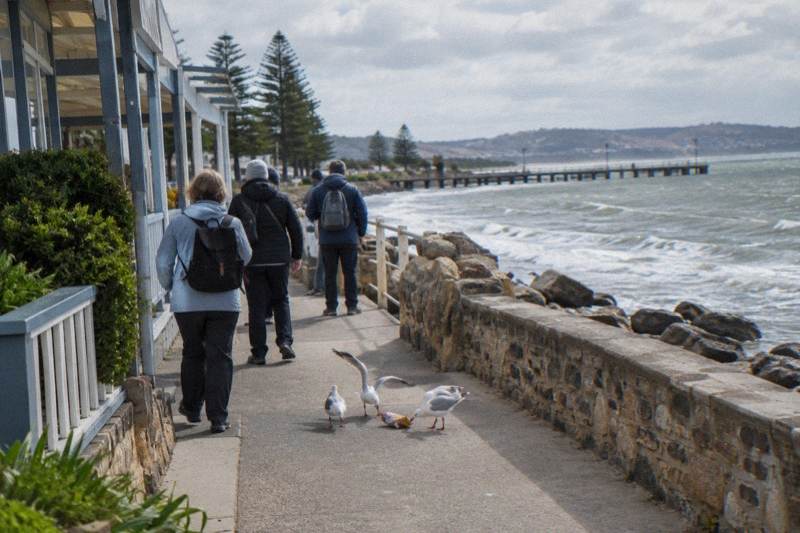
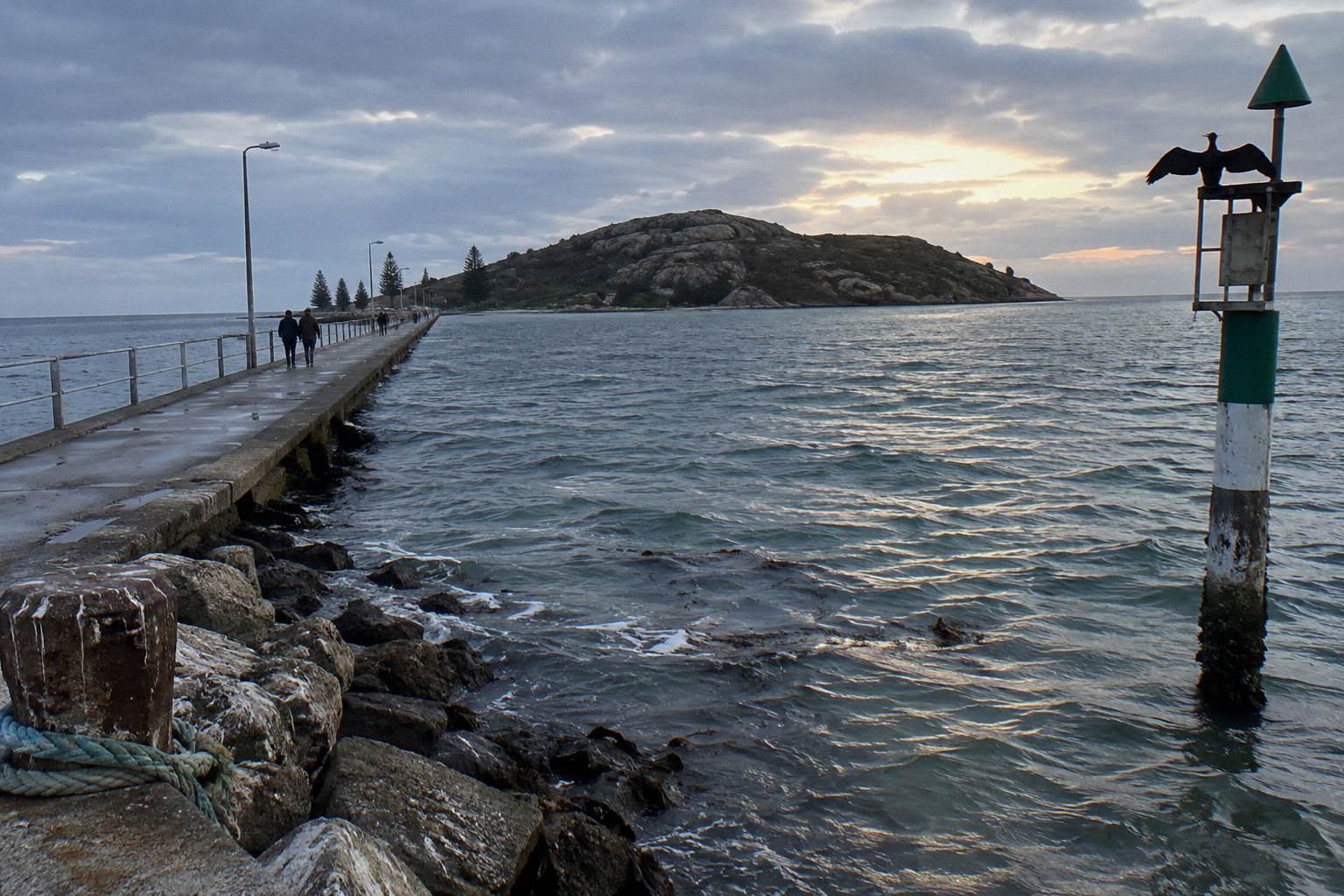
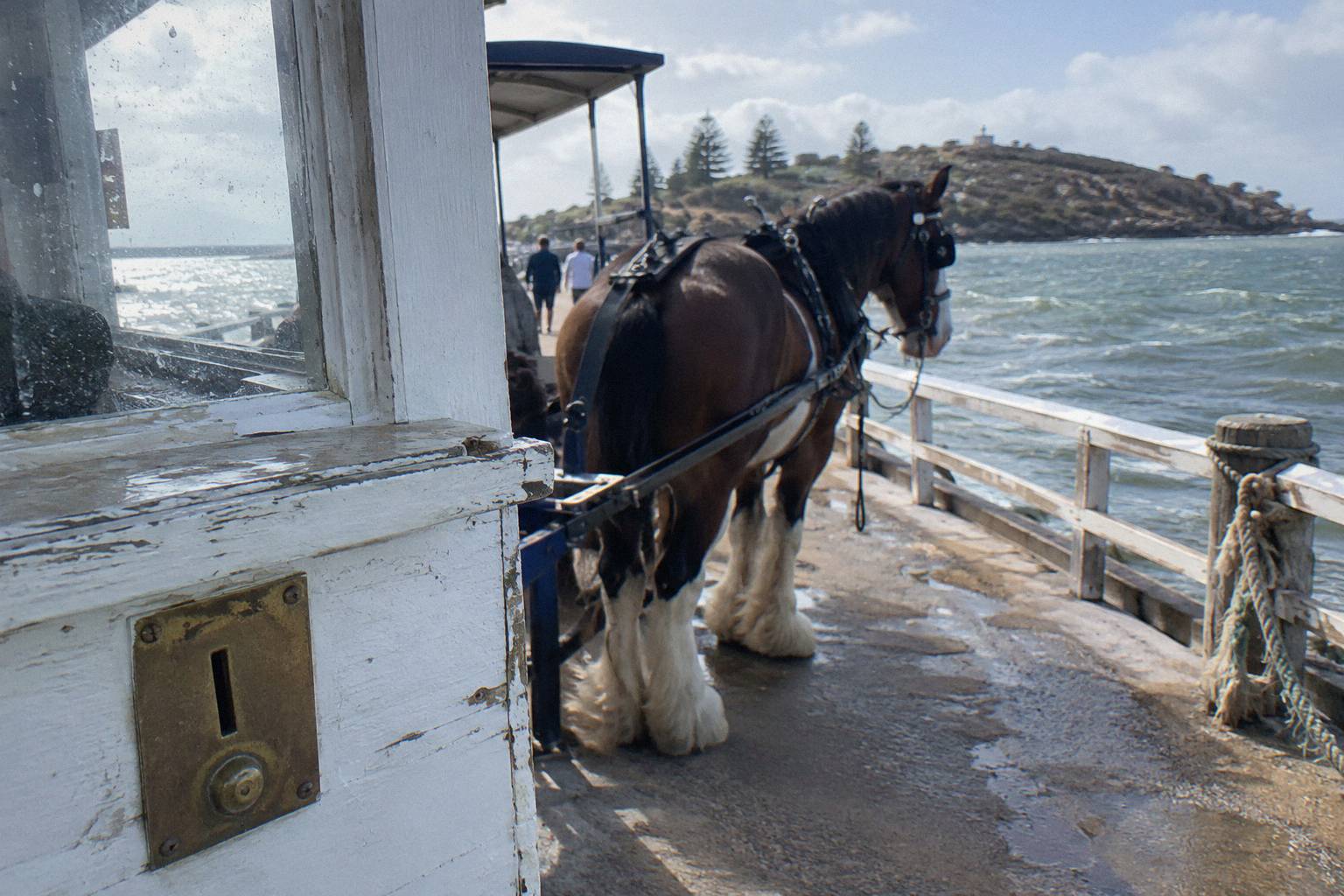
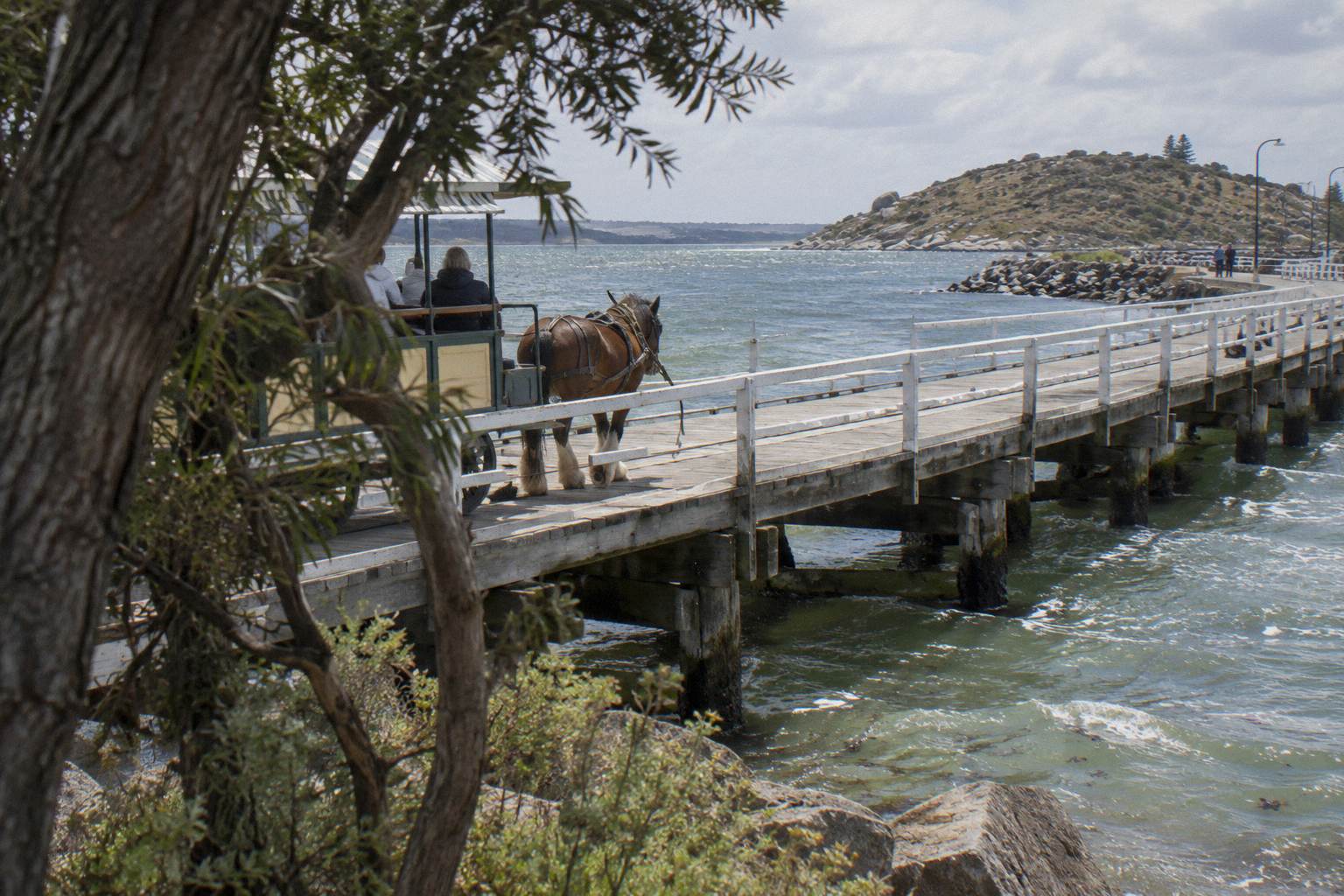
The island is reached across a causeway about 650 metres long, a 20 minute walk each way, or by the horse-drawn tram that runs every day of the year except Christmas Day, weather permitting, on an approximate 40 minute schedule with the first departure from Victor Harbor at 10:30 am. The current causeway opened to pedestrians on Wednesday 22 December 2021, replacing the original 1875 structure, parts of which were kept as viewing platforms when it was taken out of service in 2022. Entry to the island, a recreation park, is free and daytime opening applies, subject to weather and fire-danger closures. Tram tickets are sold at the causeway rather than online.
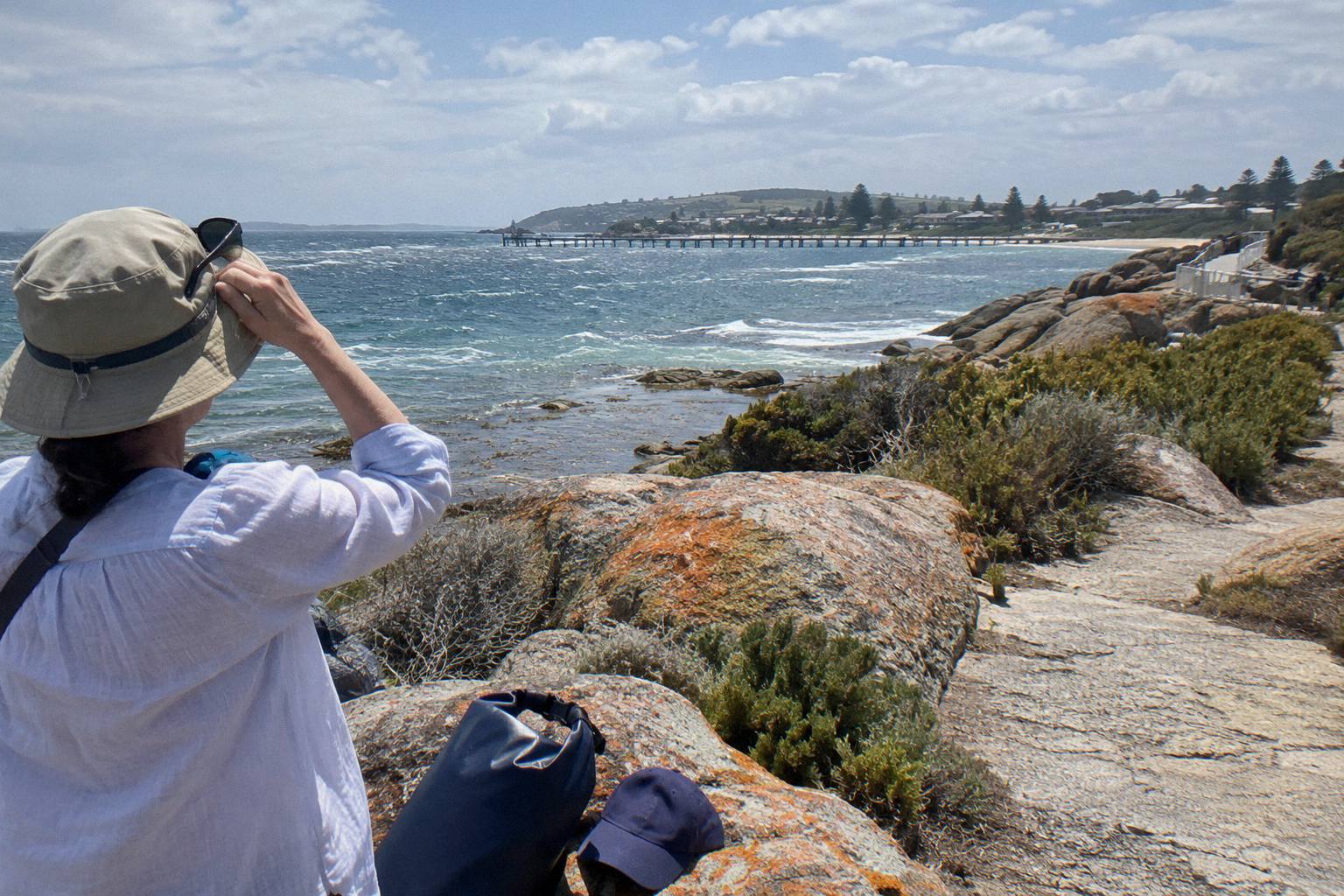
The details are on the official pages. Parks SA covers entry, hours and closures at the Granite Island Recreation Park page, and the council's project record covers the causeway replacement and its history. The tram is run by the council's tram authority: the first tram leaves Victor Harbor at 10:30 am and Granite Island at 10:50 am, with the last tram varying. Tram fares are dynamic so they are not reproduced here. More detail is in the horse tram guide.
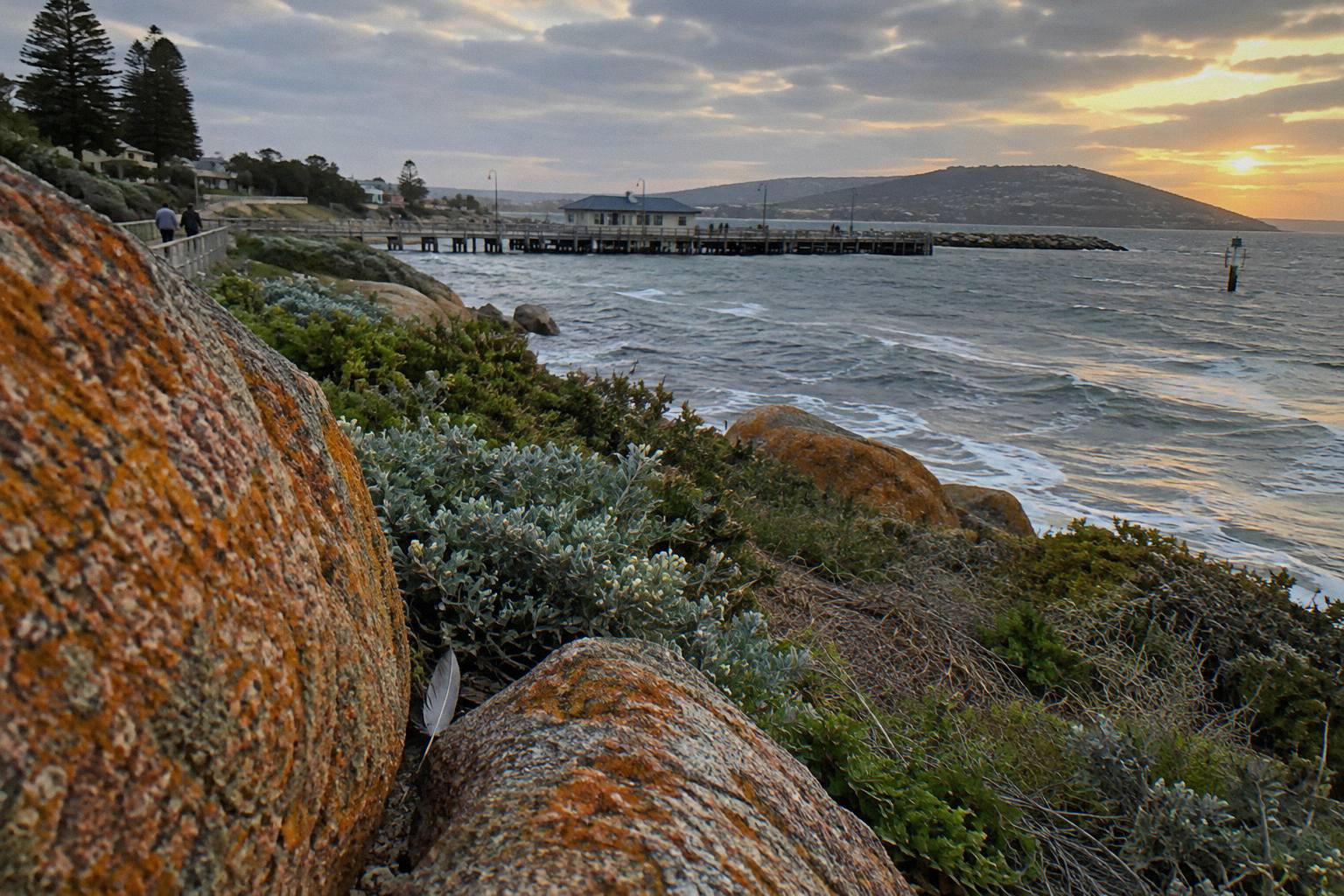
Once across, the Kaiki Walk loops the island in about 1 hour over 2.9 km. That loop is the main reason the walking shoes matter more than any penguin plan: the track covers the island's full shoreline, and it is the terrain that decides how the visit feels, not a wildlife schedule. The walking routes on the island are covered in full elsewhere.
What Do The Colony Counts Mean For A Visitor?
A count of 46 adults means the colony is recovering but still tiny, and it tells you nothing about whether any individual penguin will be visible on a given day, because no viewing program exists to report or guarantee that. The counts are a conservation measure, taken annually, not a sightings log. Reading them as a viewing forecast would be a mistake. What they do tell you is that the population trend is positive, three consecutive annual increases after the 2020 low point, which is the first sustained run of growth in the published record.
| Census year | Adult little penguins counted |
|---|---|
| 2001 | about 1,548 |
| 2015 | 22 |
| 2018 | 44 |
| 2024 | 30 |
| 2025 | 36 |
| 2026 | 46 |
The gap in the table is deliberate. Counts exist between those years in some department reports, but the comparison points above are the ones published consistently across the monitoring record and the 2026 census coverage. Note the non-linear path: 44 adults in 2018 did not hold, the fox attack in 2020 pushed the colony to its lowest point, and the recovery dates from after that event. A rising line over three years is encouraging against a 2001 baseline in the thousands, and that scale is the honest context for any visit. Everything else covered here is indexed on Victor Harbor Tours.
For planning, the counts change nothing about the itinerary. The island is the same free-entry park, the causeway is the same walk, and the absence of a commercial tour is the same in every month. The difference the numbers make is interpretive: knowing the colony is small and monitored adds something to standing on the island, and knowing the tours ended in 2020 prevents a wasted search for a booking.
Which Tours Cover Granite Island Without A Penguin Program?
Two operators cover the island directly: Victor Harbor Walking Tours runs the two guided walks, and Big Duck Boat Tours runs the two boat cruises that pass the island and its surrounding waters, with prices from AU$35 and from AU$55 per person respectively. None of the four is a penguin tour, and none promises penguins. What they offer is the island's landscape, history and marine wildlife as a guided experience, which is the closest structured option to what the evening tours once provided. Two are on foot from the town, two are on the water from the causeway.
| Tour | Operator | Duration | Starts from | Rating |
|---|---|---|---|---|
| 1.5-Hour Guided Town Walk | Victor Harbor Walking Tours | 1.5 hours | AU$35 per person | 5.0 from 9 reviews |
| 75-Minute Shipwrecks History Walk | Victor Harbor Walking Tours | 75 minutes | AU$35 per person | no rating yet |
| 1.5-Hour Ocean Adventure, Guide | Big Duck Boat Tours | 1.5 hours | AU$85 per person | 4.7 from 163 reviews |
| 45-Minute Seal Island Cruise | Big Duck Boat Tours | 45 minutes | AU$55 per person | 4.7 from 112 reviews |
The Southern Ocean Adventure Cruise with Guide runs 1.5 hours from the Granite Island Causeway boarding point aboard a 12.5 m rigid-hulled inflatable, past Seal Island, Wright Island, The Bluff, West Island, Shark Alley, Kings Beach and the Waitpinga cliffs inside Encounter Marine Park. It costs from AU$85 per person, is rated 4.7 from 163 reviews, and the operator describes whales being seen where present and conditions permit between June and September, with sightings never guaranteed. The operator's own pages cover the Southern Ocean Adventure route and the Seal Island itinerary.
The shorter alternative, the 45-Minute Seal Island Cruise, costs from AU$55 per person and is rated 4.7 from 112 reviews. Big Duck boards from a landing about 300 m out along the causeway, so even the boat options involve walking part of the island's link. Children aged 2 to 15 travel with an adult, minimum age 2, and the operator cancels departures in rough or unsafe conditions, typically the day before, with a full refund or reschedule. Rain alone does not necessarily cancel a trip.
For history rather than wildlife, the 75-Minute Shipwrecks History Walk from Victor Harbor Walking Tours starts at 60 Franklin Parade, Encounter Bay, and costs from AU$35 per person; it carries no rating yet, which is stated plainly rather than dressed up. Between the two walking tours and the two cruises, the island's story is covered on foot and from the water. The wider wildlife boat tour comparison breaks down the rest of the marine options.
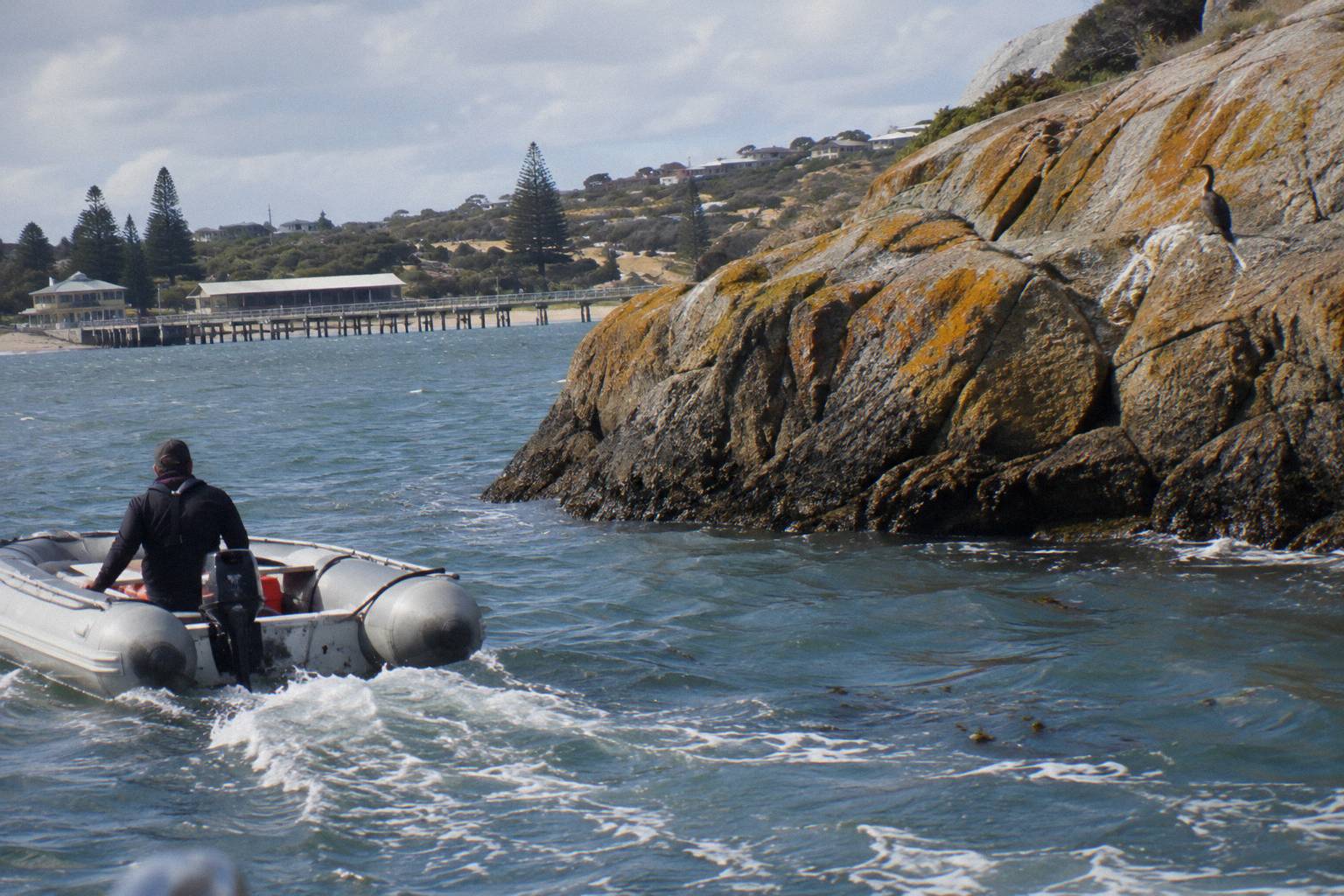
Choosing between the four comes down to what you want from the island and how you want to experience it. If wildlife is the priority, the two Big Duck cruises are the clear pick, since both put you on the water inside Encounter Marine Park with a guide who knows where the seals and seabirds gather; the longer Southern Ocean Adventure simply covers more coastline and more named landmarks in its 1.5 hours, while the 45-minute cruise suits travellers with limited time or a tighter budget. If landscape, town history and shipwrecks appeal more than open water, the two walking tours cost less, stay on solid ground, and pair naturally with a stroll across the causeway before or after, which is the experience many visitors originally came for.
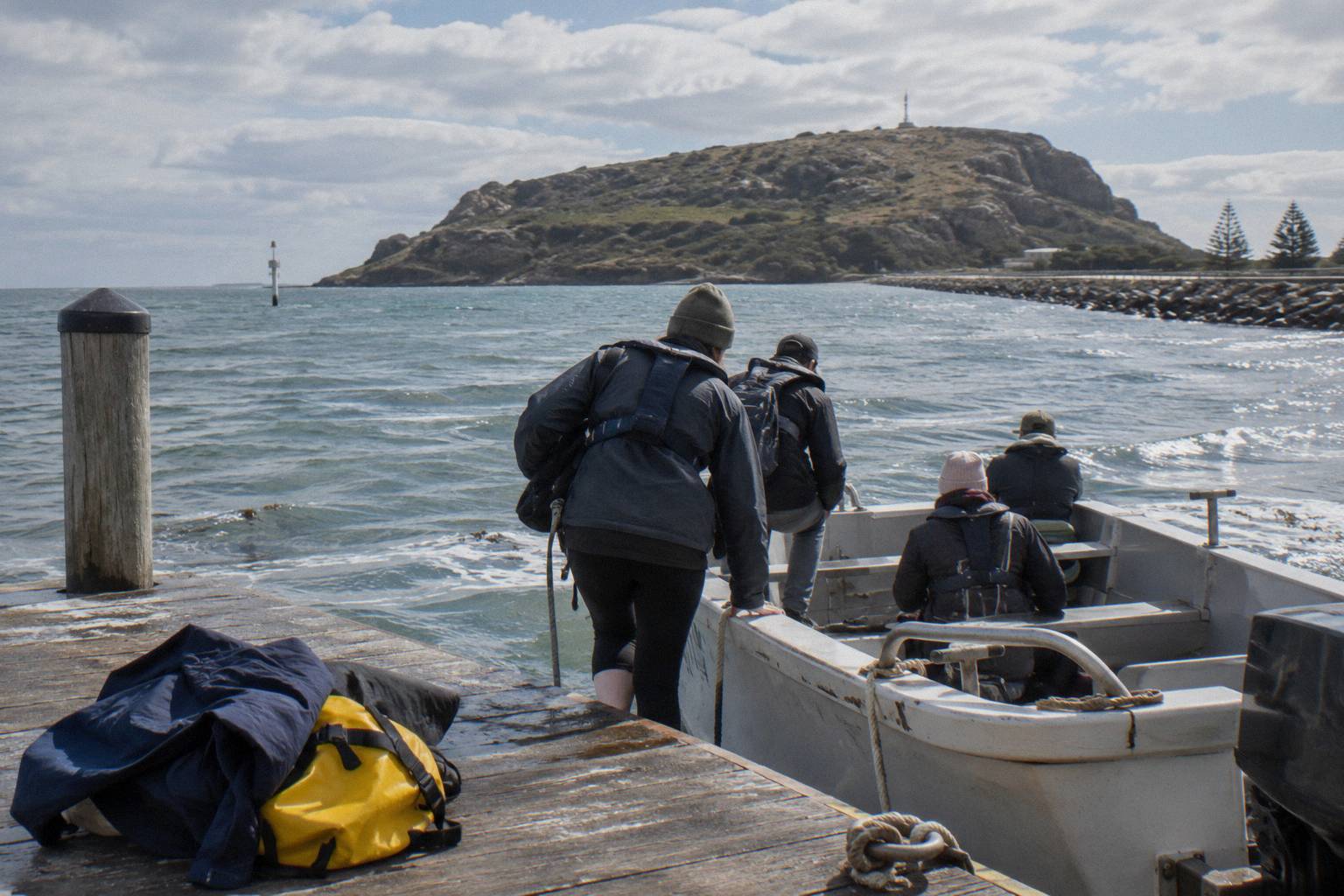
A few practical points help with planning. Because boarding for the cruises happens about 300 m along the causeway, allow time to walk that stretch from the mainland side, and expect some exposure to wind and spray on the boat itself, so warm, waterproof layers are sensible even on mild days. The minimum age of 2 and the requirement that children aged 2 to 15 travel with an adult make the cruises workable for families, while the walking tours are the lower-stress option with young children or anyone prone to seasickness. The operator's cancellation policy, with rough-weather departures typically called off the day before and a full refund or reschedule offered, means it is worth checking the forecast and your messages the evening before a booked cruise. Finally, treat the review ratings as a guide rather than a guarantee: the two cruise ratings draw on well over a hundred reviews each, the town walk's 5.0 comes from a small sample of nine, and the shipwrecks walk simply has no track record yet, so for that one you are going on the operator's description and your own interest in the subject.
What Conditions Affect A Granite Island Visit?
The three condition factors that matter are daylight, weather and sea state: the park opens in daytime hours only, weather and fire-danger closures can shut the island, and the boat operators cancel only for rough or unsafe conditions rather than rain alone. The tram runs weather permitting, so a wild morning can stop both crossings. None of these factors is penguin-specific, because no penguin viewing operates; they are the ordinary constraints of a small island park on an exposed coast, and each one has a free or cheap workaround in planning.
| Condition factor | What it affects | How to handle it |
|---|---|---|
| Daylight | Island opening hours; no evening program exists | Plan the visit for the daytime, and check sunset for your date |
| Weather and fire danger | Park closures; tram operation | Check the park page and forecast before travelling |
| Sea state | Big Duck cruises from the causeway | Hold the 24 hour free-cancellation window rather than deciding weeks out |
| Wind (Goolwa cruises) | Spirit of the Coorong Murray Mouth cruise cancels in strong winds | Treat that cruise as a calm-day option |
Daylight is the first constraint. The island is a recreation park open in daytime, and the counts that exist are collected by monitoring teams rather than offered to visitors as an experience. There is no evening program, no guided departure and no lighting for a night walk, so the visit is a daytime one. Sunset times vary through the year and are not reproduced here; check the forecast for your date.
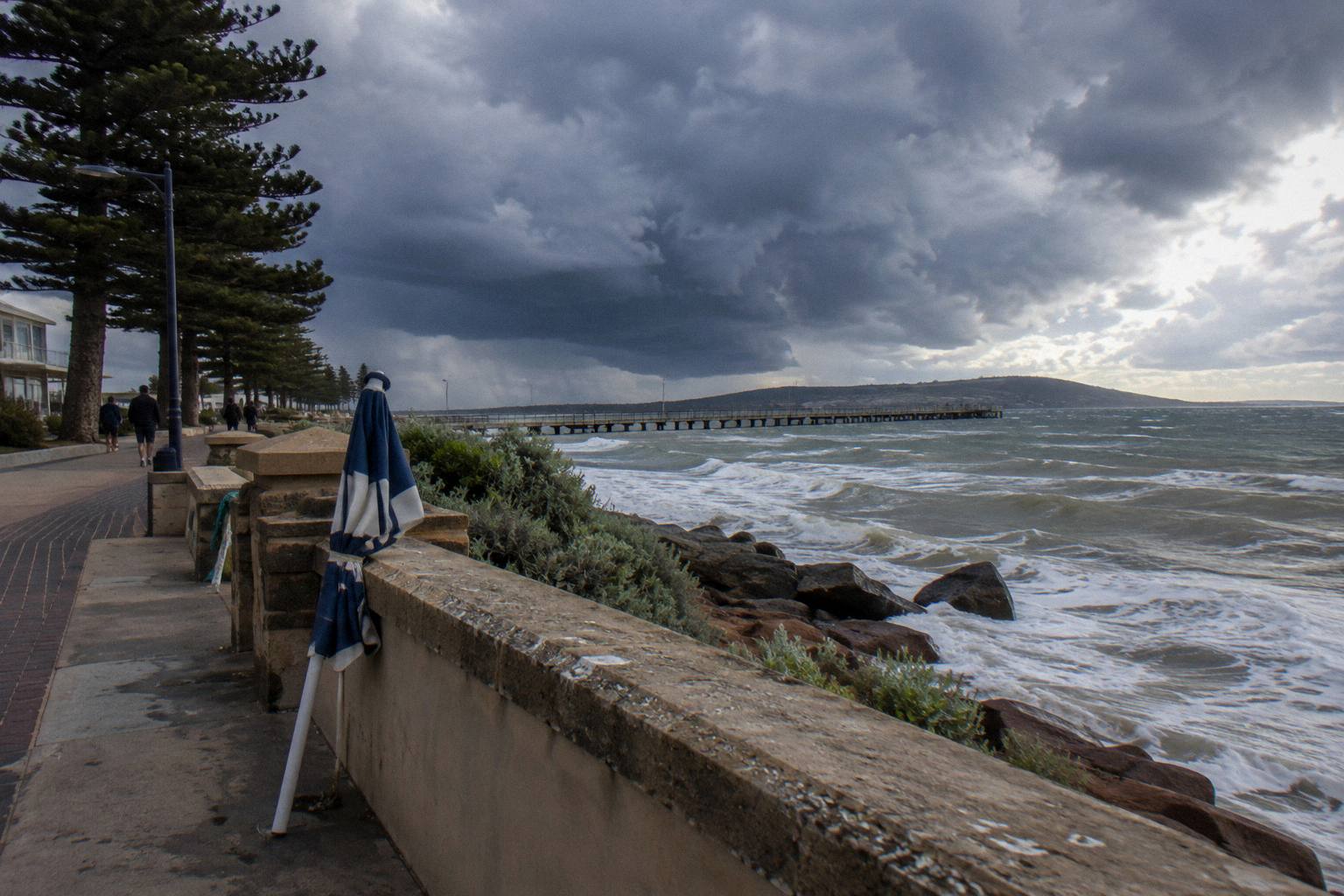
Weather follows. The Bureau averages above give the monthly picture, and fire-danger closures are a summer consideration the park applies. The walking tours publish no weather policy on the booking page, so a wet-day question is best raised with the operator before booking. Sea state affects only the boat options: the cruises board from the causeway and the operator's terms allow route changes with weather and wildlife. Booking terms for every roster tour carry free cancellation up to 24 hours before for a full refund, with a reserve-now-pay-later option, which handles most of the weather risk in planning. The sea conditions guide goes deeper on the marine side.
What Mistakes Do Visitors Make Planning Around Penguins?
The recurring mistakes are booking or searching for an evening penguin tour that ended in 2020, trusting a 2012 colony figure that conflicts with the official record, expecting a large colony when the 2026 count is 46 adults, and arriving without checking weather, fire-danger and tram schedule conditions. Each of these is avoidable with one adjustment to the plan, and none of them costs anything to fix in advance. The island visit itself remains free and simple, and the tours that replace the old product are bookable with a refund window wide enough to absorb most plan changes.
The first mistake is the most common. Travel content written before 2020 still circulates, and search results still surface the old product. The fix is to plan the visit around the causeway, the Kaiki Walk and the tram, and to put any tour budget into the walking tours or the boat cruises. The second is trusting the wrong baseline: as set out above, the news figure for 2012 and the department's count for the same years do not agree, so treat any pre-collapse number other than the 2001 count with suspicion.
The third mistake is expectation. Forty-six adults on an island whose paths cover its full shoreline is a sparse presence, and no operator or authority frames the island as a penguin attraction any more. Visit for the granite, the loop walk and the marine park, and treat any penguin presence as a bonus rather than the purpose. The fourth is practical: check the park page for closures, check the forecast, and if booking a boat trip, hold the 24 hour cancellation window rather than deciding weeks out. More shortlist ideas are in the things to do around Victor Harbor.
Common Questions About Penguin Viewing On Granite Island
Are There Still Penguins On Granite Island?
Yes. The 2026 census counted 46 adult little penguins, up from 36 in 2025 and 30 in 2024. The colony is small but recovering after collapsing from about 1,548 adults in 2001 to a low of 22 in 2015.
Can You Book A Penguin Tour On Granite Island?
No. Commercial penguin tours of Granite Island ended in 2020, and no such product exists anywhere in the current line-up. The guided walking tours and the Big Duck boat cruises are the structured ways to see the island.
When Is The Best Time To See Penguins On Granite Island?
There is no viewing season, because no viewing program operates. The island is open in daytime year round, free to enter, subject to weather and fire-danger closures. Time the visit around weather and daylight rather than wildlife.
How Do You Get To Granite Island?
Walk the causeway, about 650 metres and roughly 20 minutes each way, or take the horse-drawn tram, which runs every day except Christmas Day, weather permitting, first departing Victor Harbor at 10:30 am. Tram tickets are sold at the causeway, not online.
Why Did The Penguin Colony Decline?
The colony fell from about 1,548 adults in 2001 to 22 in 2015, and a fox attack in 2020 pushed the population to its lowest point. Conservation work and nightly citizen-science monitoring since the tours ended in 2020 have accompanied three consecutive annual increases.
What Tours Visit Granite Island Now?
The Discover Victor Harbor Guided Walking Tour and the 75-Minute Shipwrecks History Walk cover the town and island on foot, from AU$35 per person. The Southern Ocean Adventure Cruise and the Seal Island Cruise from Big Duck Boat Tours pass the island from the water, from AU$85 and AU$55 per person.