Are There Still Penguins On Granite Island?
The Granite Island little penguin colony survives at a low count after tours ended in 2020. Here is the population story, how monitoring works now, and what you can actually book.
Yes. A colony of little penguins still breeds on Granite Island, but it is small: the 2026 census counted 46 adults, up from 30 in 2024 and 36 in 2025. Commercial penguin tours of the island ended in 2020, and since then a team of citizen scientists has monitored the birds nightly. No penguin tour is sold today, and no operator can promise a sighting.
In short: Granite Island's little penguin colony persists at a low count after a long decline and a 2020 fox attack. The last commercial penguin tours ran in 2020, when the Department for Environment and Water says nightly monitoring by citizen scientists began. Counts have risen three years straight, from 30 adults in 2024 to 46 in 2026. Penguins are wild birds on a protected island, so the honest way to encounter the island today is on foot or by boat, through a guided walk or a wildlife cruise, never a penguin-specific tour.
The question comes up constantly, and for good reason. Granite Island was once famous across South Australia for its penguin colony, and for years an evening penguin tour was the signature thing to do in Victor Harbor after dark. Travellers who visited a decade or more ago remember queueing at the causeway for a guided walk to the burrows. Travellers arriving today find no such product, a changed island, and a great deal of confusion about whether the birds are gone altogether.
They are not gone. The colony's story is one of steep decline, a catastrophic 2020, and then a slow, fragile recovery that is still being written. This article lays out the numbers that are on the public record, explains why the tours ended, and sets out what you can genuinely book instead, because the island itself remains one of the most rewarding corners of the Fleurieu Peninsula. For the wider picture of things to do in the town, the shortlist of Victor Harbor tour options is a good companion read.
Yes, little penguins are still present on Granite Island, and the population trend over the past three years has been upward. The annual census counted 30 adults in 2024, 36 in 2025 and 46 in 2026, figures reported after each survey season. The colony is nonetheless tiny against its historical size, roughly 1,548 adults were counted in 2001, and sightings are never guaranteed because the birds are wild and mostly come ashore at dusk.
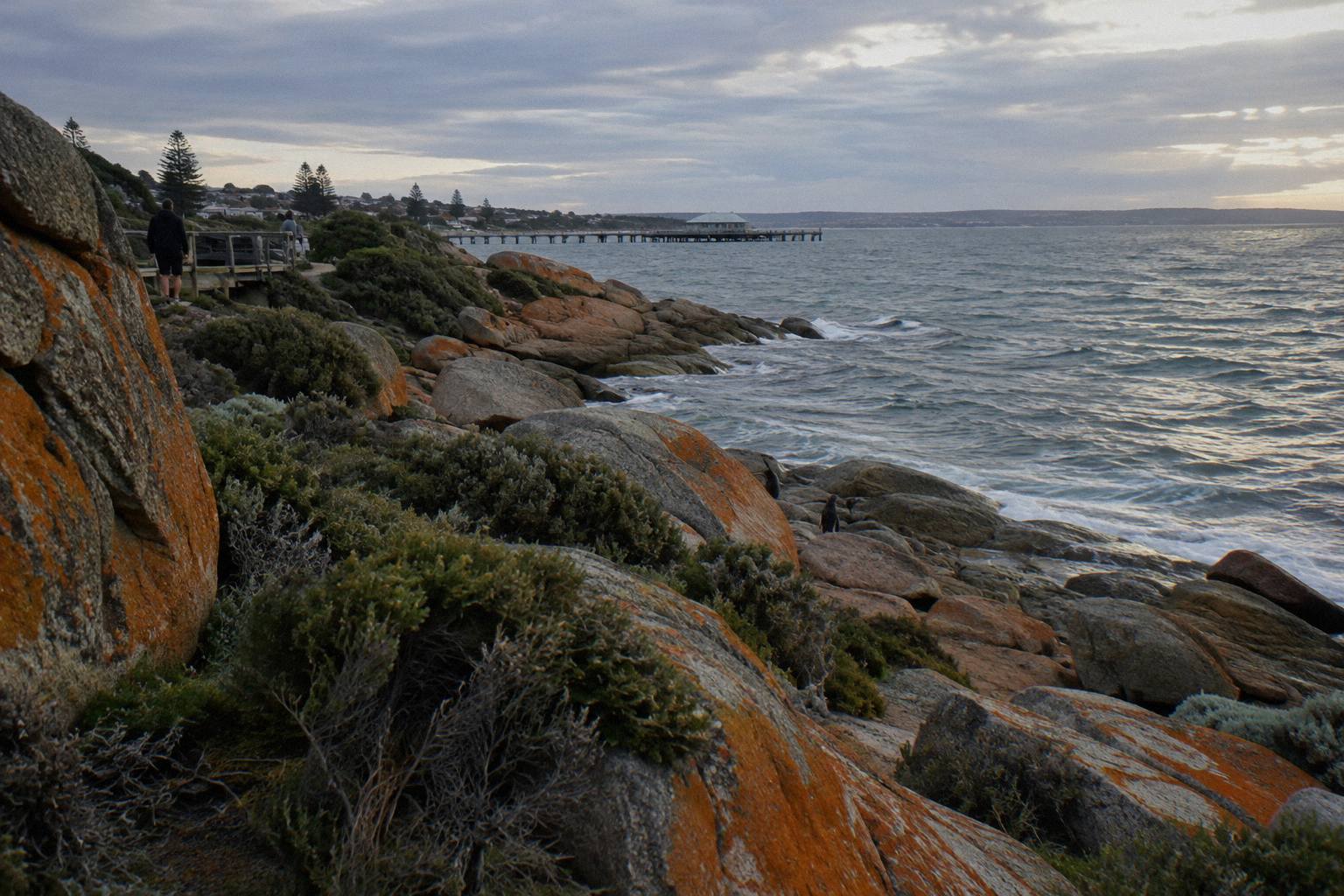
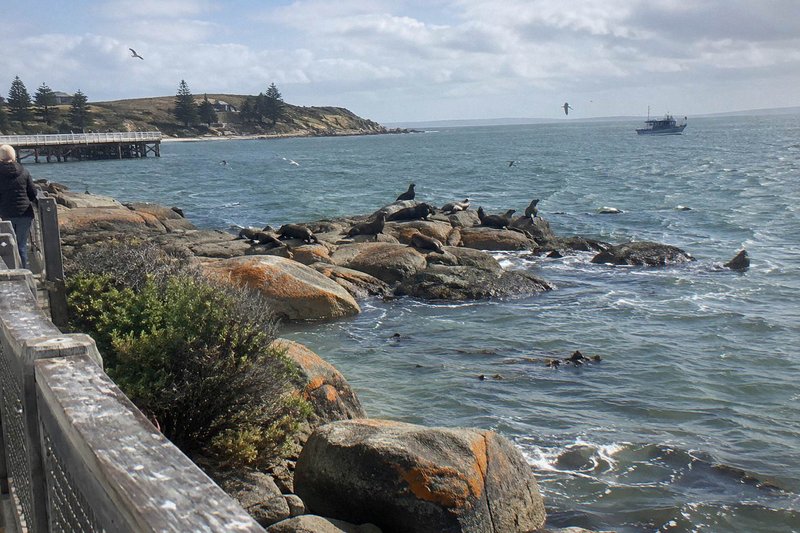
The little penguin, the smallest penguin species in the world, has bred on Granite Island for as long as records exist. The island sits just off Victor Harbor across the causeway, inside the waters of Encounter Bay, and its boulder beaches and rock crevices give the birds exactly the kind of burrow habitat they prefer. The little penguin comes ashore at dusk after a day feeding at sea, which is why the old tours always ran in the evening.
What has changed is scale. A colony that supported a nightly tourism operation for years now numbers a few dozen adults. To put the recent counts side by side:
| Year | Adult penguins counted | Source of the count |
|---|---|---|
| 2001 | about 1,548 | Department for Environment and Water report (2011) |
| 2015 | 22 | Department for Environment and Water report |
| 2018 | 44 | Department for Environment and Water census, 28 September 2018 |
| 2024 | 30 | Annual census reported publicly |
| 2025 | 36 | Annual census reported publicly |
| 2026 | 46 | Annual census, reported by the ABC |
Read that table carefully and two things stand out. First, the collapse happened well before the tours ended, the colony was already down to dozens of birds while evening walks were still running. Second, the three most recent counts form the first sustained recovery sequence in the record. The ABC's report on the 2026 census is the most recent public account of the count.
The recovery has reasons behind it, and the monitoring effort is one of them. So is the absence of nightly tour traffic through the habitat. Neither guarantees the trajectory continues, and the people closest to the data are careful not to promise it. A colony of 46 adults is still a colony where a single bad season, one dog, one fox, one unusual storm, can undo several years of gains.
For visitors, the practical reading is straightforward. The penguins are there, in small numbers, doing what wild penguins do. If seeing the island and its wildlife matters to you, a guided walk or a boat trip out on the bay will put you in the right places at the right times of day, and those are bookable today.
What Happened To The Granite Island Penguin Colony?
The colony declined from roughly 1,548 adults in 2001 to 22 by 2015, a collapse of almost the entire breeding population in under fifteen years, and a fox attack in 2020 then pushed the population to its lowest point. Researchers have pointed to a combination of pressures rather than one single cause. The 2024 to 2026 counts of 30, 36 and 46 adults are the first sustained upturn in the published record.
The decline was not a mystery event. It played out over years, tracked by state environment reports that make grim reading in hindsight. By the 28 September 2018 census the count had recovered slightly to 44 adults from 22 in 2015, but the birds were already ecologically fragile, a colony of a few dozen breeding pairs with an entire tourism industry built around them.
Then came 2020. A fox reached the island and killed birds, an event reported by local media as pushing the population to its lowest point. For a colony already that small, predation on that scale is not a setback, it is an existential shock. It is no coincidence that the same year is when commercial penguin tours ended.
What The Monitoring Record Shows
- About 1,548 adult penguins were counted on Granite Island in 2001.
- The count fell to 22 adults in 2015 and stood at 44 at the 28 September 2018 census.
- A fox attack in 2020 pushed the colony to its lowest recorded point.
- Counts have risen three years running: 30 adults in 2024, 36 in 2025 and 46 in 2026.
- Since tours ended in 2020, citizen scientists have monitored the island nightly.
One figure you will see quoted elsewhere deserves caution. Some reports describe the colony as having collapsed from more than 1,000 birds in 2012. The state's own 2016 action plan records only 38 to 26 individuals across 2012 to 2014. The two accounts conflict, so the 2012 number is best treated as unreliable, and nothing in this article rests on it. The 2001 figure and the recent census figures are the solid anchors.
The recovery since 2024 is real but modest. Going from 30 to 46 adults in two years is genuine progress for a colony this size, and it lines up with the intensive nightly monitoring and habitat protection now in place. It does not yet amount to a population that could absorb renewed tour pressure through the breeding areas, which is part of why the tours have not come back and why nobody sells one.
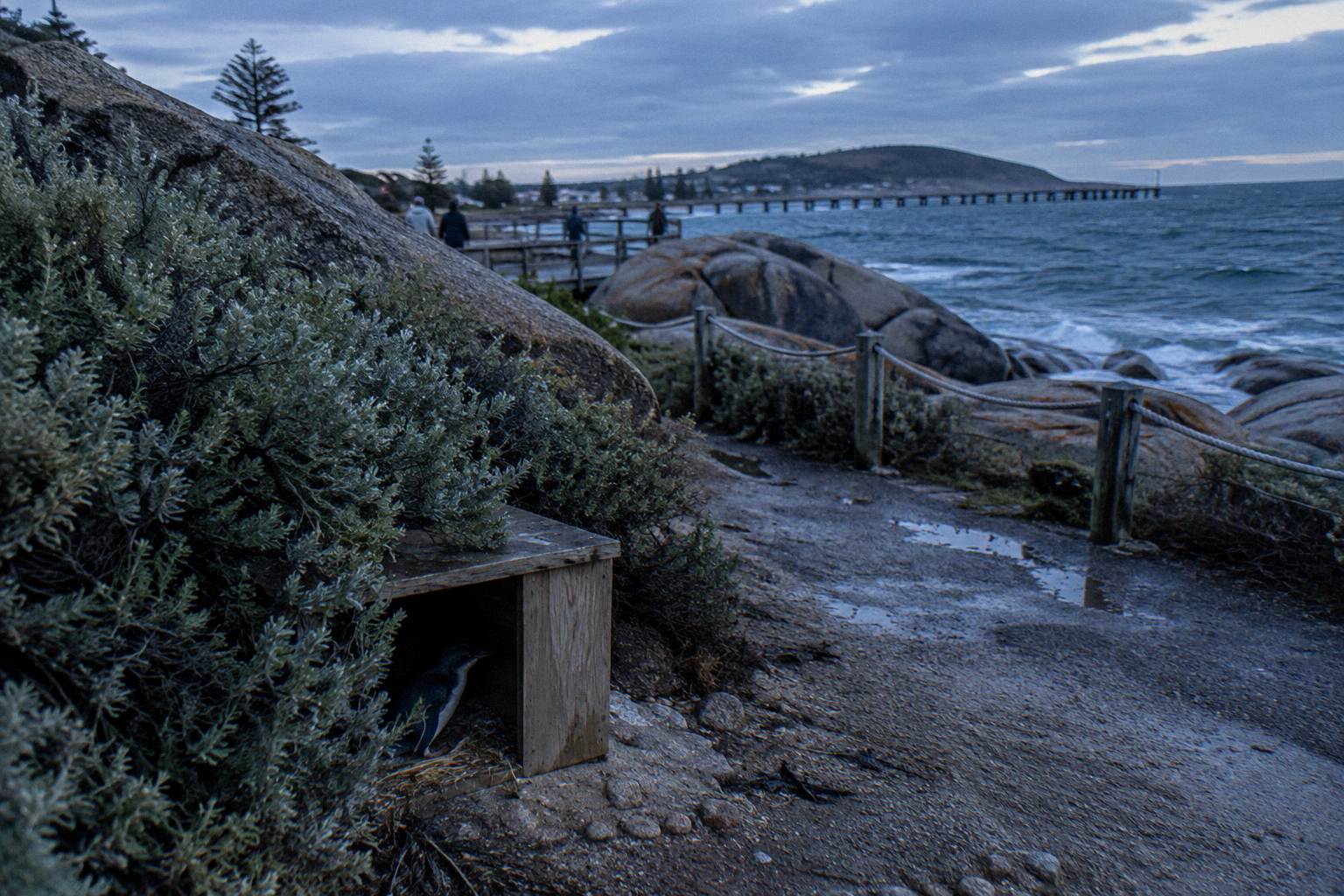
If your interest in the island is broader than penguins, the guide to Granite Island tours covers everything bookable around it, and the deeper history of the penguin question, including how the birds behave through the year, sits in whether Granite Island still has penguins and how to see them.
Why Did The Penguin Tours End In 2020?
Commercial penguin tours of Granite Island ended in 2020, a fact stated plainly by the Department for Environment and Water, which notes that citizen scientists have conducted nightly monitoring since the tours ended. The collapse of the colony to a few dozen birds, capped by the 2020 fox attack, made running tours through the habitat untenable. No operator sells a penguin tour of the island today, and none should be expected to.
The department's own wording, from a 2025 piece on citizen science awards, is that "Since penguin tours of Granite Island ended in 2020, citizen scientists have conducted nightly monitoring." That single sentence answers the question and explains what replaced the tours: a volunteer monitoring program that walks the island every night, recording burrow activity, molting birds and arrivals, and building the dataset behind the annual census.
It is worth being blunt about what this means for travellers. If any website, brochure or street offer promises you an evening penguin tour of Granite Island, it is selling something that does not exist. There is no guided penguin walk, no penguin-viewing departure, no penguin cruise in the current line-up of Victor Harbor experiences, and the full penguin status guide explains the history in detail. What exists is an island you can walk, a causeway you can cross, and a bay you can go out on with operators who show you the marine life that is actually there.
The end of the tours is not a scandal or a failure, it was the correct call for a colony in crisis. Nightly foot traffic through breeding habitat, however carefully managed, is a pressure on birds that were already at the edge. The years since have delivered the only sustained population growth in the record. Whatever your views on tourism and conservation, those two facts sit together uncomfortably for anyone arguing the tours should return.
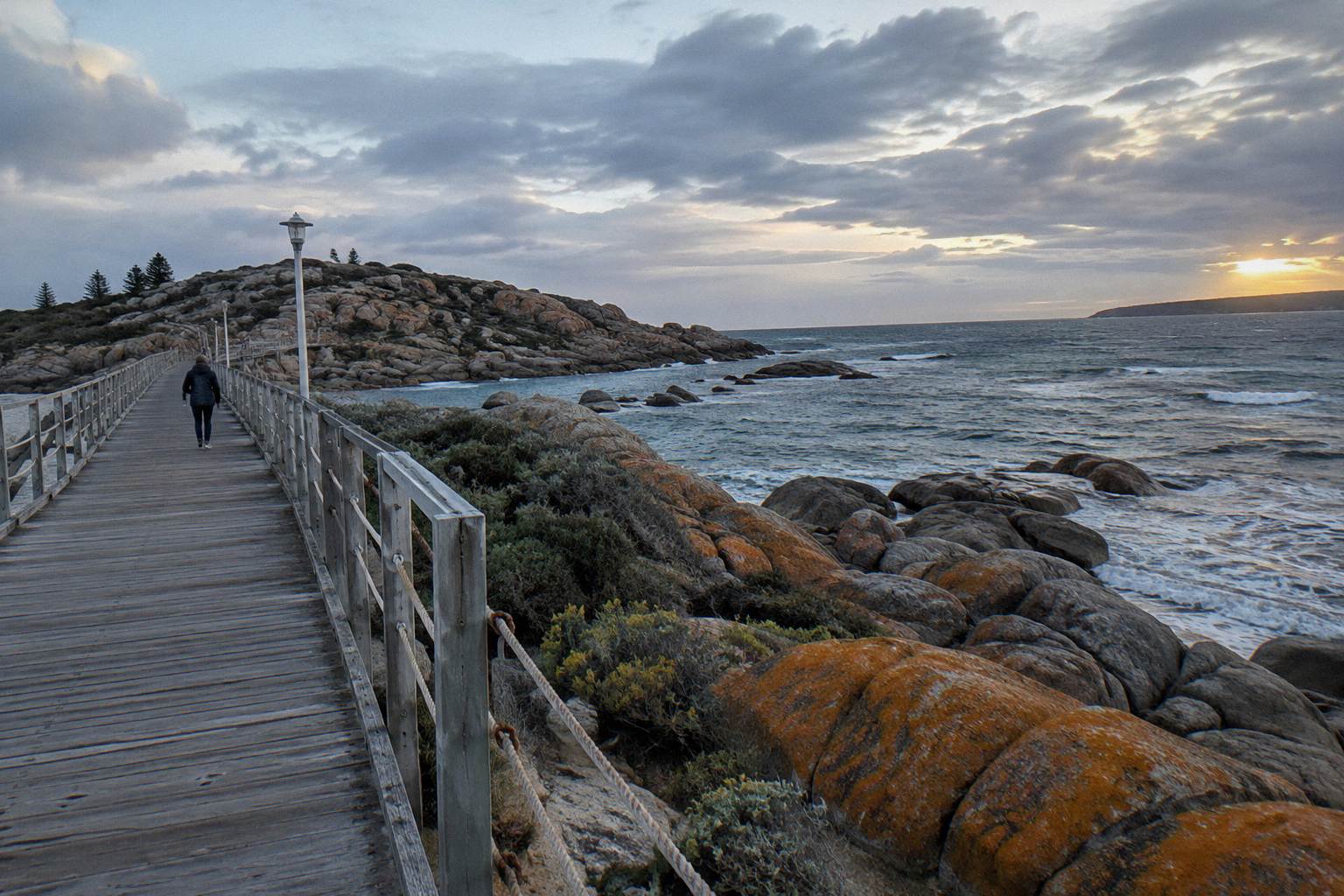
What the island offers instead is genuinely good. The Kaiki Walk, a 2.9 km loop taking about an hour, circles the island on a formed path with sweeping views back across Encounter Bay. Entry to the Granite Island Recreation Park is free and the park is open during the day, subject to weather and fire-danger closures, as the park page sets out. Walking it with a guide who knows the island's story adds a layer most visitors miss.
That is where the bookable products come in. A guided walking tour of Victor Harbor takes in the causeway and the town's history around it, and a boat trip puts the island in context from the water. Neither is a penguin tour, both are honest ways to spend a day here.
How Is The Colony Monitored Now?
Since the tours ended, a citizen-science team has monitored the island's penguins nightly, an arrangement the Department for Environment and Water has publicly recognised. The volunteers record arrivals, burrow activity and condition, and their work feeds the annual census counts that track the colony's size. The 2026 count of 46 adults is the product of that ongoing effort rather than a one-off survey.
Nightly monitoring sounds simple and is anything but. Someone walks the island most evenings of the year, in winter cold and summer wind, logging what the colony is doing: which burrows are active, when birds are molting, how many come ashore at dusk. Over a season that builds a picture no single census night could. Over several years it becomes the dataset that shows whether the recovery is holding. More of these guides are collected on Victor Harbor Tours.
The program's value showed in 2025, when the environment department's citizen science awards put the Granite Island penguin monitors in the spotlight. Public recognition of volunteer wildlife monitoring is rare, and it underlined how central the volunteers have become to the colony's survival, they are, in a practical sense, the successor to the tour guides, watching the birds every night without selling a ticket.
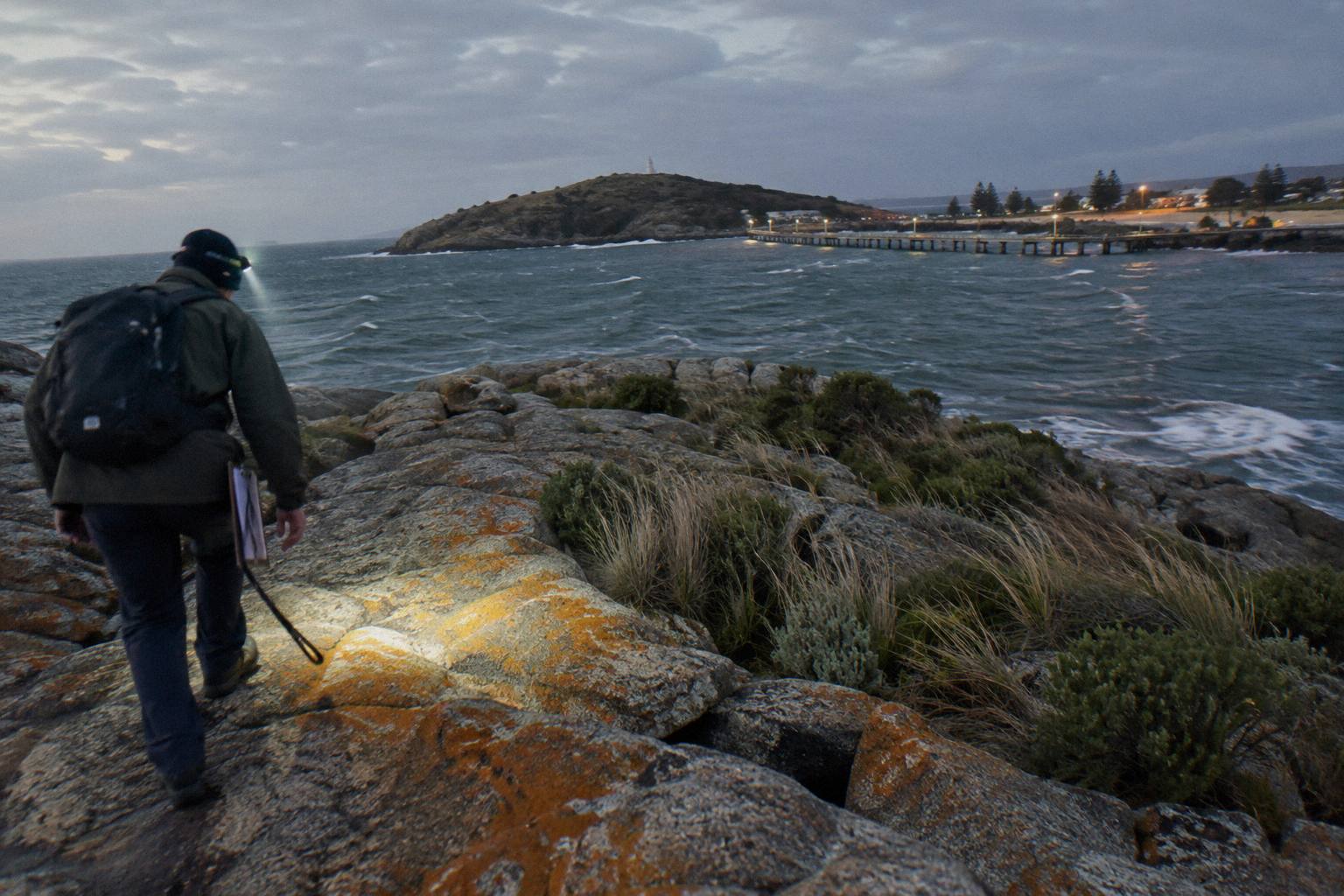
For a visitor, the monitors are also a reminder of the island's rules. The birds that remain are spread through habitat that a walker can easily stray into without knowing. Staying on formed paths, keeping dogs away from the island, and not shining lights at the shoreline at dusk are the behaviours the monitoring program exists partly to protect. The colony at 46 adults cannot afford careless evenings.
The census itself is the annual checkpoint. Counts of 30, then 36, then 46 across 2024 to 2026 have each been reported publicly after the survey, and the upward run is the first in the published record since monitoring began. Whether the next census extends the streak is the open question, and it is one the monitors will answer one night at a time.
What Can You Actually Book Around Granite Island?
You can book guided walks and boat cruises, not penguin tours. The Discover Victor Harbor Guided Walking Tour, 1.5 hours from 1 Esplanade, from AU$35 per person, covers the town and its Granite Island story, and Big Duck Boat Tours runs the 1.5-Hour Ocean Adventure and the 45-Minute Seal Island Cruise from the causeway. All amounts are in Australian dollars, and every one of these carries free cancellation up to 24 hours before.
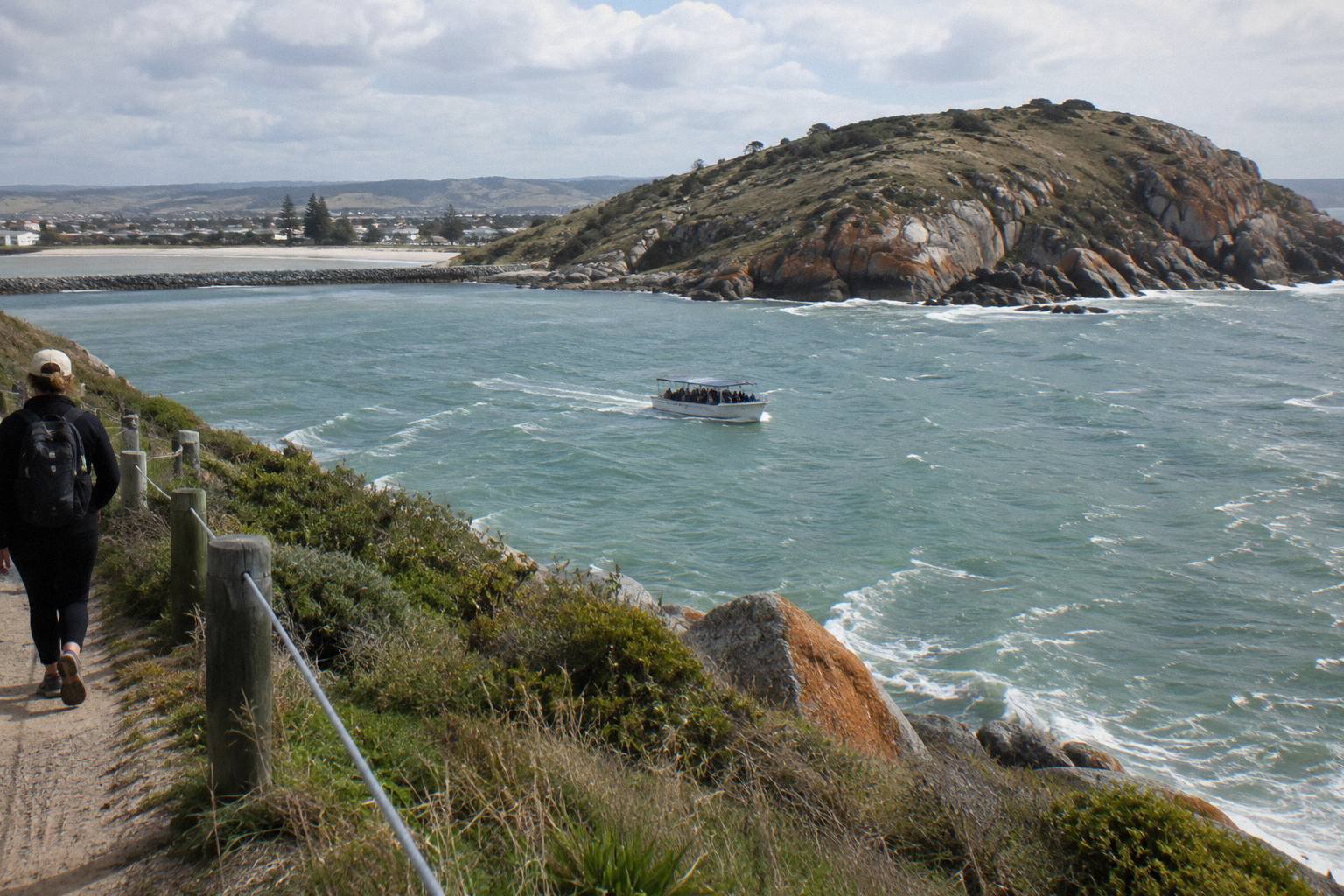
The walking option suits anyone who wants the island explained rather than just visited. The Discover Victor Harbor Guided Walking Tour is run by Victor Harbor Walking Tours, meets at 1 Esplanade, runs about 1.5 hours and is rated 5.0 from 9 reviews. It is the featured pick here because it does what a good local walk does: it puts the causeway, the whaling history, the tram and the penguin story into one narrative you would never assemble from signs alone.
There is also a second walk with a different flavour. The Victor Harbor: Shipwrecks & Settlers Walking Tour, 75 minutes from 60 Franklin Parade in Encounter Bay, digs into the maritime disasters of the coast, also from AU$35 per person. Between them, the two walks cover most of what makes Victor Harbor historically interesting, and neither pretends to include a penguin viewing.
Out on the water, Big Duck Boat Tours runs two very different experiences from the Granite Island Causeway. The Victor Harbor: Southern Ocean Adventure Cruise with Guide is the bigger trip: 1.5 hours aboard Pungari, a 12.5 m rigid-hulled inflatable, tracking a route the operator describes past Seal Island, Wright Island, The Bluff, West Island, Shark Alley, Kings Beach and the Waitpinga cliffs, inside the Encounter Marine Park. It is from AU$85 per person and rates 4.7 from 163 reviews. Whales are seen where present and conditions permit, and the operator says sightings are never guaranteed.
The shorter option is the Victor Harbor: Seal Island Cruise, 45 minutes from AU$55 per person, rated 4.7 from 112 reviews. The operator's own wording is that "Fur Seals, Sea-Lions, and Seabirds await" at the island, and it is the quick, low-commitment way to get out on the bay and see the coast's resident marine life. Both Big Duck trips cancel in rough or unsafe conditions, typically with notice the day before, and carry free cancellation up to 24 hours before for a full refund.
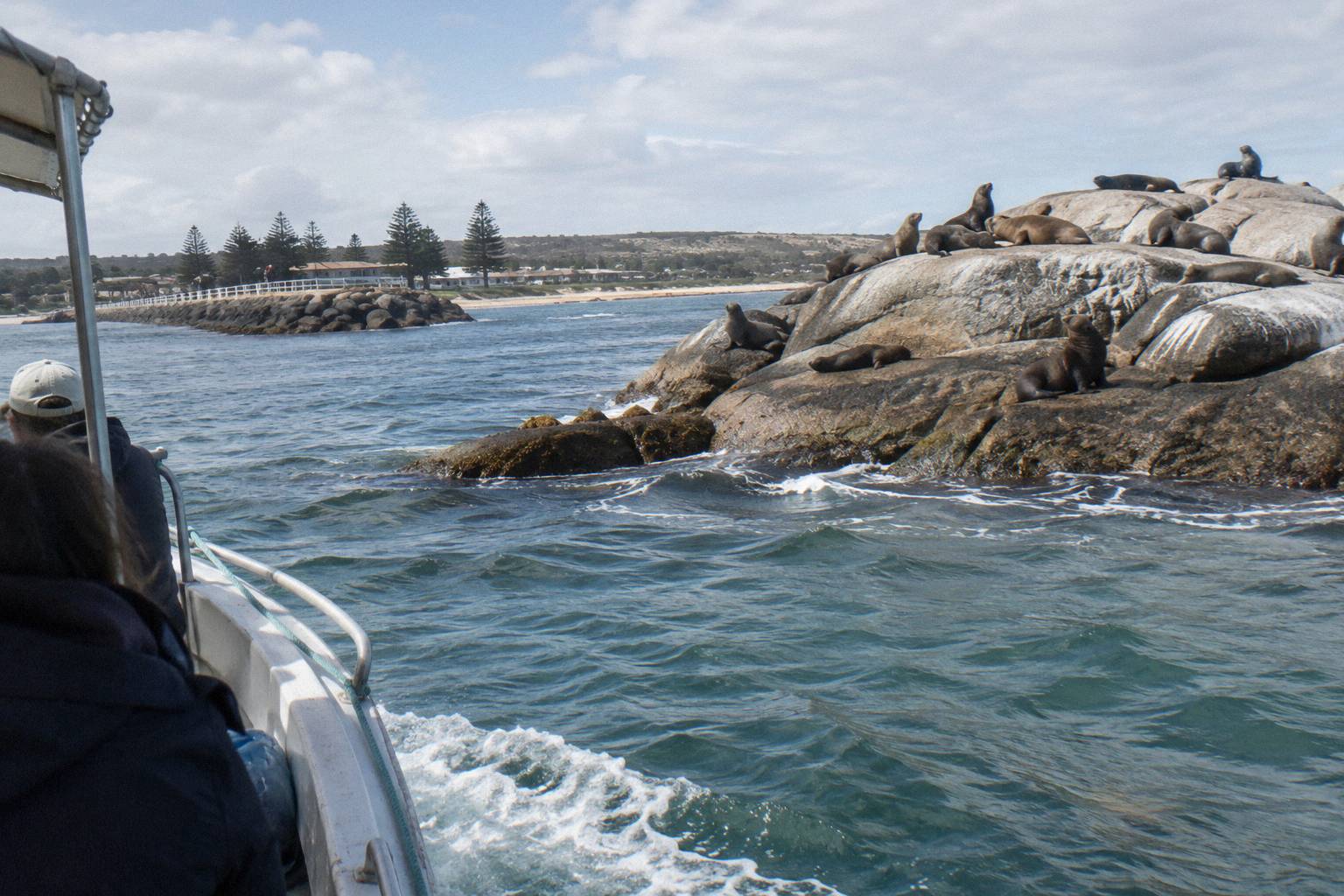
How the options compare, using each product's own figures:
| Experience | Operator | Duration | Meeting point | From price | Rating |
|---|---|---|---|---|---|
| Discover Victor Harbor Guided Walking Tour | Victor Harbor Walking Tours | 1.5 hours | 1 Esplanade, Victor Harbor | AU$35 per person | 5.0 from 9 reviews |
| Shipwrecks & Settlers Walking Tour | Victor Harbor Walking Tours | 75 minutes | 60 Franklin Parade, Encounter Bay | AU$35 per person | no rating yet |
| Southern Ocean Adventure Cruise | Big Duck Boat Tours | 1.5 hours | Granite Island Causeway | AU$85 per person | 4.7 from 163 reviews |
| Seal Island Cruise | Big Duck Boat Tours | 45 minutes | Granite Island Causeway | AU$55 per person | 4.7 from 112 reviews |
Choosing between them is mostly about time and sea legs. A walker with a free evening and no interest in boats loses nothing by staying ashore. A family with kids aged two and up can do either Big Duck trip, children from 2 to 15 travel with an adult, though the trips are not suitable for pregnant passengers. Anyone prone to seasickness should weigh the 45-minute cruise against the 90-minute one, and the piece on whether you will get seasick on a Victor Harbor whale tour applies just as well to the shorter runs.
When Are Penguins Most Likely To Be Around The Island?
Little penguins come ashore at dusk after feeding at sea, so the hours around sunset on a calm evening are when the birds are most likely to arrive at the island, and the breeding season through spring and summer is when burrow activity peaks. No tour or operator can promise a sighting, and none tries, the birds are wild, few in number, and protected inside a recreation park where their habitat is off-limits to walkers.
It costs nothing to be on the island or the causeway shore at dusk. The Kaiki Walk closes the day well, and the causeway itself, about 650 metres one way and a 20 minute walk, gives you a vantage back toward the island's northern shoreline. If penguins come ashore, it happens in the fading light, and the right behaviour is stillness, distance and no lights, not a search party.
What you should not do is climb onto the boulder beaches or probe the rock crevices. That is the habitat the monitors walk so carefully, and the colony's slow recovery depends on it staying undisturbed. The Granite Island Recreation Park is free to enter and open in daytime hours, and the formed paths are where visitors belong.
It is also worth being realistic about the odds. With 46 adults spread across an island of rock and scrub, an unguided dusk visit delivers a penguin sighting only occasionally, and often as a distant flutter rather than a close encounter. The dependable wildlife of the bay is on the water, fur seals and sea lions at their islands, seabirds along the cliffs, and in season, southern right whales, which the SA Whale Centre says are usually first seen in May and can be found until early October, with July and August the most reliable months.
That is the honest trade on offer. Come for the island at dusk on foot, with modest expectations and good behaviour, or come for the guaranteed-nowhere, likely-on-the-water marine life with a boat operator. The guide to Victor Harbor wildlife boat tours works through the boat side in detail.
Mistakes People Make When Visiting Granite Island For Penguins
The common mistakes are paying anyone who claims to sell a penguin tour, which does not exist, expecting a sighting, which nobody can promise, and walking off the formed paths at dusk to search the burrows, which damages the habitat the recovery depends on. Others arrive expecting the old penguin centre or an evening program and find neither. Avoiding these is easy once the island's status is clear.
The first mistake is the expensive one. Fake or resold penguin tour offers surface now and then, trading on memories of the old product. The commercial tours ended in 2020 and nothing has replaced them. If money changes hands for a "penguin experience" on Granite Island, something is wrong with the transaction.
The second is expectation. Even the monitors, who walk the island nightly, record the birds methodically rather than photograph them in floodlit glory. A visitor with an hour at dusk is witnessing a small wild colony on its own terms. People who arrive primed by decade-old memories of busy viewing platforms go home disappointed, and sometimes blame the penguins.
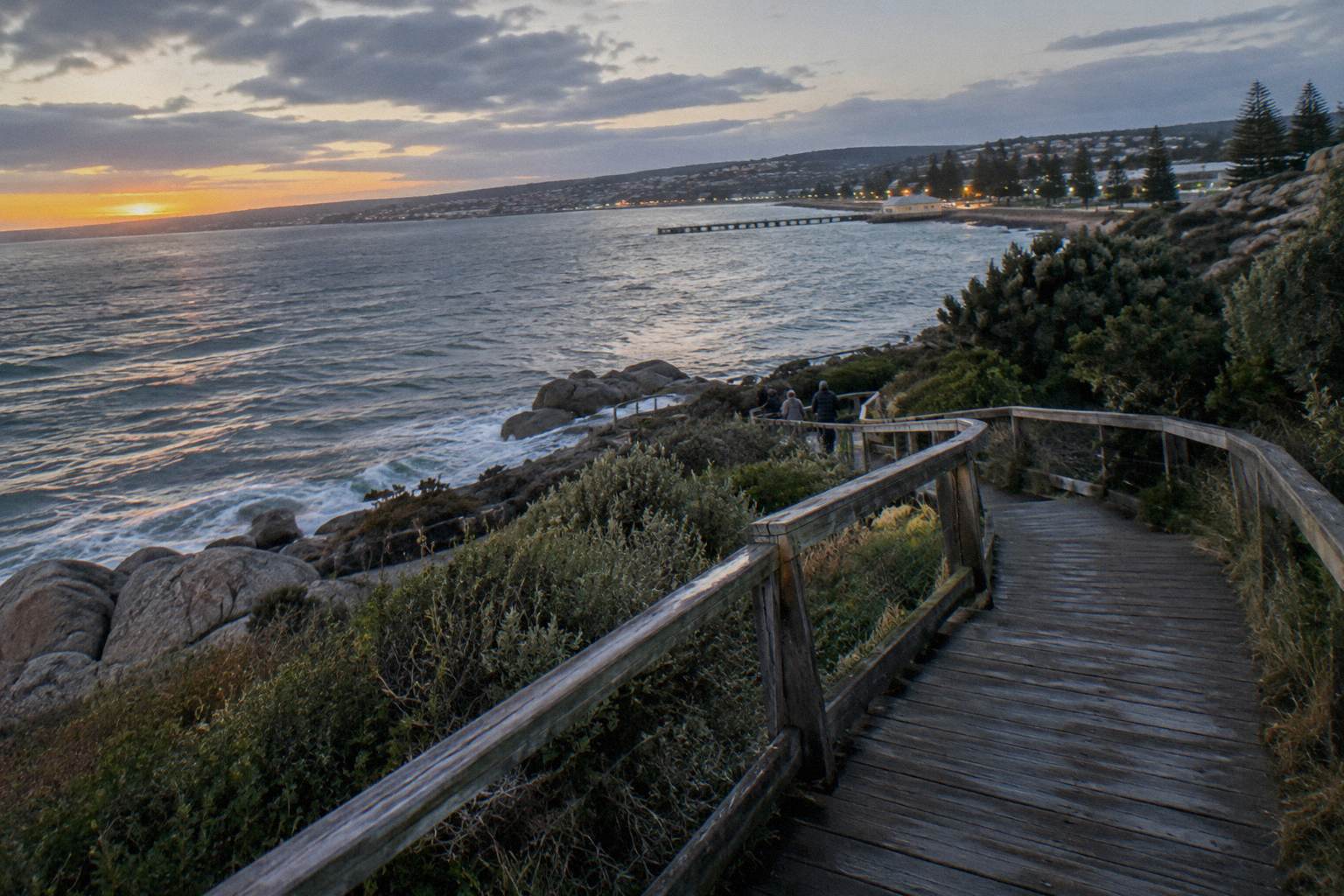
The third is behaviour. Rock-hopping onto the boulder beaches, shining torches at the shoreline, letting dogs explore, each of these puts direct pressure on a colony of a few dozen birds. The fox attack of 2020 showed how fast predation can undo years. The rules are simple: stay on paths, no dogs, no lights at the waterline, and give any bird you do see all the room it wants.
The fourth is planning around things that no longer exist or never did. There is no evening penguin program, no penguin centre to visit, and no train from Adelaide, though the heritage Cockle Train does run on selected days between Goolwa and Victor Harbor. Getting here is otherwise a drive of about an hour and a quarter from Adelaide, or a direct bus of just under two hours, and the comparison of tour versus drive options from Adelaide settles that choice for most visitors.
The last mistake is treating the island as only about penguins. It is a spectacular piece of coast in its own right, the gateway to Encounter Marine Park, and the best days here combine a walk, a boat trip and an unhurried look at the bay. The penguins are the island's most famous residents, but they are not its only reason to cross the causeway.
Common Questions About The Island's Penguins
Are There Still Penguins On Granite Island?
Yes. The 2026 census counted 46 adult little penguins, up from 30 in 2024 and 36 in 2025. The colony is small but present, and it is monitored nightly by citizen scientists.
Can You Take A Penguin Tour Of Granite Island?
No. Commercial penguin tours of Granite Island ended in 2020, and no operator sells one today. Guided walking tours of Victor Harbor and boat cruises from the causeway are the bookable alternatives.
Why Did The Penguin Population Decline So Much?
The colony fell from about 1,548 adults in 2001 to 22 in 2015, and a fox attack in 2020 pushed it to its lowest point. The exact mix of causes is complex, but predation and pressure on a small colony were decisive in 2020.
When Is The Best Time To See Penguins On Granite Island?
Little penguins come ashore at dusk, so calm evenings around sunset are when an unguided sighting is most plausible. No sighting is guaranteed, and visitors should stay on formed paths and avoid lights at the shoreline.
What Can I Book Instead Of A Penguin Tour?
The Discover Victor Harbor Guided Walking Tour from AU$35 per person, the Shipwrecks and Settlers walk, also from AU$35, and Big Duck Boat Tours' Seal Island Cruise from AU$55 or Southern Ocean Adventure from AU$85 per person. All amounts are Australian dollars.
Is The Penguin Population Recovering?
The last three census counts rose each year, from 30 adults in 2024 to 46 in 2026, the first sustained increase in the published record. Volunteers continue nightly monitoring, but the colony remains small enough that one bad season could reverse the gains.