Granite Island Penguin Tours: What Ended In 2020 And How To Visit Now
Penguin tours of Granite Island no longer exist. The Department for Environment and Water says commercial penguin tours ended in 2020, and citizen scientists have monitored the colony nightly since. Here is where the colony stands, how to walk the island responsibly, and which guided options run instead.
Short answer
There is no bookable penguin tour of Granite Island. Commercial penguin tours ended in 2020, and the Department for Environment and Water says citizen scientists have monitored the colony nightly since. The 2026 census counted 46 adults. Guided alternatives include the 1.5-hour guided town walk from AU$35 and Encounter Bay boat tours from AU$55.
This page sits inside the Granite Island coverage collected by Victor Harbor Tours; for a wider look at the island's tram, walks and boat options, see the Granite Island tours overview.
Quick Facts
| Question | Answer |
|---|---|
| Is a penguin tour of Granite Island sold? | No. Commercial penguin tours ended in 2020 |
| Who monitors the colony now? | Citizen scientists, nightly, since the tours ended |
| How many adults in the 2026 census? | 46 |
| Does the island cost anything to enter? | No, Granite Island Recreation Park is free entry |
| How long is the causeway walk? | About 650 metres, around 20 minutes on foot |
| Guided alternatives | Town walking tour from AU$35, boat tours from AU$55 |
What Happened To The Granite Island Penguin Tours?
Commercial penguin tours of Granite Island stopped in 2020, and nothing has replaced them. The Department for Environment and Water puts it plainly: since penguin tours of Granite Island ended in 2020, citizen scientists have conducted nightly monitoring of the colony. No operator on this site sells a penguin tour, an evening departure or a guided penguin sighting, and any listing that claims otherwise is selling something that no longer exists. The colony itself remains, and it is recovering slowly.
The ending was not a single dramatic announcement. The tours had wound down as the colony collapsed over the 2010s, and a fox attack in 2020 pushed the population to its lowest point, according to local reporting on the census programme. When the commercial operation closed, the nightly monitoring passed to volunteers, and that arrangement has continued ever since.
For a time before closure there was also a Penguin Centre on the island. Official confirmation of its exact closing date is thin, so nothing specific is claimed about it here. What matters for a visitor planning a trip now is simpler: the bookable product is gone, the birds are wild, and the island is managed as a recreation park first.
That shift changed how the island is used. Where evening tour groups once walked to viewing spots, the park is now a daytime destination, open from dawn to dusk subject to weather and fire-danger closures, as the Granite Island Recreation Park page sets out. The recovery work continues around ordinary visitors: fox control, habitat care and the nightly counts that track whether the colony is growing.
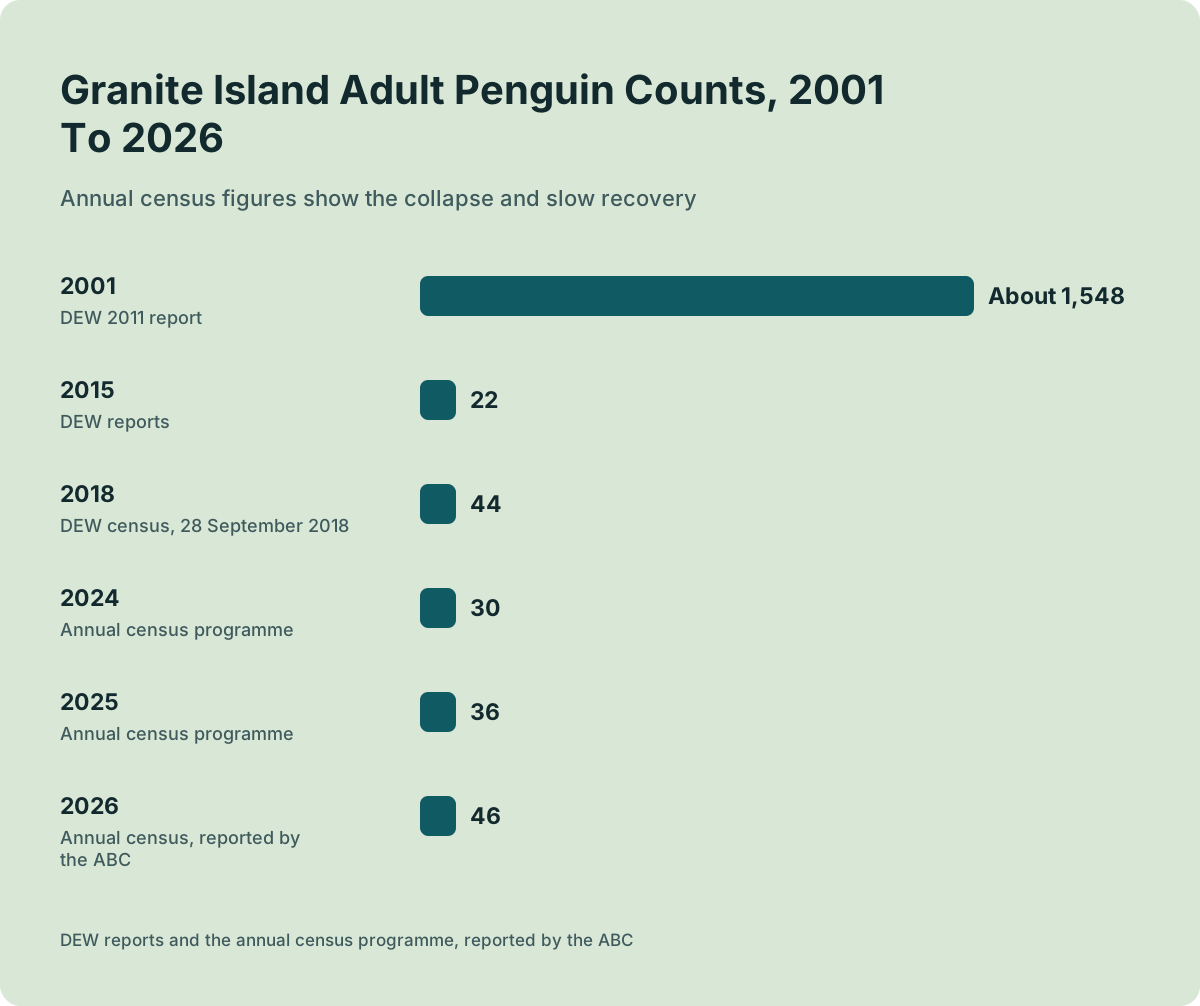
The counts, importantly, are encouraging without being triumphant. Forty-six adults in 2026 is a real rise from the low twenties a decade ago, and it is still a fraction of the roughly 1,548 adults recorded in 2001. Anyone hoping to glimpse a wild penguin should treat it as a possibility, never a promise, which is exactly how the monitoring programme describes the colony too.
How Is The Colony Tracking Now?
The adult population has climbed for three consecutive counts: 30 in 2024, 36 in 2025 and 46 in 2026. That is a steady recovery from the 22 adults counted in 2015, though it remains far below the roughly 1,548 adults recorded in 2001. The 2026 figure comes from the annual census reported by the ABC, drawing on the monitoring programme that replaced the commercial tours.
The census history tells the story in one line of numbers. Each figure below is the adult count from its year's official count or report, with the source named so you can follow it up yourself.
| Year | Adult penguins counted | Source |
|---|---|---|
| 2001 | About 1,548 | DEW 2011 report |
| 2015 | 22 | DEW reports |
| 2018 | 44 | DEW census, 28 September 2018 |
| 2024 | 30 | Annual census programme |
| 2025 | 36 | Annual census programme |
| 2026 | 46 | Annual census, reported by the ABC |
One number you will sometimes see quoted for 2012 does not appear here, and deliberately so. Reports conflict about what the colony numbered in 2012, so no 2012 figure is printed. The trend line is clear without it: a collapse through the 2010s, a fox attack in 2020 at the low point, and a slow climb since under volunteer monitoring. The ABC's report on the 2026 census covers the count and the recovery effort in detail.
The practical read for a visitor: penguins are present on the island as a wild colony of a few dozen adults, most visible around dusk and dawn when birds come and go from burrows, and entirely dependent on the birds' own behaviour. Nobody can sell you a sighting, and the responsible way to encounter the island is the one the park itself supports, which is walking it in daytime and leaving the birds undisturbed.
Since no penguin product exists, the closest guided experiences are the ones that interpret the island and the bay around it. The Discover Victor Harbor Guided Walking Tour, from AU$35 per person, rated 5.0 from 9 reviews, tells the town and island story on foot; the Victor Harbor: Southern Ocean Adventure Cruise with Guide, from AU$85, and the Victor Harbor: Seal Island Cruise, from AU$55, put a guide on the water instead. All amounts are Australian dollars, and each carries free cancellation up to 24 hours before.
Can You Still See Penguins On Granite Island?
Yes, as wild birds, occasionally, and with no guarantee attached. The colony of 46 adults lives in burrows around the island, and penguins are most active around dawn and dusk when they depart and return to feed. There is no tour, no viewing platform session and no ranger-led evening walk. What exists is the island itself, free to enter, and a 2.9 km loop walk, the Kaiki Walk, that takes about an hour.
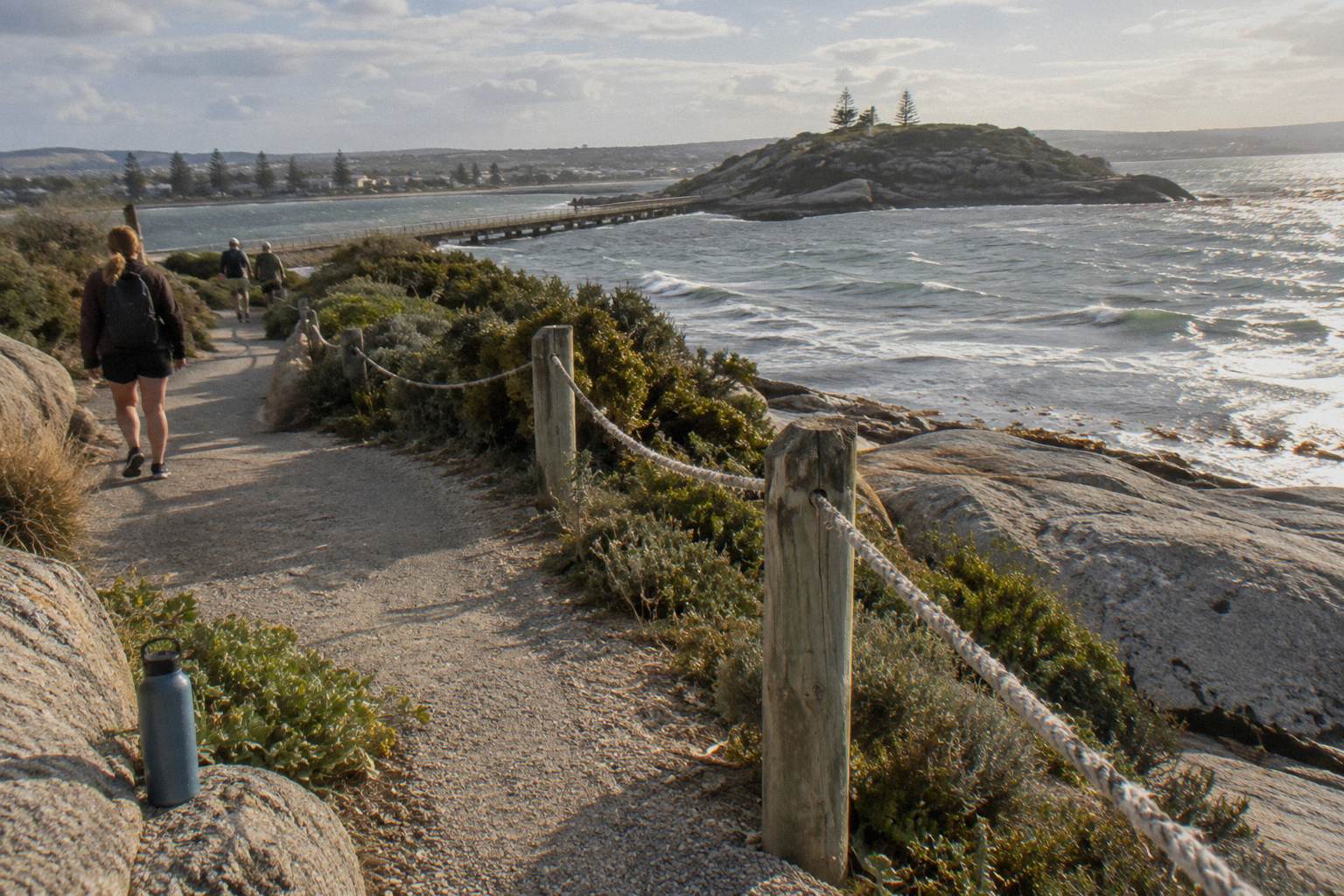
The Kaiki Walk is the park's own circuit of the island, about an hour at a steady pace. It passes the rocky shoreline where the penguin burrows sit among the granite, and the signage along the route interprets the island's wildlife and Ramindjeri heritage. The birds themselves are discreet by nature: little penguins spend daylight hours in burrows and move at first and last light, so a midday walker should expect granite, seabirds and views rather than penguins in the open.
Responsible viewing rules follow from the birds being wild. Stay on the track, keep dogs away from the island as park rules require, do not probe burrows or use bright lights at dusk, and give any bird you do see a wide berth. The worst outcome for a recovering colony of 46 adults is habituation or disturbance at the burrow, and the volunteer monitors who count nightly see the consequences of careless visits first.
Expectation-setting matters here. A family that arrives at midday, walks the loop in an hour and leaves has had a good island visit, penguins or not. A visitor who specifically wants the best odds of a wild sighting should be on or near the island at the edges of the day, accept that odds are modest with a colony this size, and treat any glimpse as a bonus. For deeper background on conditions and timing, the Granite Island penguin viewing conditions page works through the details.
If a guided interpretation appeals more than a self-guided loop, the walking tours are the natural substitute. The Discover Victor Harbor Guided Walking Tour meets at 1 Esplanade and runs 1.5 hours from AU$35 per person; its companion, the Victor Harbor: Shipwrecks & Settlers Walking Tour, meets at 60 Franklin Parade in Encounter Bay and runs 75 minutes, also from AU$35. Neither is a penguin walk, and neither claims to be; both put a local guide between you and the coastline's story. The Victor Harbor walking tours comparison lays out how the two differ.
What Are The Ways To Visit Granite Island Now?
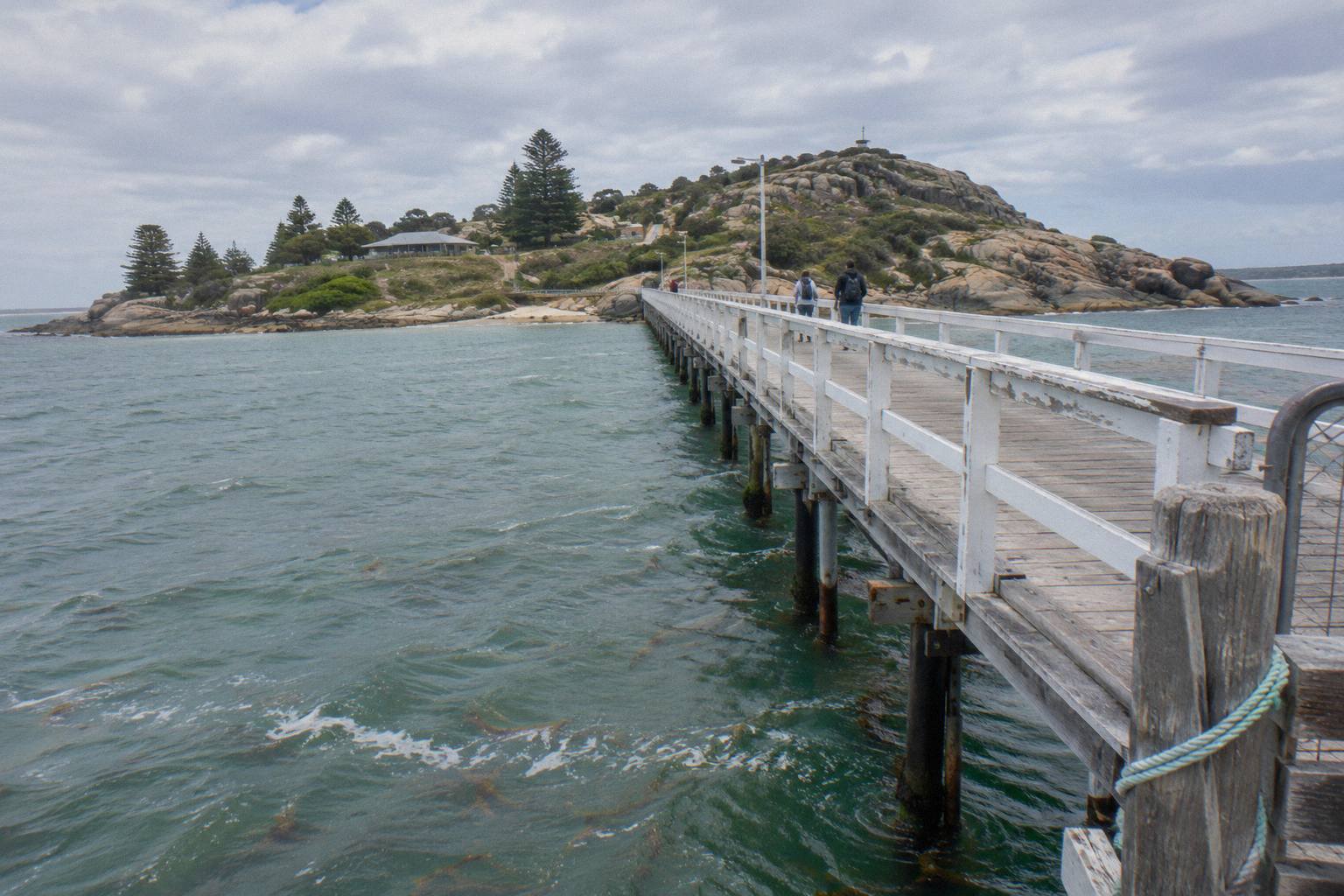
Three: walk the causeway free of charge, ride the horse-drawn tram, or arrive as part of a boat tour's route. The causeway is about 650 metres each way, roughly 20 minutes on foot, and island entry is free. The tram runs every day except Christmas Day, weather permitting, with the first departure from Victor Harbor at 10:30 am. Boat tours view the island from the water rather than landing.
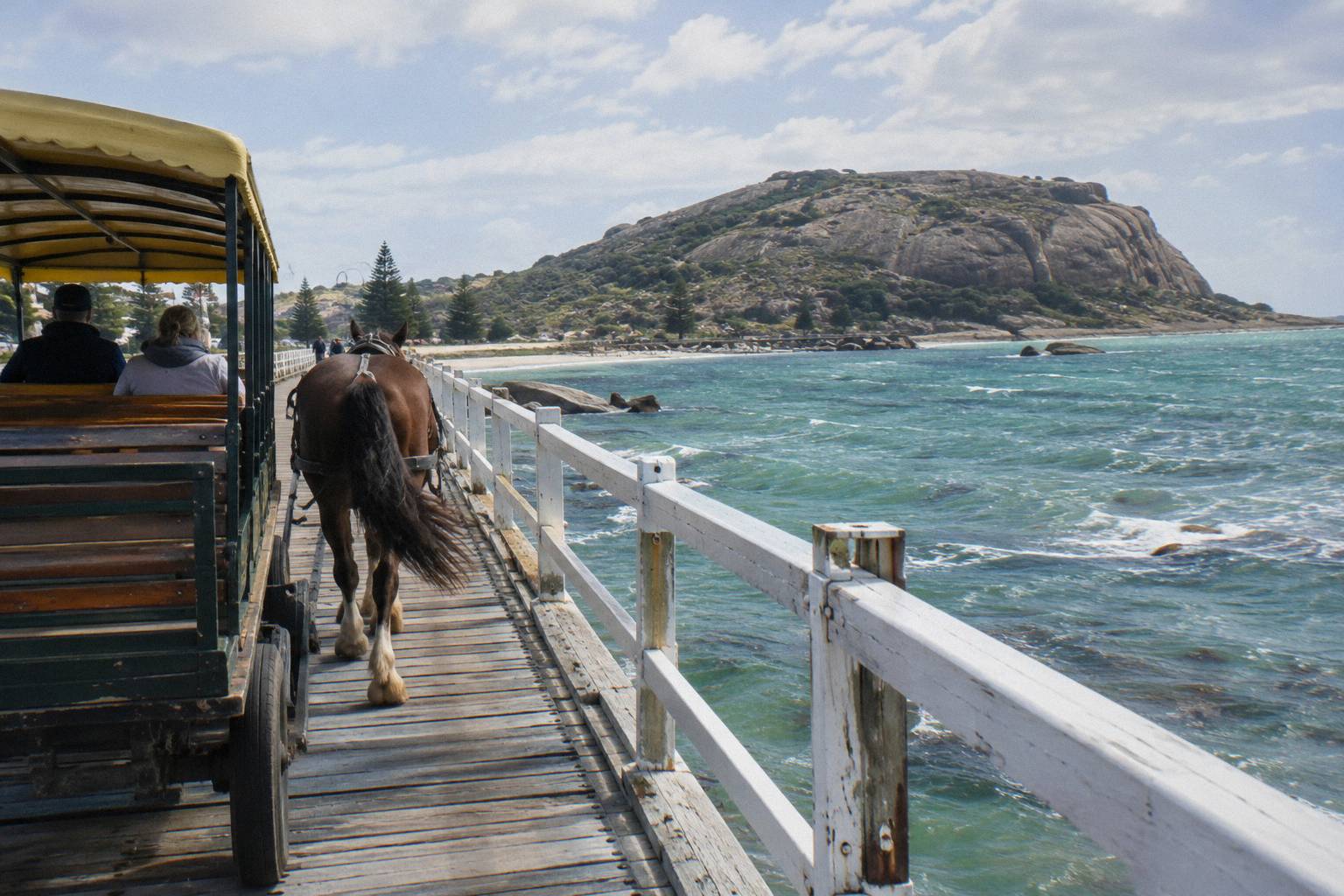
Walking is the default and the cheapest option by definition, since it costs nothing. The current causeway opened to pedestrians on Wednesday 22 December 2021, built after a AU$43 million state commitment, with construction beginning in March 2021. The original causeway dates to 1875 as the Victoria Pier extension, begun in 1862; the old structure was taken out of service in 2022 and parts of it survive as viewing platforms. The council's causeway project page carries the full history.
The horse-drawn tram is the heritage alternative, run by the Victor Harbor Horse Tram Authority, a council subsidiary. It operates every day of the year except Christmas Day, weather permitting, on an approximate 40 minute schedule; the first tram leaves Victor Harbor at 10:30 am and Granite Island at 10:50 am, and the last tram of the day varies. Tickets are bought at the causeway, not online, and fares are set dynamically, so none are quoted here. The tram's own operation page has current details.
| Way to visit | What it involves | Bookable in advance? |
|---|---|---|
| Walk the causeway | About 650 metres each way, about 20 minutes, free | No booking needed |
| Horse-drawn tram | Heritage tram crossing, runs daily except Christmas Day, weather permitting | Tickets at the causeway |
| Kaiki Walk on the island | 2.9 km loop, about 1 hour, free | No booking needed |
| Guided town walking tour | 1.5 hours with a guide, from AU$35 | Yes, free cancellation to 24 hours |
| Boat tour past the island | Views from the water, from AU$55 | Yes, free cancellation to 24 hours |
The boat option deserves a sentence of explanation. Big Duck Boat Tours departs from the Granite Island Causeway, so even the water-based product begins with the same walk out, and its boarding point sits about 300 metres along the causeway. Routes pass the island and the Encounter Marine Park beyond it, subject to change with weather and wildlife, as the operator describes. For the full picture on the water side, the Encounter Bay ocean safari guide compares the options.
Families weighing the tram against the walk can dig into the Granite Island horse tram guide, and the wider question of walking versus riding is covered in the blog post can you walk to Granite Island or take a tour.
Which Boat Tours Of Encounter Bay Run Instead?
Two Big Duck products cover the bay: the Victor Harbor: Seal Island Cruise, 45 minutes from AU$55, rated 4.7 from 112 reviews, and the Victor Harbor: Southern Ocean Adventure Cruise with Guide, 1.5 hours from AU$85, rated 4.7 from 163 reviews. Both meet at the Granite Island Causeway, both carry free cancellation up to 24 hours before, and neither is a penguin tour. They interpret seals, seabirds and, in season, whales.
The Seal Island Cruise is the shorter and cheaper of the two, running about 45 minutes with departures around 12:45 pm. The operator describes fur seals, sea lions and seabirds at the island; no official species list or approach distance is published for the site, so the operator's wording is what stands. Children aged 2 to 15 travel with an adult, the minimum age is 2, and the operator notes the trip is not suitable for pregnant passengers.
The Southern Ocean Adventure is the bigger circuit. It runs about 90 minutes, typically departing around 10:45 am with an extra 2 pm sailing when busy, aboard Pungari, a 12.5 metre NAIAD rigid-hulled inflatable. The route takes in Seal Island, Wright Island, The Bluff, West Island, Shark Alley, Kings Beach and the Waitpinga cliffs, inside the Encounter Marine Park. Rosetta Head, the bluff above it all, stands 97 metres above sea level. Whales are seen where present and conditions permit, in the operator's words, and sightings are never guaranteed.
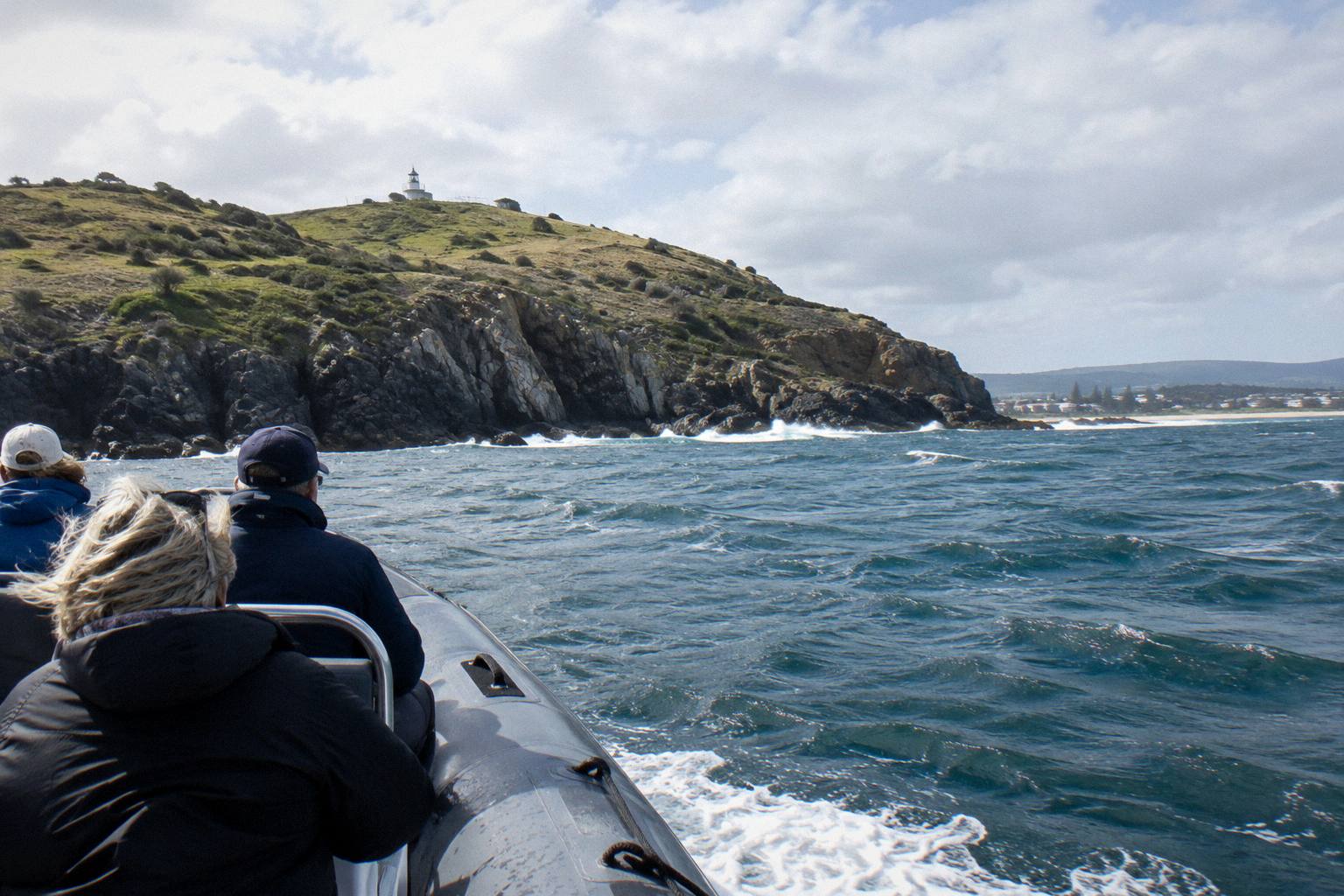
A comparison makes the choice simpler than the marketing suggests.
| Seal Island Cruise | Southern Ocean Adventure | |
|---|---|---|
| Duration | 45 minutes | 1.5 hours |
| From price | AU$55 per person | AU$85 per person |
| Rating | 4.7 from 112 reviews | 4.7 from 163 reviews |
| Typical departure | About 12:45 pm | About 10:45 am, extra 2 pm when busy |
| Route focus | Seal Island and bay | Full coastline circuit to the Waitpinga cliffs |
| Meeting point | Granite Island Causeway | Granite Island Causeway |
Weather governs both. Big Duck cancels departures in rough or unsafe conditions, typically notifying the day before by text and email with a full refund or reschedule, and short-notice cancellations are possible; rain alone does not necessarily cancel a trip. Late arrivals get no refund, so the causeway walk needs padding into your timing: 650 metres with children in tow takes longer than 20 minutes. The operator's own booking terms spell out the full policy.
If whale season is your real target, July and August are described as the most reliable months by both the operator and the SA Whale Centre, within a season that runs May to October, and the whale watching season calendar maps that out month by month.
How Should You Plan A Penguin-Focused Day?
Plan a penguin day by anchoring it around the island and the bay: arrive early to walk the causeway and the Kaiki Walk before crowds build, put midday on the water with a boat tour, then return to the shoreline near dusk for the slim chance of spotting a wild penguin. Book guided pieces in advance with the 24 hour free-cancellation terms in mind, and let weather decide the water legs.
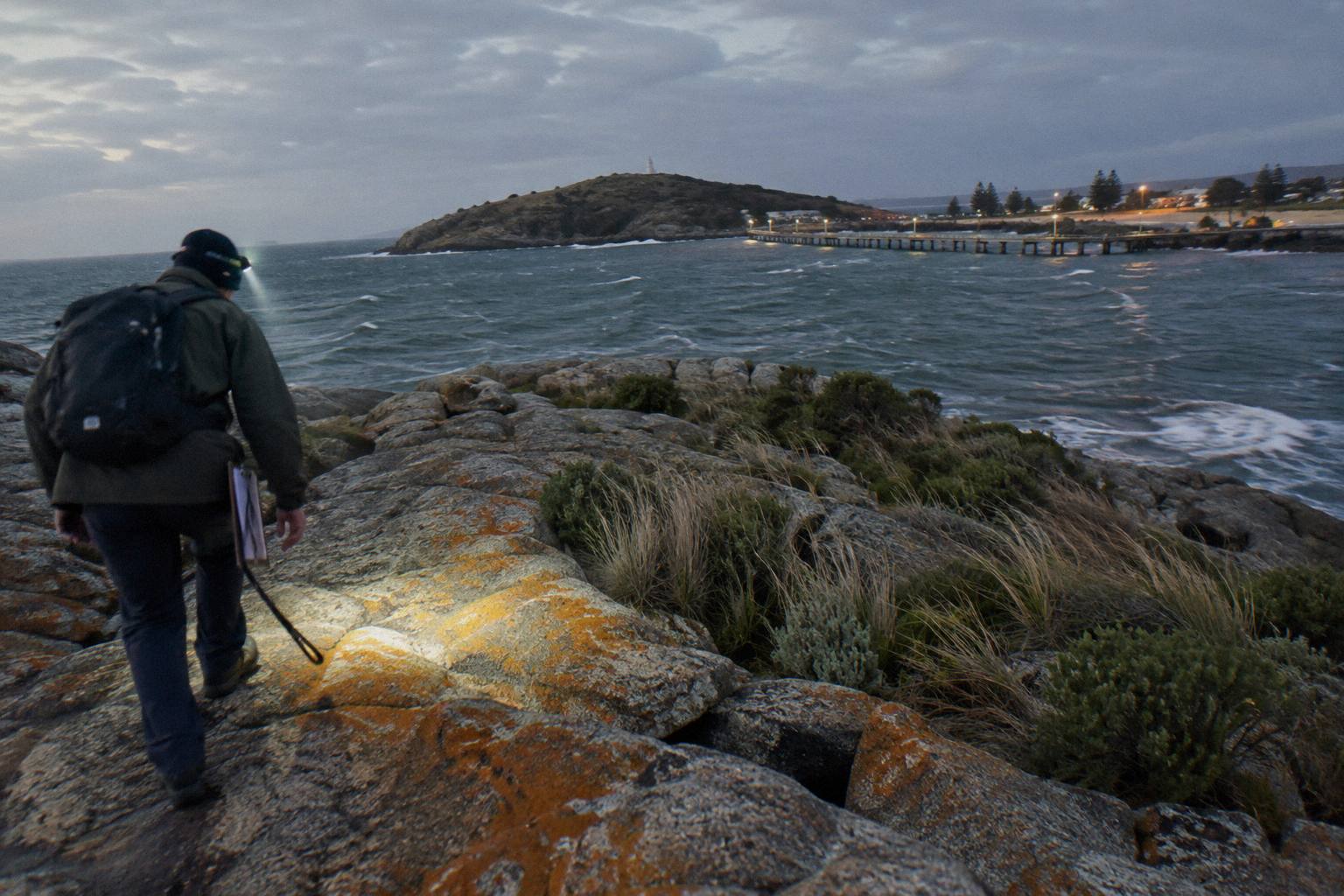
Timing follows the birds' rhythm. Penguins depart to feed before dawn and return around dusk, so the hours around first and last light are when the colony is most likely to reveal itself, in modest numbers and without any promise. Midday belongs to the boat trips, the tram and the town, all of which run regardless of the penguins' timetable.
Climate shapes the clothing list more than the calendar does. Bureau of Meteorology averages for Victor Harbor put the July mean maximum at 15.5 °C and the mean minimum at 6.6 °C, with August nearly identical at 16.4 °C and 6.8 °C; summer sits in the mid twenties by day. Rainfall peaks in June at a mean of 83.4 mm, with July and August close behind, so a waterproof layer earns its place in the bag across the penguin-favourable months. The BOM climate averages carry the full monthly breakdown.
| Month | Mean max (C) | Mean min (C) | Mean rain (mm) |
|---|---|---|---|
| May | 18.6 | 8.8 | 60.7 |
| June | 16.2 | 7.2 | 83.4 |
| July | 15.5 | 6.6 | 79.7 |
| August | 16.4 | 6.8 | 72.8 |
| September | 18.5 | 7.7 | 55.4 |
| October | 20.6 | 9.1 | 40.3 |
The 2025 marine mammal regulations add one more planning note if your day doubles as a whale trip. Under the rules in force since 1 September 2025, a vessel may come no closer than 100 metres to a whale, or 300 metres where a calf is present or inside the Encounter Bay Whale Nursery Protection Area, and craft must travel at 4 knots or less within 300 metres, for no more than 60 minutes. Tour operators work inside these limits, and whale behaviour plus sea state decide the rest. The marine parks authority's viewing marine mammals page summarises the approach rules.
Getting there is straightforward: Adelaide city centre to Victor Harbor is about 84 km, roughly 1 hour 15 minutes by road, and a direct bus from Adelaide Central Bus Station runs most days in just under two hours. There is no regular train; the heritage Cockle Train runs on selected days between Goolwa and Victor Harbor, not as a bookable tour product. The blog post on how to get to Victor Harbor from Adelaide for a tour compares the options.
What Mistakes Do Visitors Make With Penguin Expectations?
The biggest mistakes are searching for a penguin tour that no longer exists, since the wildlife show ended in 2020, and trusting outdated pages that still describe evening walks. Visitors also expect midday sightings from a colony of just 46 adults, even though the birds stay in burrows until dusk. Some then skip the island entirely, missing a free park with a fine hour-long walk.
Outdated information is the root of most of it. Pages written before 2020, and a few refreshed badly since, still describe commercial tours and the visitor centre as current. Anything you read that promises a guided penguin viewing on Granite Island is describing the past; the Department for Environment and Water is categorical that the tours ended in 2020 and that volunteers have monitored nightly since.
The timing mistake follows. A colony measured in dozens, in burrows, through daylight hours, offers slim odds to a 2 pm visitor. That is not a reason to skip the island, it is a reason to schedule it differently: early or late for the walk, midday for the boats, and realistic expectations throughout.
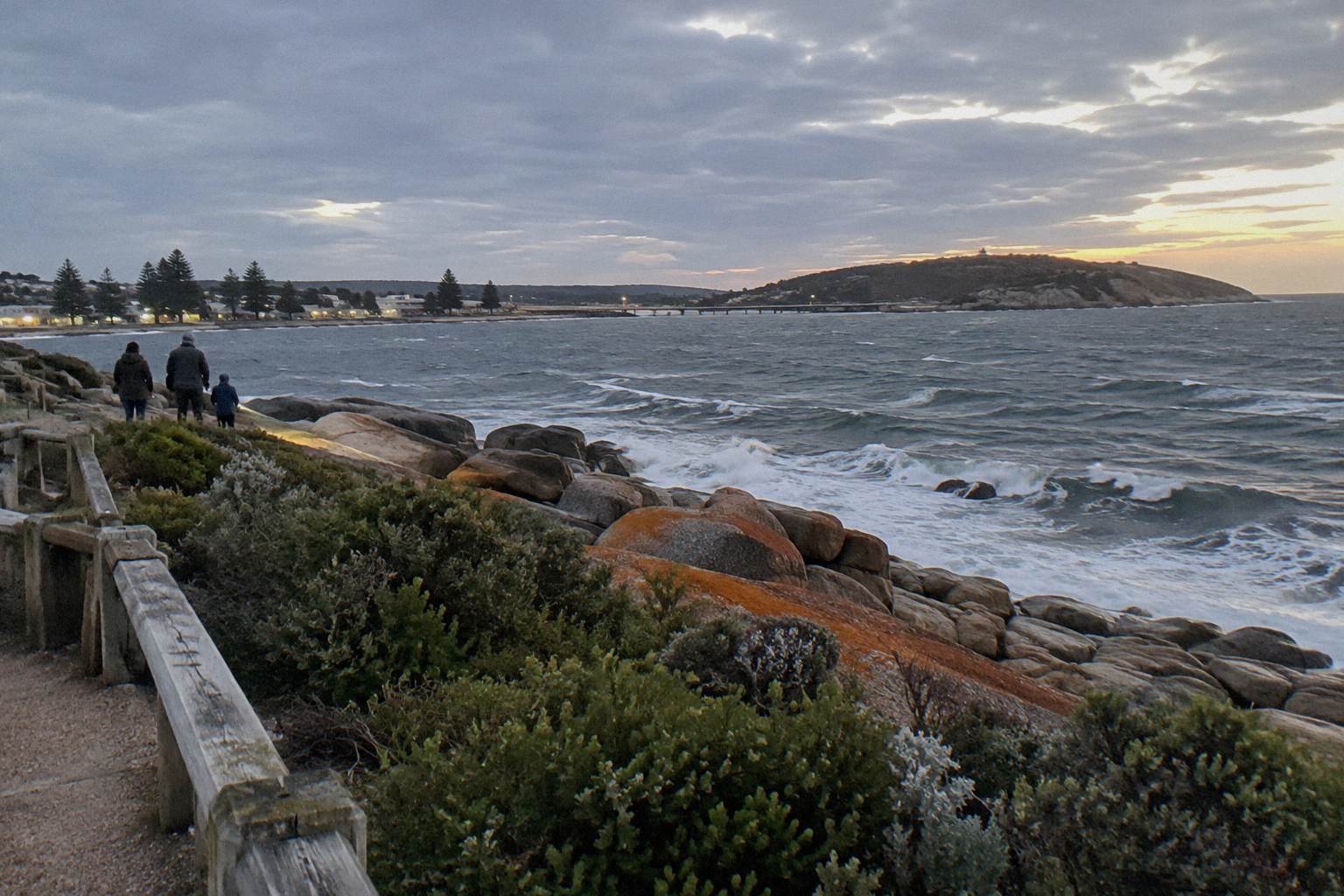
The last mistake is treating "no penguin tour" as "nothing to do". The island and its causeway are free, the Kaiki Walk is a genuine hour of coastline, the tram is a heritage experience running daily except Christmas Day, and the Encounter Bay boats put a guide on the water. A well-built day loses nothing by the absence of a penguin product except the false promise that came with it.
For anyone planning with children, the guide to Victor Harbor boat and penguin tours with kids handles the family version of the same question, including the boat age minimums.
Each carries free cancellation up to 24 hours before, so the weather can change your plans without charging you for it.
Common Questions About Visiting Granite Island
Do Granite Island Penguin Tours Still Run?
No. Commercial penguin tours of Granite Island ended in 2020, according to the Department for Environment and Water, and citizen scientists have monitored the colony nightly since. No operator sells a penguin tour, an evening departure or a guided penguin sighting on the island.
How Many Penguins Are On Granite Island?
The 2026 census counted 46 adults, up from 36 in 2025 and 30 in 2024. The colony was counted at 22 adults in 2015 and 44 in September 2018, against roughly 1,548 adults recorded in 2001.
Can I See Penguins On Granite Island Without A Tour?
Yes, occasionally, as wild birds with no guarantee. Little penguins spend daylight in burrows and move around dawn and dusk, so the edges of the day offer the best odds. Stay on the Kaiki Walk track, avoid disturbing burrows and keep any encounter brief and quiet.
What Tours Of Granite Island Can I Actually Book?
Guided options centre on the town and the water. The Discover Victor Harbor Guided Walking Tour runs 1.5 hours from AU$35 per person; the Victor Harbor: Seal Island Cruise runs 45 minutes from AU$55; the Victor Harbor: Southern Ocean Adventure Cruise with Guide runs 1.5 hours from AU$85. All amounts are Australian dollars.
Is Granite Island Free To Visit?
Yes. Granite Island Recreation Park has free entry and is open during the daytime, subject to weather and fire-danger closures. The causeway walk, about 650 metres each way, is free; the horse-drawn tram charges fares bought at the causeway, which vary and are not quoted here.
When Is The Best Time Of Day To Visit For Wildlife?
Early morning and late afternoon suit the penguins' rhythm of departing and returning around dawn and dusk. Midday suits the boat tours, which run to their own schedules and depend on sea conditions. July and August are described as the most reliable whale months, within a season running May to October.